No products in the cart.

Being a Doctor Will Never Be the Same After A.I.

The integration of AI in healthcare is not just a trend; it is a transformative shift. Doctors are now leveraging AI for more accurate diagnoses and treatment plans.

AI is changing the role of doctors in patient care. Recent advancements in artificial intelligence are reshaping how doctors diagnose and interact with patients. This evolution in healthcare requires doctors to adapt to maintain quality care.
The integration of AI in healthcare is a transformative shift. Doctors now use AI for more accurate diagnoses and treatment plans. This change helps healthcare professionals achieve better patient outcomes through improved data analysis and predictive modeling.
Enhancing Diagnostic Accuracy with AI
AI technologies significantly improve diagnostic accuracy. AI algorithms can analyze large amounts of medical data quickly. They identify patterns that human eyes might miss. For example, AI can help detect early signs of diseases like cancer, increasing the chances of successful treatment.
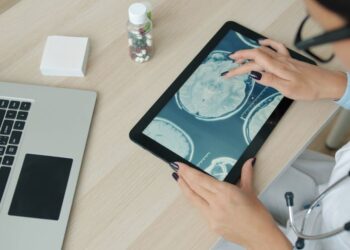
A study by the World Health Organization shows that AI systems can outperform human doctors in some diagnostic tasks, such as interpreting medical images. This capability enhances diagnostic accuracy and allows doctors to focus on complex cases that need human intuition and empathy. The National Institutes of Health reports that AI can identify cancerous lesions in mammograms more accurately than radiologists, highlighting AI’s potential to improve traditional diagnostic methods.
AI tools can also personalize treatment plans based on individual patient data. By analyzing a patient’s medical history and genetic information, AI can suggest tailored treatment options. This precision in healthcare is unprecedented and marks a significant leap forward. As AI evolves, diagnostic tools will become even more sophisticated. Doctors must stay informed about these advancements to use AI effectively. Career Ahead analysis indicates that ongoing education and training are essential for medical professionals to keep up with technological changes.
Career Ahead analysis indicates that ongoing education and training are essential for medical professionals to keep up with technological changes.
Furthermore, integrating AI into diagnostic processes can lower healthcare costs. By improving the speed and accuracy of diagnoses, AI can help prevent unnecessary tests and procedures. This leads to a more efficient use of healthcare resources. As AI systems become part of clinical workflows, the potential for cost savings and better patient outcomes will likely drive further adoption in healthcare.
Transforming Patient-Doctor Interactions
AI is also changing how doctors interact with patients. With telemedicine and AI-driven chatbots, patients can now get immediate responses to their health questions. This allows doctors to spend more time on complex cases while AI handles routine inquiries. A study from Harvard Business Review shows that AI can streamline administrative tasks, letting healthcare providers focus more on patient care.
Moreover, AI can improve the patient experience by providing personalized health information and reminders. For example, AI applications can send medication reminders or follow-up care instructions. This proactive approach helps patients stick to their treatment plans and fosters a better relationship between doctors and patients. However, the rise of AI in patient interactions raises concerns about the depersonalization of care. Some patients may feel that AI lacks the empathy and understanding of human doctors. Healthcare professionals must balance using AI tools and maintaining the human touch that is vital in medical practice.
As AI becomes more integrated into healthcare, doctors will need to develop new communication skills. They must learn to explain AI-generated insights and recommendations to patients clearly. This highlights the importance of continuous education in both medical knowledge and technology. Interpreting and communicating AI findings will become essential for healthcare professionals, ensuring that patients stay informed and engaged in their care.

As AI continues to shape the future of medicine, the roles and responsibilities of healthcare professionals will change. Those who adapt will be better positioned to thrive in a technology-driven healthcare environment. The integration of AI into healthcare is just beginning, and its full impact is yet to be seen. As more tools emerge, the dynamics of patient care will evolve, presenting both challenges and opportunities for doctors.
Healthcare professionals must balance using AI tools and maintaining the human touch that is vital in medical practice.
In conclusion, the rise of AI in healthcare is not just a technological advancement; it marks a shift in how medical professionals approach patient care. As AI tools become more sophisticated, doctors must embrace these changes. They should leverage technology to enhance their practice while ensuring that empathy and patient-centered care remain central to their work.
Frequently Asked Questions
What AI tools should medical doctors be familiar with?
Doctors should learn about AI diagnostic tools, telemedicine platforms, and patient management systems. These technologies can enhance their practice and improve patient outcomes.
How can healthcare professionals adapt to AI in their practice?
Healthcare professionals can adapt by engaging in continuous education and training focused on AI technologies. Workshops and online courses can help them stay updated on the latest advancements.

What should medical doctors do about the rise of AI in diagnostics?
Medical doctors should embrace AI as a tool to enhance their diagnostic capabilities. They must also be ready to explain AI-generated insights to patients, ensuring clear communication and trust.
Related Articles
Written by Career Ahead AI. AI can make mistakes, so verify key facts. Report errors to support@careeraheadonline.com.