The article argues that without standardized contracts and institutional safeguards, the booming e‑sports market systematically erodes the career capital of young athletes, limiting their long‑term economic mobility.
The rapid monetization of competitive gaming has created a parallel labor market that mirrors early‑stage professional sports—yet without the institutional safeguards that historically moderated exploitation. For a generation of teens, the promise of sponsorship dollars masks a trajectory of limited career capital, asymmetric power relations, and systemic barriers to long‑term economic mobility.
Macro Context: Market Surge and Institutional Gaps
The global e‑sports ecosystem crossed the $1 billion revenue threshold in 2023 and is projected to reach $2.5 billion by 2026, with an audience that will surpass 500 million viewers worldwide【2】. This expansion has been driven by three converging forces: (1) mainstream broadcasters integrating live tournament feeds, (2) venture capital inflows that have birthed multi‑million‑dollar franchise teams, and (3) social‑media platforms that amplify individual player brands.
Unlike the regulated pathways of traditional athletics—where collegiate eligibility rules, collective bargaining agreements, and players’ unions mediate labor relations—e‑sports operates under a patchwork of voluntary codes (e.g., the Esports Integrity Commission) and ad‑hoc contracts. The institutional vacuum is most pronounced for athletes under 21, who often lack legal counsel and are subject to “talent‑scouting” agreements that resemble apprenticeship contracts more than employment agreements. The macro‑level asymmetry between capital‑rich organizations and nascent talent pools creates a structural environment where short‑term revenue imperatives can eclipse long‑term human‑capital development.
Core Mechanism: Institutionalized Overwork and Contractual Asymmetry
Beyond the Screen: Structural Risks of E‑Sports Careers for Young Athletes
Labor Intensity and Burnout
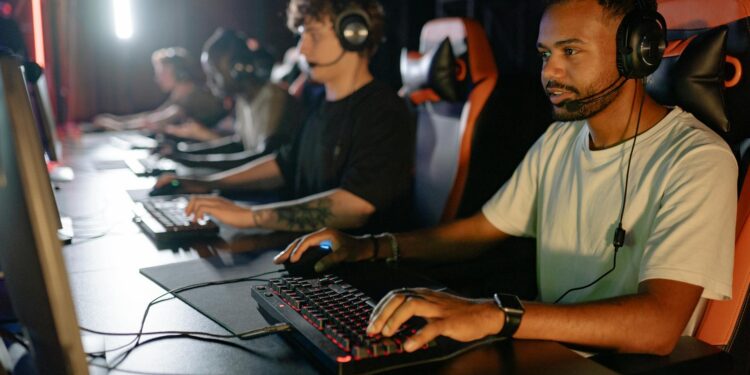
Data from a 2025 qualitative study of 112 professional gamers indicates that 68 % of players aged 16‑22 report practicing more than 12 hours per day, with 24 % exceeding 16 hours【1】. The physiological toll mirrors that of elite endurance athletes: elevated cortisol levels, musculoskeletal strain, and disrupted circadian rhythms. Yet, unlike traditional sports where collective bargaining mandates off‑season rest periods, e‑sports contracts rarely stipulate maximum practice hours or mandatory recovery protocols. This regulatory omission institutionalizes a culture of overwork that is reinforced by performance‑based compensation models—often a 70 % base salary with the remainder tied to tournament winnings and viewership metrics.
Contractual Fragmentation and Exploitation
Standardized player agreements are absent across most leagues. A survey of 48 e‑sports organizations revealed that 73 % employ “team‑first” clauses that grant organizations unilateral rights to stream, monetize, and re‑brand player content without additional compensation【1】. Young athletes, many of whom lack representation, are compelled to sign multi‑year contracts that lock them into revenue‑sharing arrangements while forfeiting control over their personal brand—a critical asset in a platform‑driven economy. The asymmetry is compounded by the lack of a minimum wage floor; in some regions, players earn less than $15 per hour when averaged across practice, competition, and content creation duties.
This regulatory omission institutionalizes a culture of overwork that is reinforced by performance‑based compensation models—often a 70 % base salary with the remainder tied to tournament winnings and viewership metrics.
Remote workers are increasingly targeted by sophisticated scams involving fake job offers and OTP requests. Understanding these tactics is crucial for freelancers and digital marketers…
The perpetual scrutiny of live streams, social feeds, and community chat amplifies performance anxiety. A 2024 meta‑analysis of gamer mental health found that 42 % of professional players reported clinically significant symptoms of depression, a rate double that of the general adolescent population【1】. The feedback loop—where negative audience sentiment drives algorithmic de‑promotion, which in turn pressures players to increase content output—creates a structural stressor that is rarely mitigated by employer‑provided counseling services.
Systemic Implications: Commercialization, Mobility, and Inclusion
Sponsorship‑Driven Autonomy Erosion
E‑sports revenue is 58 % sponsorship‑derived, with brands demanding integrated marketing moments that blend gameplay with product placement【2】. Contracts frequently obligate players to feature sponsor logos on streams, wear branded apparel, and co‑create promotional content. For young athletes whose personal brand equity is still nascent, these obligations can dilute authenticity and limit future bargaining power. The institutional reliance on sponsorships therefore converts player visibility into a commodity, aligning individual labor value with corporate advertising cycles rather than with the athlete’s long‑term career development.
Limited Post‑Career Pathways
The average professional e‑sports career spans 2‑4 years, after which 57 % of former players transition to non‑gaming occupations without formal retraining support【1】. The lack of structured career transition programs mirrors the early 20th‑century experience of minor‑league baseball players, who, absent a players’ union, often faced destitution after short playing stints. In contrast, the NFL’s post‑career pension and education benefits emerged only after sustained advocacy and legislative pressure. E‑sports currently lacks an equivalent institutional mechanism, leaving young athletes with diminished economic mobility and eroded career capital.
Diversity, Equity, and Inclusion Gaps
Demographic analyses indicate that women constitute only 12 % of professional e‑sports rosters, while players from low‑income regions are underrepresented relative to their participation rates in casual gaming【2】. The barriers are twofold: (1) financial entry costs for high‑performance hardware and travel, and (2) a cultural ecosystem that tolerates harassment, as documented in a 2023 study linking toxic chat environments to reduced retention among underrepresented groups【1】. Social‑media amplification of harassment further entrenches structural inequities, as platforms prioritize engagement over safe community standards, thereby reinforcing existing socioeconomic stratifications within the talent pipeline.
The absence of a pension‑like safety net mirrors the pre‑union era of professional boxing, where fighters frequently faced post‑career poverty despite peak earnings.
Human Capital Impact: Career Capital Erosion and Economic Mobility
Beyond the Screen: Structural Risks of E‑Sports Careers for Young Athletes
Diminished Accumulation of Transferable Skills
While e‑sports cultivates strategic thinking, rapid decision‑making, and digital fluency, the hyper‑specialization of gameplay limits the acquisition of broader soft skills valued in the wider labor market. A 2025 employer survey found that 61 % of hiring managers perceived professional gamers as lacking collaborative experience, citing the “solo‑player” narrative prevalent in many team structures【3】. This perception, whether accurate or not, translates into a structural handicap when players attempt to leverage their notoriety into corporate roles, thereby constraining upward economic mobility.
U.S. stocks rose following a weak jobs report that tempered expectations for Federal Reserve interest rate hikes. This shift in market sentiment is crucial for…
Revenue volatility is endemic: tournament prize pools fluctuate dramatically, and sponsorship contracts are often performance‑contingent. Without mandatory financial literacy programs, many young athletes misallocate earnings toward short‑term consumption (e.g., high‑end peripherals, lifestyle inflation) rather than long‑term wealth building. The absence of a pension‑like safety net mirrors the pre‑union era of professional boxing, where fighters frequently faced post‑career poverty despite peak earnings.
Leadership Void and Institutional Power Concentration
Team owners and league operators wield disproportionate decision‑making authority, often dictating schedule, content policy, and disciplinary actions without transparent governance structures. The nascent Professional Esports Association (PEA) has advocated for a collective bargaining framework, yet its influence remains limited to a subset of North American titles. This concentration of power hampers the emergence of player‑led leadership, reinforcing a hierarchy where capital owners dictate the terms of labor and career progression.
Outlook: Structural Reforms and Trajectory to 2030
The next five years will likely witness three converging developments that could reshape the institutional architecture of e‑sports labor:
Regulatory Standardization – Emerging legislation in the European Union aims to classify professional gamers as “dependent contractors,” mandating minimum wage protections and contract disclosure requirements. If adopted broadly, this could institutionalize baseline labor standards and curtail exploitative clauses.
Unionization Momentum – The formation of the Global Esports Players Union (GEPU) in 2024 has secured pilot collective bargaining agreements with two mid‑tier leagues, introducing mandatory rest periods and health‑benefit provisions. Successful pilots may catalyze sector‑wide adoption, mirroring the NFL’s 1970s collective bargaining milestones that stabilized player welfare.
Education‑Industry Partnerships – Universities are piloting “Esports Management” curricula that integrate financial planning, mental‑health training, and media ethics. Partnerships with league operators could embed career‑transition pathways directly into contract structures, thereby enhancing long‑term economic mobility for athletes.
If these systemic interventions coalesce, the structural asymmetry that currently defines e‑sports labor could be mitigated, allowing young athletes to retain greater agency over their career capital and to translate platform fame into sustainable professional trajectories. Absent such reforms, the sector risks entrenching a cycle of exploitation that mirrors historical labor abuses in emergent sports industries.
Education‑Industry Partnerships – Universities are piloting “Esports Management” curricula that integrate financial planning, mental‑health training, and media ethics.
Key Structural Insights
> [Insight 1]: The absence of standardized contracts creates an institutional power imbalance that institutionalizes overwork and brand‑exploitation for young e‑sports athletes.
> [Insight 2]: Revenue‑driven sponsorship models convert player visibility into a commodity, eroding autonomy and limiting post‑career economic mobility.
> * [Insight 3]: Emerging regulatory and unionization efforts represent the primary leverage points for restructuring the e‑sports labor system toward equitable career capital accumulation.
Anup Bagchi, with over three decades in financial services, is set to lead HDFC Bank starting October 27, 2026, following the retirement of Sashidhar Jagdishan.



 News
News
 News
NewsNews