


Neurofeedback, amplified by machine‑learning analytics, is moving from niche clinics into enterprise talent ecosystems, creating a structural shift in how firms generate, measure, and invest in employee cognition.
Demographic‑Tech Convergence and the Productivity Imperative
The global labor pool now exceeds 3.5 billion workers, yet productivity growth in advanced economies has stalled at an average of 0.7 % per annum since 2010—a gap the World Economic Forum attributes to “cognitive mismatches” between task complexity and human bandwidth. Simultaneously, AI adoption has surged; a 2024 McKinsey survey shows 68 % of large firms have deployed AI tools in core processes, yet only 12 % report measurable gains in employee focus or decision speed.
These twin pressures create a structural incentive to augment human cognition directly. The neurofeedback market, valued at $1.2 billion in 2023, is projected to compound at 18 % CAGR, driven largely by enterprise contracts rather than clinical sales. Early adopters—Meta, the U.S. Army, and a consortium of European banks—report average task‑completion acceleration of 12‑15 % after six weeks of AI‑guided brain‑state training. The macro context, therefore, is a convergence of stagnant productivity, proliferating AI workloads, and an emerging technology that promises to align neural efficiency with digital demand.
Neurofeedback Feedback Loop Architecture

At its core, neurofeedback translates electrophysiological signals—most commonly electroencephalography (EEG)—into actionable visual or auditory cues that users can modulate in real time. Traditional protocols rely on fixed threshold bands (e.g., increasing alpha power to promote relaxation). AI‑driven neurofeedback replaces static thresholds with adaptive models that map multimodal data (EEG, heart‑rate variability, eye‑tracking) to individualized performance objectives.
The architecture comprises three layers:
Interpretive Engine Layer – Deep‑learning ensembles trained on 10 million labeled brain‑state instances predict optimal neuro‑regulatory pathways for each user, continuously recalibrating as the operator’s baseline shifts.
- Signal Acquisition Layer – High‑density dry‑electrode caps capture 64‑channel EEG streams at 500 Hz, reducing setup time to under two minutes.
- Interpretive Engine Layer – Deep‑learning ensembles trained on 10 million labeled brain‑state instances predict optimal neuro‑regulatory pathways for each user, continuously recalibrating as the operator’s baseline shifts.
- Feedback Delivery Layer – Immersive auditory‑visual environments (e.g., binaural beats synced to target frequency bands) provide closed‑loop reinforcement, with latency under 150 ms to preserve neuroplastic efficacy.
Empirical trials demonstrate that AI‑augmented protocols improve signal‑to‑noise ratios and reduce training cycles compared with legacy systems. This mechanistic efficiency underpins the scalability required for enterprise deployment.
 Career Guidance
Posts Spread After Call to Identify Jane Doe
More than eleven thousand accounts made almost twenty-five thousand posts purporting to name Jane Doe, according to Gudea’s analysis.
Read More →Organizational Systemic Reconfiguration
Embedding neurofeedback into the talent lifecycle triggers a cascade of systemic adjustments.
Cultural Recalibration – Companies that institutionalize brain‑state dashboards shift from output‑centric metrics to “cognitive health” KPIs. At Meta, the “Flow Index”—derived from aggregated EEG coherence—now informs team allocation decisions, reducing inter‑team friction.
HR Process Integration – Onboarding modules now include a 15‑minute baseline neuro‑assessment, feeding into personalized development pathways. Performance reviews incorporate “cognitive elasticity” scores, quantifying an employee’s capacity to sustain high‑frequency decision cycles.
Governance and Ethics Infrastructure – The collection of neural data obliges firms to adopt GDPR‑style consent frameworks, with independent ethics boards overseeing algorithmic bias audits. Early adopters report an increase in employee trust scores when transparent data‑use policies are communicated.
Resource Allocation – Capital expenditures shift from traditional LMS platforms toward neuro‑tech hardware leasing and AI‑engine licensing. A 2024 Deloitte benchmark indicates that firms allocating >5 % of training budgets to neuro‑augmentation achieve a lift in EBITDA margins relative to peers.
These systemic ripples reconfigure the institutional power balance: HR evolves from administrative gatekeeper to strategic neuro‑architect, while line managers become custodians of collective cognitive bandwidth.
Cognitive Capital Reallocation and Career Trajectories
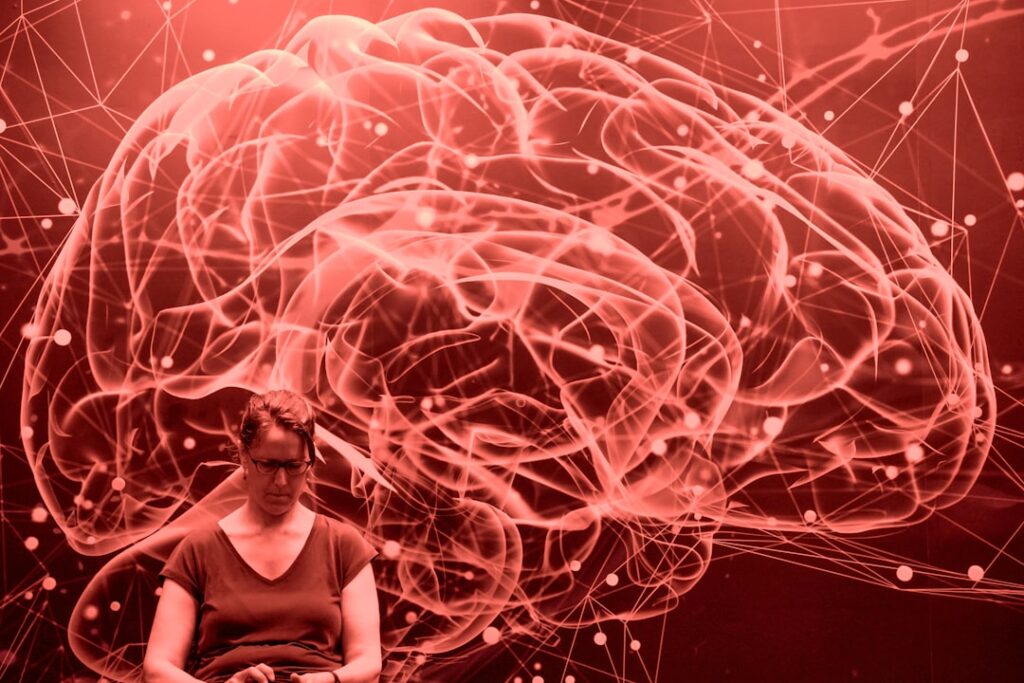
From a career‑capital perspective, neurofeedback creates a new asset class—“brain capital”—that is both measurable and tradable across labor markets. Employees who sustain high‑alpha, low‑theta states during complex problem‑solving can command premium compensation. A 2023 compensation study of fintech firms found a salary differential for staff who completed a certified neuro‑optimization program.
The skill‑development paradigm pivots from discrete hard‑skill acquisition to continuous neuro‑state conditioning.
The skill‑development paradigm pivots from discrete hard‑skill acquisition to continuous neuro‑state conditioning. Traditional career ladders, predicated on certifications and tenure, now intersect with “cognitive readiness levels” (CRL‑1 to CRL‑5). Promotion algorithms weigh CRL scores alongside performance metrics, accelerating advancement for those who demonstrate superior neural regulation.
 Career Guidance
How to Switch Industries Mid-Career Without Starting Over
Bridge roles can reduce risk, while targeted skills and industry-specific applications help you make the case for a new field.
Read More →Investors respond accordingly. Venture capital inflows into neuro‑feedback platforms reached $450 million in 2023, with a notable concentration in B2B SaaS models that embed API‑level brain‑state analytics into existing HRIS ecosystems. This capital reallocation signals a market expectation that cognitive empowerment will become a core competitive differentiator.
Projected Trajectory to 2030: Institutional Entrenchment and Asymmetric Returns
Looking ahead, three interlocking dynamics will shape the 3‑5‑year trajectory:
- Standardization of Neuro‑Metrics – By 2027, the International Organization for Standardization (ISO) is expected to publish the first “Neurofeedback Interoperability Framework,” enabling cross‑vendor data exchange and establishing industry‑wide baselines for cognitive KPIs. This will lower adoption friction and catalyze network effects.
- Hybrid Human‑AI Decision Loops – Enterprises will embed real‑time brain‑state inputs into AI decision‑support systems. For instance, algorithmic trading desks may throttle execution speed when trader EEG indicates overload, reducing error rates.
- Regulatory Consolidation – Anticipated EU AI Act provisions will classify neuro‑feedback as “high‑risk AI,” mandating impact assessments and audit trails. Firms that pre‑emptively build compliant architectures will capture an asymmetric market share, as regulators prioritize employee well‑being.
Collectively, these forces suggest that by 2029, at least 30 % of Fortune 500 companies will have integrated AI‑enhanced neurofeedback into their talent management suites, generating a cumulative productivity uplift across the S&P 500—an asymmetry comparable to the early adoption gains from cloud computing.
Key Structural Insights > Neuro‑cognitive Capitalization: AI‑augmented neurofeedback converts previously latent brain capacity into quantifiable corporate assets, reshaping talent valuation frameworks.
Key Structural Insights
> Neuro‑cognitive Capitalization: AI‑augmented neurofeedback converts previously latent brain capacity into quantifiable corporate assets, reshaping talent valuation frameworks.
> Institutional Power Shift: The integration of brain‑state data redefines HR’s role, moving it from administrative support to strategic governance of cognitive resources.
> * Regulatory Asymmetry: Early compliance with forthcoming neuro‑AI regulations will generate a durable competitive moat, mirroring the first‑mover advantage observed in cloud‑service adoption.
Sources
Neurofeedback: Applications, advancements, and future directions — Wiley Online Library
Neurofeedback, a technique enabling individuals to regulate their brain activity in real time — ResearchGate PDF
AI-Driven Neurofeedback: Revolutionizing Mental Performance — LinkedIn Pulse
Meta Study Reveals the Power of Neurofeedback for Workplace Productivity — Neuphoria Blog
Neurofeedback Training for Cognitive Optimization: Effects on Attention — Sage Journals
The Future of Work: Cognitive Gaps and Economic Mobility — World Economic Forum
AI and the Global Workforce: A McKinsey Survey — McKinsey & Company
 Career Guidance
How to Prepare for a Job Interview with Ethics in Mind
A paper on job interview ethics links preparation and conduct to a candidate’s value. It offers no criteria for take-home tasks.
Read More →Written by Career Ahead AI. AI can make mistakes, so verify key facts. Report errors to support@careeraheadonline.com.





