No products in the cart.

Bricolage fuels hidden innovation in modern firms
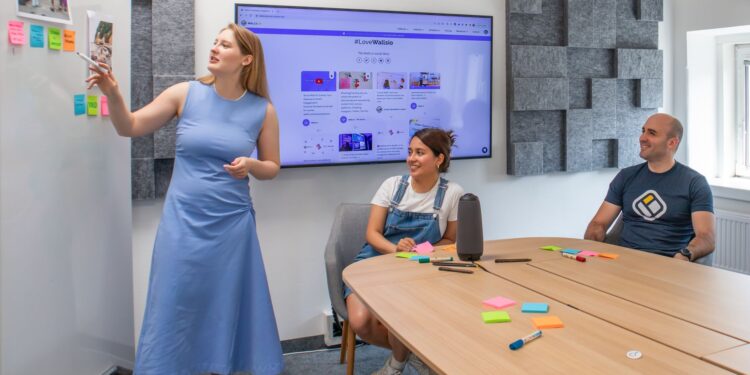
Moreover, 90% of surveyed companies report heightened employee engagement when staff are empowered.

Employees repurpose everyday tools to solve complex problems, turning resource scarcity into a strategic advantage. The practice now underpins 80% of firms’ employee‑led innovation programs, reshaping how organizations build career capital and institutional resilience.
The surge in remote work and heightened emphasis on agility have pushed firms to extract value from existing assets. As companies confront tighter budgets and distributed teams, the capacity for DIY problem‑solving becomes a systemic lever for sustained growth. This article dissects the structural shift toward bricolage, outlines its mechanisms, and projects its influence on leadership pathways and institutional power over the next three years.
Framing the rise of DIY problem‑solving
The pandemic accelerated remote work adoption, with roughly 60% of firms expanding flexible arrangements, compelling employees to improvise with limited on‑site support. Concurrently, 75% of organizations now list innovation as a primary growth driver, creating fertile ground for bricolage to flourish. By redefining “resource constraints” as opportunities, firms are institutionalising a culture where frontline staff routinely redesign processes. According to Career Ahead’s analysis of these trends, the convergence of remote work and innovation mandates rewrites traditional hierarchies, granting individual contributors greater agency in shaping strategic outcomes.How bricolage reshapes organizational mechanisms

Bricolage transforms constraints into catalysts for innovation.
Systemic implications for leadership and power structures
When employees routinely innovate, decision‑making diffuses upward, diluting traditional top‑down authority. Leaders shift from commanders to facilitators, curating resource pools and championing knowledge sharing. This reallocation of power strengthens institutional resilience, as organisations become less dependent on singular expertise. Data show that firms embracing bricolage experience faster strategic pivots, a critical advantage in volatile markets. The resulting agility redefines career capital, rewarding adaptability and creative problem‑solving over tenure alone.Impact on career trajectories and talent development
Projected trajectory over the next three years
In the coming 3‑5 year horizon, firms are expected to embed bricolage into performance metrics, linking project‑based resource recombination to bonus structures. Investment in digital toolkits that catalogue reusable assets will rise, creating institutional repositories that accelerate idea generation. As AI augments human improvisation, the synergy between algorithmic suggestions and employee ingenuity will likely double the rate of incremental innovations, reinforcing bricolage as a core strategic asset across sectors.
Impact on career trajectories and talent development Bricolage fuels hidden innovation in modern firms Bricolage cultivates a new breed of “resource architects” who blend technical know‑how with improvisational skill.
The forward momentum of DIY problem‑solving will reshape how organisations allocate power, rewarding those who turn constraints into growth engines and reinforcing the structural shift toward distributed innovation.
Key Structural Insights
Insight 1: Bricolage converts resource scarcity into a systematic source of innovation, driving measurable gains in employee engagement and organizational agility.
Insight 2: The diffusion of decision‑making through DIY problem‑solving rebalances institutional power, positioning frontline contributors as strategic catalysts.
Insight 3: Career capital is increasingly measured by improvisational impact, accelerating talent mobility and redefining leadership pathways.
Adapting to uncertainty: By embracing bricolage, employees can develop a growth mindset, allowing them to navigate complex problems and unexpected challenges with greater agility and creativity, ultimately driving organizational resilience and adaptability.
Informal networks thrive: Bricolage fosters the formation of informal networks and communities of practice, where employees can share knowledge, expertise, and resources, leading to increased collaboration, knowledge transfer, and innovation across the organization.
Written by Career Ahead AI. AI can make mistakes, so verify key facts. Report errors to support@careeraheadonline.com.