China's humanoid robot production is surging, but demand remains a challenge. Companies face a crowded market with limited applications, high production costs, and a need for innovation to meet market needs. The future hinges on aligning technology with practical uses across various sectors.
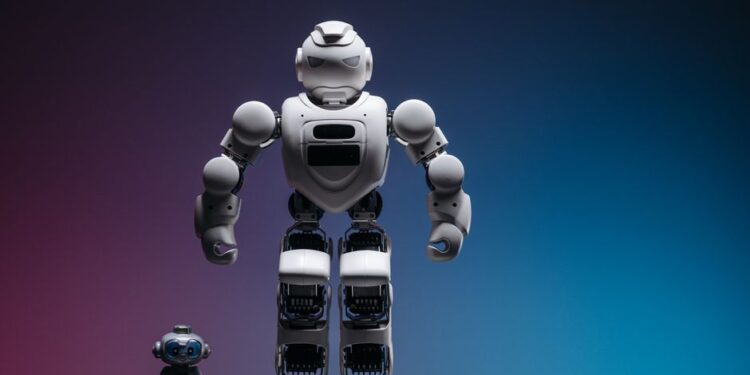
China has ramped up its production of humanoid robots to address the technological demands of its aging population and rising labor costs. However, despite this capacity, the market struggles with a significant demand gap. Companies like Matrix Robotics and EngineAI are at the forefront, but they face challenges in finding enough buyers for their products.
The Shanghai-based Matrix Robotics claims to have thousands of orders for its humanoid robot, the MATRIX-3, priced at around $99,000 each. However, only a few hundred robots have been delivered so far. EngineAI, another key player, offers humanoid robots for various applications, including security and entertainment. Yet, experts note that the limited use cases for these robots hinder broader adoption. According to a report by Yahoo Finance, the lack of diverse applications means that many potential customers are hesitant to invest in technology that may not meet their specific needs.
Intensifying Competition in the Humanoid Robotics Market
The competition among humanoid robot manufacturers in China is intensifying, with over 140 manufacturers and 330 different models reported in 2025. Companies are racing to innovate and capture market share in what Morgan Stanley estimates to be a $5 trillion market. However, as highlighted by the New America think tank, many humanoid robots are still more performative than functional, limiting their integration into everyday environments. This performative nature often leads to skepticism among potential buyers, who may question the practicality of investing in robots that prioritize showmanship over utility.
Despite technological advancements, the economics of humanoid robot production remain challenging. Experts point out that these robots are expensive to produce, fragile, and often require highly structured environments to operate effectively. This reality creates a barrier for potential buyers, particularly in sectors that might already be equipped with non-humanoid robots that perform repetitive tasks efficiently. Furthermore, high production costs mean that many companies are unable to offer competitive pricing, which is essential in a market where cost-effectiveness is a key consideration for buyers.
Furthermore, high production costs mean that many companies are unable to offer competitive pricing, which is essential in a market where cost-effectiveness is a key consideration for buyers.
The recent leadership change at Warner Studios, involving the integration of Paramount executives, is set to reshape production strategies and project approvals, signaling a shift…
The Chinese government’s substantial investments in the robotics sector, aligned with the 2026-2030 five-year plan, aim to foster innovation. However, without clear market demand, these investments risk leading to a bubble, as many companies struggle to achieve profitability amidst high production costs. As reported by AP News, this disconnect between production capabilities and market readiness could result in significant financial losses for investors and manufacturers alike.
As the current state of the humanoid robotics market in China evolves, there is a growing need for sales and marketing expertise to bridge the gap between technological capabilities and market demand. Robotics engineers will need to collaborate closely with marketing teams to effectively communicate the value propositions of humanoid robots to potential customers.
Investment Trends and Future Projections
Investment in robotics startups has surged, with many companies reporting substantial revenues. For instance, Unitree reported revenues of 1.7 billion yuan last year, with profits exceeding 278 million yuan. This financial success illustrates the potential for growth within the sector, provided that companies can successfully navigate the challenges of market demand. However, as highlighted by TechCrunch, the sustainability of this growth is contingent on the industry’s ability to innovate and create robots that fulfill practical needs in various sectors.
Looking ahead, Morgan Stanley forecasts that humanoid robot sales in China could double to around 28,000 units within the year. However, this optimistic projection hinges on the industry’s ability to create viable applications that resonate with potential buyers. The need for robots that can perform complex tasks in unpredictable environments remains a crucial factor in driving demand. Companies that can successfully develop humanoid robots capable of adapting to diverse settings will likely find themselves at a competitive advantage.
Moreover, the rapid growth of the Chinese humanoid robot market has implications for the global landscape. With Chinese companies accounting for approximately 85% of global humanoid robot production, their success or failure could significantly influence international robotics trends. As production costs decrease and technology advances, China may solidify its position as a leader in the humanoid robotics field. However, this dominance will depend on the ability of these companies to align their offerings with market needs and consumer expectations.
The tightening of bench policies in India's IT sector reflects a significant transformation in workforce management, impacting job security and project allocation.
This financial success illustrates the potential for growth within the sector, provided that companies can successfully navigate the challenges of market demand.
Practical Applications and Workforce Implications
The future of the humanoid robotics market will likely be characterized by a focus on practical applications, particularly in sectors like logistics and manufacturing. As companies work to enhance the functionality of their robots, the demand for skilled robotics engineers and manufacturing analysts will evolve, requiring these professionals to adapt to new market realities. The challenges faced by the humanoid robotics market in China raise important questions about the future of this technology. Will the industry successfully transition from production capacity to market viability? As companies strive to meet the demands of a changing workforce and society, the answers to these questions will shape the trajectory of robotics development in the coming years.
Key industries adopting humanoid robots include logistics, security, and hospitality. Companies are exploring the use of humanoids for tasks ranging from sorting parcels to providing customer service in hotels. Manufacturing analysts can assess the market by analyzing demand trends, production capacities, and the economic viability of humanoid robots. Understanding the competitive landscape and technological advancements is also crucial. Robotics engineers should focus on acquiring skills in AI integration, machine learning, and sales strategies. As the market evolves, blending technical expertise with business acumen will be essential.



Industry & Global Trends


 Industry & Global Trends