No products in the cart.

Class 9 Maths Syllabus Unchanged Despite New Textbooks
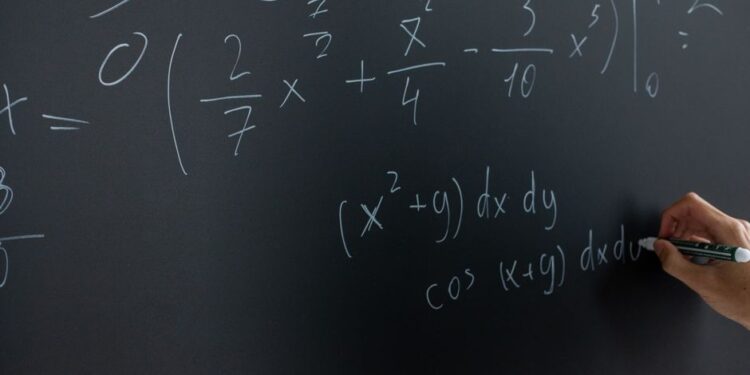
NCERT confirms that no topics have been removed from the Class 9 Maths syllabus, impacting how educators prepare for the 2026 academic year.

India’s National Council of Educational Research and Training (NCERT) confirmed that no topics have been removed from the Class 9 Maths syllabus as of September 25, 2026. This announcement comes with new textbooks for the academic year 2026-27. NCERT clarified that concepts perceived as missing are integrated into other chapters, improving the overall learning experience for students.
This clarification is important for educators and curriculum developers as they prepare for the upcoming academic year. The new syllabus aligns with the National Education Policy (NEP) 2020, which promotes a more integrated approach to learning. The final version of the syllabus will be released in October 2026, after feedback from teachers and educational stakeholders.
Understanding the Syllabus Changes and Their Implications
NCERT’s decision to keep the Class 9 Maths syllabus intact is crucial for educators. The council noted that some topics may not be standalone chapters but are included in other sections. For example, concepts related to Lines and Angles, introduced in earlier grades, are explored in Class 9 through chapters on Proportionality and Theorems. This integration aims to deepen students’ understanding of mathematical principles.
According to Scribd.com, a well-structured syllabus is vital for effective teaching and learning. It serves as a guide for educators on what to teach and how to assess student understanding. With NCERT’s focus on integrated learning, teachers must adapt their methods to help students see connections between different mathematical concepts.
Additionally, the new syllabus includes a chapter on algorithms, highlighting the growing importance of computational thinking in education. This aligns with NEP 2020’s goal of preparing students for a technology-driven future. As noted by Yogiraj.co.in, understanding algorithms is essential for students, as it lays the groundwork for future studies in fields like computer science and data analysis.
As noted by Yogiraj.co.in, understanding algorithms is essential for students, as it lays the groundwork for future studies in fields like computer science and data analysis.
The integration of these concepts presents both challenges and opportunities for educators. Teachers must develop new strategies to convey these integrated topics effectively. Career Ahead analysis shows that this shift requires teachers to understand the content and be skilled in teaching methods that promote critical thinking and problem-solving.
As educators prepare for the new syllabus, they should also consider the resources available to them. NCERT has announced new textbooks, including “Ganita Manjari – Part 2” for Mathematics, available for purchase starting September 21, 2026. Access to updated materials will be crucial for teachers as they implement the revised curriculum.
Adapting Teaching Methodologies to the Revised Syllabus
The integration of topics in the Class 9 Maths syllabus requires a reevaluation of teaching methods. Educators must adopt innovative approaches to help students connect different mathematical concepts effectively. Traditional teaching methods may not be enough to convey the depth of understanding needed by the new syllabus.
Teachers may benefit from collaborative techniques, allowing them to create interdisciplinary lessons that highlight connections between various mathematical principles. For example, integrating real-world applications of algorithms in math lessons can boost student engagement and understanding. This aligns with findings from Degreefromanywhere.com, which emphasizes the importance of contextual learning in education.
Moreover, professional development opportunities will be vital as teachers adapt to these changes. Workshops and training sessions focused on the new syllabus and teaching methods can equip educators with the necessary tools. Career Ahead research indicates that ongoing support and training can lead to better student outcomes and a clearer understanding of complex concepts.
Online resources, interactive tools, and educational software can provide students with diverse learning experiences.
Additionally, educators should use technology to enhance their teaching practices. Online resources, interactive tools, and educational software can provide students with diverse learning experiences. This is especially relevant for concepts related to algorithms and computational thinking, as these tools can make abstract ideas more tangible.
As new textbooks are introduced, teachers will need to establish effective assessment strategies that align with the integrated syllabus. This will require a shift from traditional testing methods to more comprehensive evaluations that consider students’ understanding of interconnected concepts.
In summary, NCERT’s clarification about the Class 9 Maths syllabus has important implications for educators. By understanding the integrated approach of the revised syllabus, teachers can better prepare their lessons and adapt their methods to meet their students’ needs.
The clarity provided by NCERT is timely as educators prepare for the new academic year. As they get ready to implement the revised syllabus, the focus will be on how well they can adapt their teaching strategies to foster a deeper understanding of mathematics.
Frequently Asked Questions
What topics are included in the NCERT Class 9 Maths syllabus?
The NCERT Class 9 Maths syllabus includes topics such as algebra, geometry, statistics, and probability. Key concepts like Lines and Angles, Quadrilaterals, and algorithms are integrated within various chapters.
Educators can access new textbooks from NCERT, online educational platforms, and professional development workshops to enhance their teaching practices and adapt to the revised syllabus.
How should teachers adapt to the new textbooks?
Teachers should familiarize themselves with the new textbooks and focus on creating interdisciplinary lessons that connect various mathematical concepts. Professional development and training sessions can also aid in this transition.
What resources are available for teaching the Class 9 Maths syllabus?
Educators can access new textbooks from NCERT, online educational platforms, and professional development workshops to enhance their teaching practices and adapt to the revised syllabus.
Related Articles
- Exam System Fix Alone Won’t Secure Youth’s Future | Workforce Shift
Written by Career Ahead AI. AI can make mistakes, so verify key facts. Report errors to support@careeraheadonline.com.