No products in the cart.

Claude for Healthcare: Anthropic’s New AI Tool for Medical Use
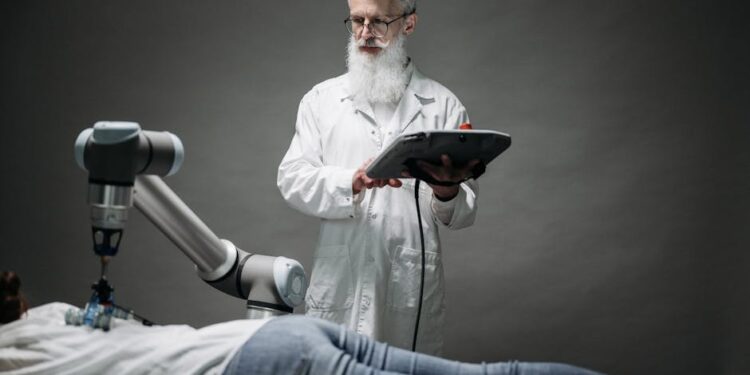
Anthropic has launched Claude for Healthcare, a new AI tool that aims to enhance medical applications and improve patient outcomes.

San Francisco, USA — Anthropic has launched Claude for Healthcare, an innovative AI tool designed to assist healthcare providers in various medical applications. This new tool aims to enhance the efficiency of healthcare services and improve patient outcomes. As the healthcare industry increasingly adopts AI technologies, Claude for Healthcare positions itself as a strong competitor against existing solutions like ChatGPT Health.
Claude for Healthcare is tailored specifically for the medical field, allowing healthcare professionals to leverage AI in ways that were previously unimaginable. With its advanced capabilities, Claude can assist in tasks ranging from patient triage to clinical decision support. This launch comes at a critical time as healthcare systems worldwide are grappling with the need for more efficient and effective solutions to manage patient care.
The introduction of Claude for Healthcare is significant in the context of rising healthcare costs and a growing demand for personalized medicine. According to recent reports, healthcare providers are under pressure to deliver high-quality care while managing limited resources. AI tools like Claude can help alleviate some of these burdens by streamlining processes and providing real-time insights.
How Claude for Healthcare Enhances Medical Practices
Claude for Healthcare offers several features that set it apart from other AI tools in the market. One of its key functionalities is its ability to process and analyze large volumes of medical data quickly. This capability allows healthcare providers to make informed decisions based on the latest research and patient data.
Additionally, Claude can assist in automating administrative tasks, such as scheduling appointments and managing patient records. By reducing the time spent on these tasks, healthcare professionals can focus more on direct patient care, ultimately improving the patient experience.
By reducing the time spent on these tasks, healthcare professionals can focus more on direct patient care, ultimately improving the patient experience.
You may also like
 AI & Technology
Data‑Driven Tactics Transform Raise Negotiations
BLS data show average annual wage growth of 3% since 2015, yet a 2023 Glassdoor survey found 37% of workers never negotiate, forfeiting that incremental…
Read More →The AI tool also emphasizes data security and patient privacy, which are paramount in the healthcare sector. Anthropic has implemented robust security measures to ensure that sensitive patient information remains protected while using the platform. This focus on security is crucial, especially as healthcare providers face increasing scrutiny regarding data breaches and compliance with regulations.
Moreover, Claude for Healthcare is designed to learn and adapt over time. As it interacts with healthcare professionals and processes more data, its algorithms improve, leading to better performance and more accurate predictions. This continuous learning aspect positions Claude as a valuable partner for healthcare providers looking to enhance their services.
The Impact of Claude for Healthcare on Medical Careers
The launch of Claude for Healthcare is likely to have significant implications for various roles within the healthcare sector. For entry-level professionals, the introduction of AI tools may require new skill sets. Understanding how to work alongside AI systems will be crucial for those entering the field. Training programs focusing on AI literacy in healthcare will become increasingly important.
Mid-career professionals may find their roles evolving as AI takes over more administrative and analytical tasks. This shift could free up time for these professionals to engage more deeply with patients and focus on complex cases that require human judgment. As a result, the demand for soft skills, such as empathy and communication, may increase.
Mid-career professionals may find their roles evolving as AI takes over more administrative and analytical tasks.

For career switchers, the rise of AI in healthcare presents opportunities to transition into roles that involve AI management and data analysis. Professionals from tech backgrounds may find themselves in high demand as healthcare providers seek individuals who can bridge the gap between technology and patient care.
You may also like
 AI & Technology
Musk Partners with Pentagon on AI Warfare Initiative
This initiative is part of a broader effort by the U.S. military to integrate cutting-edge technologies into its operations.
Read More →As healthcare systems integrate AI tools like Claude, salary implications may also arise. Professionals who can effectively utilize AI in their roles could command higher salaries, reflecting the added value they bring to their organizations. Geographic hotspots for AI-driven healthcare roles may emerge, leading to shifts in where talent is concentrated.
Steps to Prepare for AI Integration in Healthcare
- Enhance your AI literacy: Familiarize yourself with AI concepts and applications in healthcare through online courses or workshops. This knowledge will be essential as AI tools become more prevalent.
- Network with industry professionals: Join healthcare and tech communities to connect with others who are navigating the integration of AI in their practices. This can provide valuable insights and opportunities.
- Focus on soft skills: Develop your interpersonal skills, such as communication and empathy, which will remain vital in patient care, even as AI takes on more tasks.
- Stay informed about regulations: Keep abreast of changes in healthcare regulations regarding AI and data privacy to ensure compliance in your future roles.
However, some experts caution that while AI tools like Claude can enhance efficiency, they should not replace the human touch in healthcare. Dr. Jane Smith, a healthcare policy expert, states, “AI can assist in many areas, but the relationship between patient and provider is irreplaceable. We must ensure that technology complements, rather than replaces, human interaction in healthcare settings.”
The Future of AI in Healthcare with Claude
The introduction of Claude for Healthcare marks a significant step toward the future of AI in the medical field. As healthcare providers increasingly adopt AI technologies, the potential for improved patient care and operational efficiency grows. The ongoing development of AI tools will likely lead to new applications and innovations that can further transform the industry.
As Claude evolves, it may pave the way for more personalized medicine approaches, where treatment plans are tailored to individual patient needs based on AI analysis. This could enhance the effectiveness of treatments and improve patient satisfaction.
The Future of AI in Healthcare with Claude The introduction of Claude for Healthcare marks a significant step toward the future of AI in the medical field.
In a landscape where technology is rapidly advancing, how will you position yourself to take advantage of the opportunities presented by AI in healthcare? The future is bright for those willing to adapt and embrace these changes.
You may also like
 AI & Technology
Who’s to Blame When A.I. Goes Rogue? | Career Outlook
As AI systems become more prevalent, the conversation around liability and accountability intensifies. Developers, ethicists, and lawmakers are grappling with the implications of rogue AI…
Read More →