No products in the cart.

Climate Justice Redefines Global Supply Chains: A Structural Shift in Worker Rights and Environmental Accountability
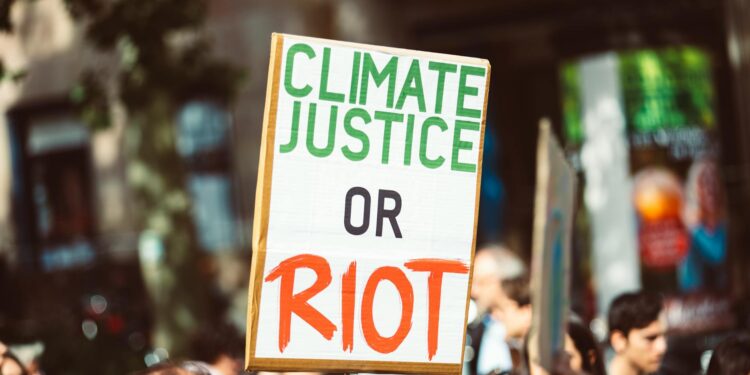
The convergence of EU, US, and emerging‑market climate‑justice regulations is redefining supply‑chain risk, forcing firms to embed labor standards into carbon accounting and reshaping career pathways for sustainability specialists.

The convergence of climate activism, labor standards, and regulatory pressure is reshaping the architecture of worldwide production networks. Companies that embed climate‑justice metrics into sourcing are building new career pathways, while firms that lag risk systemic exclusion.
Supply Chains at a Crossroads: Consumer and Regulatory Pressure
The architecture of global supply chains is confronting a dual imperative: decarbonization and the protection of frontline labor. A 2024 BSR survey found that 71 % of consumers prefer brands that demonstrate environmental stewardship, while the International Labour Organization reports that 2.7 billion workers are employed in sectors most exposed to climate‑related disruptions [1]. Simultaneously, 85 % of Fortune 500 firms acknowledge the strategic necessity of integrating human‑rights due diligence into corporate planning [2].
These macro forces are crystallizing within the European Union’s Green Deal and the United Nations Sustainable Development Goals (SDGs), which together codify a rules‑based framework that obliges multinational enterprises to disclose emissions, water usage, and labor conditions across tiers [3]. The EU’s forthcoming Corporate Sustainability Due Diligence Directive (CSDDD) will impose liability on firms that fail to prevent adverse human‑rights or environmental impacts in their value chains, effectively extending institutional power from the boardroom to the factory floor [4].
The confluence of consumer preference, regulatory expansion, and institutional advocacy signals a structural shift: supply chains are no longer peripheral cost centers but central vectors of corporate legitimacy and economic mobility.
Regulatory and Transparency Drivers

Evolving Legal Mandates
The Green Deal’s “Fit for 55” package mandates a 55 % reduction in greenhouse gas emissions by 2030, compelling manufacturers to audit upstream emissions through the Scope 3 reporting requirement [5]. Parallelly, the UN Guiding Principles on Business and Human Rights (UNGPs) have been operationalized into national legislation in the United Kingdom, France, and Germany, creating enforceable pathways for workers to claim remediation for climate‑linked harms [6].
These legal scaffolds generate a feedback loop: as firms adopt rigorous emissions accounting, they uncover labor‑related exposure—such as heat stress in textile factories in Bangladesh—that were previously invisible in financial statements. The institutionalization of climate‑justice metrics thus forces a re‑balancing of risk assessments, integrating occupational health data with carbon accounting.
Stakeholder Coalitions
Effective climate‑justice movements now hinge on multi‑actor coalitions that blend NGOs, labor unions, and investor collectives. The Climate Justice Alliance (CJA), for instance, has partnered with the International Trade Union Confederation (ITUC) to launch the “Just Transition Supply Chain Initiative,” which provides a standardized set of indicators for wage parity, safe working conditions, and carbon intensity [7].
Stakeholder Coalitions Effective climate‑justice movements now hinge on multi‑actor coalitions that blend NGOs, labor unions, and investor collectives.
Investor pressure amplifies these coalitions. A 2023 survey by the Principles for Responsible Investment (PRI) indicated that 70 % of institutional investors consider climate‑justice alignment a material factor in portfolio allocation [8]. The resulting capital flows incentivize firms to embed ESG (environmental, social, governance) criteria that explicitly reference labor outcomes, thereby reshaping the cost of capital for non‑compliant suppliers.
You may also like
 Government & Policy
RBI Prioritizes Financial Stability Amid Emerging Risks
The Reserve Bank of India (RBI) has outlined five key priorities to enhance financial stability in response to emerging global risks.
Read More →Transparency as a Structural Lever
Supply‑chain transparency has transitioned from a voluntary disclosure to a compliance imperative. According to BSR, 75 % of large enterprises now view transparency as essential for risk mitigation [1]. Digital traceability platforms—such as blockchain‑based provenance tools used by apparel giant H&M—enable real‑time verification of both carbon footprints and labor standards at the mill level [9].
The systemic implication is a reconfiguration of information asymmetry: previously, lead firms could shield downstream violations behind opaque contracts; now, regulatory audits and public dashboards expose every tier, compelling upstream firms to enforce compliance through contractual clauses and performance‑based incentives.
Systemic Ripple Effects Across Industries
Industry‑wide Recalibration
The fashion sector illustrates the breadth of the shift. In 2022, the Sustainable Apparel Coalition reported a 30 % reduction in average water consumption per garment among its members, but simultaneously documented a 12 % rise in reported heat‑related illnesses among factory workers in Southeast Asia [10]. The dual trend underscores how climate mitigation can exacerbate labor risks if not managed holistically.
Agriculture presents a parallel trajectory. The adoption of climate‑smart agriculture practices in Brazil’s soy supply chain, driven by EU import standards, has increased yields by 15 % while reducing deforestation by 22 % [11]. Yet, the same reforms have sparked labor disputes over mechanization, prompting unions to demand reskilling programs—a clear illustration of the interdependence between environmental and worker outcomes.
Disruption of Global Value Chains
The integration of climate‑justice criteria is inducing friction in traditional sourcing models. Companies reliant on low‑cost, high‑emission inputs face “compliance gaps” that manifest as shipment delays, tariff penalties, and reputational losses. For example, electronics manufacturer Apple postponed the launch of a new iPhone line in 2024 after audits revealed excessive carbon emissions and unsafe working hours at a key component supplier in Vietnam [12].
These disruptions incentivize the emergence of regionalized supply hubs that align with stringent ESG standards. The “Near‑shoring” trend, accelerated by the Inflation Reduction Act’s tax credits for domestically produced clean‑energy components, is reshaping the semiconductor supply chain, shifting a portion of production from East Asia to the United States and Europe [13]. This re‑allocation of production capacity creates new career pathways in high‑skill, climate‑focused manufacturing while marginalizing low‑skill labor pools in traditional export economies.
This re‑allocation of production capacity creates new career pathways in high‑skill, climate‑focused manufacturing while marginalizing low‑skill labor pools in traditional export economies.
Emergent Business Models
Circular economy frameworks are gaining traction as a structural response to climate‑justice demands. Companies such as Patagonia have institutionalized product‑take‑back schemes that couple material recirculation with fair‑wage commitments for refurbishment workers [14]. Social enterprises like Fairphone embed modular design principles that extend product lifespans and embed labor‑rights clauses into supplier contracts, effectively monetizing climate‑justice compliance as a market differentiator.
These models generate asymmetric competitive advantages: firms that internalize lifecycle emissions and labor costs can command premium pricing, while also attracting ESG‑focused capital. Conversely, firms that maintain linear, cost‑driven models risk exclusion from both markets and financing channels.
You may also like
 Government & Policy
Corporate Health Cover: Risks of Overdependence
Relying solely on corporate health insurance can expose employees to significant risks, especially during job transitions or retirement. This article explores the limitations of corporate…
Read More →Human Capital and Career Capital Reallocation
Talent Attraction and Retention
Millennial and Gen‑Z workers increasingly prioritize purpose alongside compensation. A 2023 Deloitte Global Millennial Survey found that 80 % of respondents would reject a job offer from a company perceived as environmentally irresponsible [15]. Companies that publicly align with climate‑justice standards report a 12 % lower turnover rate among sustainability‑focused talent pools [16].
This trend translates into career capital: professionals with expertise in carbon accounting, supply‑chain risk analytics, and labor rights compliance command premium salaries and accelerated promotion trajectories. The World Economic Forum’s “Future of Jobs” report projects a 22 % increase in demand for “green supply‑chain managers” by 2027 [17].
Investor Expectations and Capital Allocation
Institutional investors are operationalizing climate‑justice criteria through thematic funds and impact‑linked loans. BlackRock’s “Climate‑Justice Bond” series, launched in 2022, ties coupon payments to verified improvements in both emissions intensity and worker safety metrics across a basket of emerging‑market manufacturers [18]. Such financial instruments embed asymmetric risk‑return profiles that reward firms delivering integrated ESG outcomes.
Consequently, firms that fail to demonstrate climate‑justice performance face higher cost of capital, as credit rating agencies incorporate ESG scores into sovereign and corporate ratings. Moody’s Analytics, for instance, adjusted its ESG rating methodology in 2023 to weight labor‑rights violations in high‑emission sectors more heavily [19].
Training programs funded by the EU’s Just Transition Fund (JTF) have upskilled 45 000 workers in the renewable‑energy sector of Eastern Europe, enabling transitions from coal mining to solar panel assembly [20].
Economic Mobility and Institutional Power
The reconfiguration of supply chains creates pathways for upward economic mobility among workers who acquire climate‑justice competencies. Training programs funded by the EU’s Just Transition Fund (JTF) have upskilled 45 000 workers in the renewable‑energy sector of Eastern Europe, enabling transitions from coal mining to solar panel assembly [20].
However, the structural shift also risks entrenching power asymmetries. Suppliers in jurisdictions with weak enforcement may experience “green‑washing” pressures, where compliance is signaled through superficial certifications rather than substantive labor improvements. This dynamic underscores the need for robust institutional oversight to prevent a bifurcated labor market where climate‑justice benefits accrue primarily to workers in regulated economies.
Outlook to 2029: Institutional Consolidation and Career Trajectories
Over the next three to five years, three convergent forces will solidify the climate‑justice transformation of supply chains.
- Regulatory Convergence – The CSDDD, the U.S. Inflation Reduction Act, and China’s “Carbon Neutrality by 2060” roadmap will align to create a de‑facto global minimum standard for emissions and labor due diligence. Companies will need integrated compliance platforms that map carbon footprints to worker‑safety data across all tiers.
- Capital Realignment – ESG‑linked financing will become mainstream, with 60 % of new corporate bond issuances expected to carry sustainability‑performance covenants by 2028 [21]. This will embed climate‑justice outcomes directly into corporate cost structures, rewarding firms that achieve measurable reductions in both emissions and occupational hazards.
- Talent Re‑skilling at Scale – Universities and vocational institutes will embed climate‑justice curricula into business, engineering, and public‑policy programs. The resulting talent pipeline will elevate the strategic importance of “career capital” tied to sustainability expertise, making climate‑justice competence a prerequisite for senior leadership roles in multinational corporations.
You may also like
 Government & Policy
8th Pay Commission Stakeholder Meetings Begin
The 8th Pay Commission is conducting stakeholder meetings to discuss salary and pension revisions for over 1 crore central government employees and pensioners, with key…
Read More →Firms that internalize these systemic dynamics will likely secure a durable competitive edge, attract high‑impact talent, and command favorable financing terms. Those that treat climate‑justice as a peripheral compliance checkbox will confront escalating regulatory penalties, capital constraints, and talent shortages, accelerating their marginalization from global value chains.
Key Structural Insights
Regulatory Integration: The fusion of climate and labor regulations is converting supply‑chain compliance from a discretionary practice into a core component of institutional risk management.
Capital‑Performance Coupling: ESG‑linked financing mechanisms now tie cost of capital directly to verified climate‑justice outcomes, creating asymmetric incentives for firms to embed sustainability into their operational DNA.
- Career Capital Realignment: Mastery of integrated carbon‑labour analytics is emerging as a decisive lever for career advancement, reshaping leadership pipelines across multinational enterprises.