No products in the cart.

Climate‑Resilient Valuation Redefines Commercial Real Estate
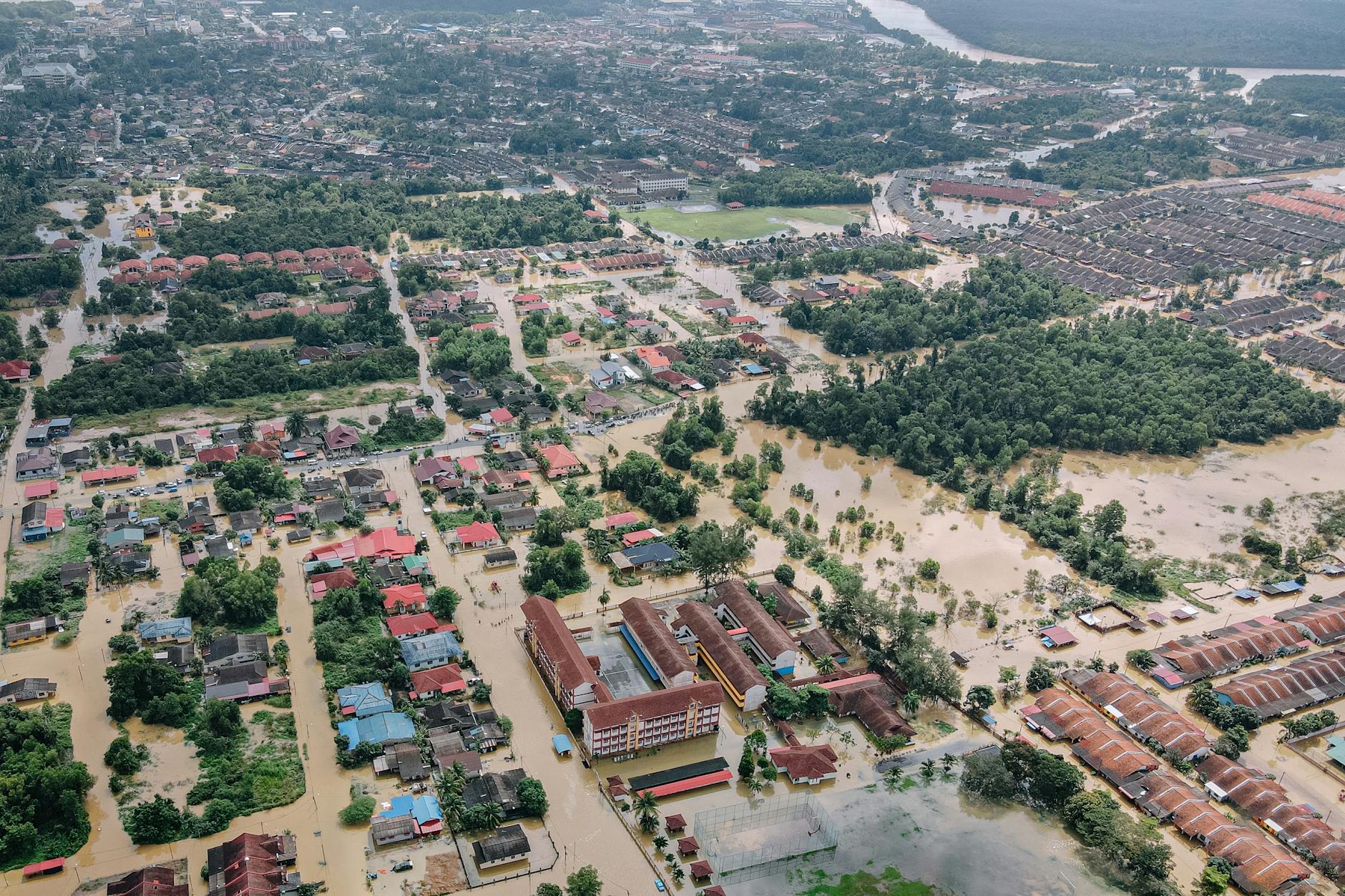
By embedding climate‑risk overlays into valuation models, the commercial real estate sector is undergoing a systemic shift that redefines capital allocation, regulatory oversight, and career pathways, positioning resilience as a central determinant of asset value.

The integration of climate‑risk metrics into CRE pricing is reshaping capital flows, career pathways, and regulatory hierarchies, signaling a structural pivot from location‑centric to resilience‑centric asset assessment.
—
Macro Shift in Valuation Paradigms
Global commercial property assets now exceed $33 trillion, yet UNEP FI estimates that roughly 30 % of that portfolio faces high climate exposure—a risk that translates into an average annual loss of $200 billion in depreciation and insurance claims [1]. The frequency of climate‑related loss events has risen 60 % since 2010, outpacing inflation and prompting institutional investors to embed resilience into underwriting standards.
In India, the 2024 weather calendar recorded 322 extreme‑event days, inflicting property damage valued at ₹12 trillion and displacing over 3 million urban residents [2]. The fiscal strain on municipal budgets and the surge in disaster‑relief financing have amplified demand for assets that can withstand flood, heat, and wind stress. Consequently, valuation models that ignore resilience now generate systematic mispricing, eroding the credibility of legacy appraisal firms and compelling a reallocation of capital toward climate‑smart portfolios.
—
Mechanics of Climate‑Adjusted Valuation

The core mechanism is a dual‑layer risk overlay that quantifies both physical exposure and transition vulnerability. Physical exposure is mapped through geospatial flood‑risk indices, heat‑stress projections, and wind‑load simulations, each calibrated against historical loss data. For instance, a 2022 Bloomberg‑NEF analysis linked a 1 °C rise in average summer temperature to a 3 % reduction in office lease premiums in South‑Asian megacities.
The EU Taxonomy and the Indian Real Estate (Regulation and Development) Act 2023 now require green‑building certification—LEED, GRIHA, or IGBC—as a prerequisite for financing.
You may also like
 News
NewsCrafting Purpose in Career Paths: Strategies for the Modern Workforce
Learn how to cultivate a meaningful career in a world that often feels devoid of purpose. This article explores actionable strategies for modern professionals.
Read More →Transition vulnerability captures regulatory, market, and technology shifts. The EU Taxonomy and the Indian Real Estate (Regulation and Development) Act 2023 now require green‑building certification—LEED, GRIHA, or IGBC—as a prerequisite for financing. Asset‑level scoring systems, such as the Climate‑Adjusted Net Operating Income (CANOI), deduct projected climate‑related operating cost escalations from traditional NOI, delivering a resilience‑adjusted cap rate.
These metrics have been institutionalized through scenario‑based stress testing. In 2021, the Bank of England’s Prudential Regulation Authority mandated that major lenders run 2‑degree Celsius and 4‑degree pathways for their CRE portfolios, mirroring the post‑2008 financial‑crisis shift toward macro‑prudential oversight. The outcome is a valuation framework that treats climate resilience as a material financial variable, not an ancillary ESG add‑on.
—
Systemic Ripple Effects Across the CRE Ecosystem
Design and Construction
Developers now embed adaptive design features—elevated podiums, flood‑resilient foundations, and passive cooling façades—into speculative projects to preserve marketability. The Hudson Yards redevelopment in New York, for example, incorporated a 2‑meter flood barrier after the 2021 Nor’easter, resulting in a 5 % premium on pre‑lease rates compared with neighboring non‑resilient towers.
Capital Allocation
Institutional investors such as BlackRock, the California Public Employees’ Retirement System (CalPERS), and Singapore’s GIC have reallocated $45 billion toward climate‑resilient CRE funds since 2020, citing risk‑adjusted return expectations. Impact‑focused capital—sourced from sovereign wealth funds and development banks—now stipulates minimum resilience scores as a condition for financing, creating an asymmetric advantage for projects that meet the threshold.
Regulatory Architecture
Regulators are codifying resilience metrics into building codes and disclosure mandates. The Indian Ministry of Housing released the National Resilience Framework in 2023, mandating flood‑risk mapping for all commercial projects exceeding ₹500 crore. Simultaneously, the U.S. Securities and Exchange Commission (SEC) proposed Climate‑Related Disclosures for Real Estate Holdings, requiring public REITs to report scenario‑based valuation adjustments. These policies elevate resilience from a voluntary practice to a compliance imperative, reshaping the institutional power balance toward climate‑focused oversight bodies.
Market Dynamics
Traditional valuation firms that rely solely on comparable sales and rent‑growth trends are experiencing valuation compression in high‑risk zones. Conversely, data‑analytics platforms—such as MSCI’s Real Estate Climate Index—are capturing market share by delivering granular, real‑time resilience scores. This shift mirrors the post‑2008 transition from static credit models to dynamic, stress‑tested frameworks, underscoring a systemic reorientation toward forward‑looking risk assessment.
This educational pipeline is creating a new elite of professionals whose capital is measured by proficiency in scenario modeling, geospatial analytics, and regulatory navigation.
You may also like
 Business
Why Economically Engaged Companies Radically Outperform Competitors
Discover how economically engaged companies outperform their competitors and what this means for your career trajectory.
Read More →—
Human Capital and Institutional Realignment

Emerging Career Capital
The demand for climate‑risk analysts, ESG data engineers, and resilient‑design consultants has surged 78 % in the CRE sector since 2020, according to a LinkedIn labor‑market report. Universities now offer specialized master’s programs—e.g., MIT’s “Real Estate and Climate Resilience”—that blend finance, engineering, and policy. This educational pipeline is creating a new elite of professionals whose capital is measured by proficiency in scenario modeling, geospatial analytics, and regulatory navigation.
Economic Mobility
Workers in construction and facilities management are transitioning toward green‑retrofit roles, which command 20‑30 % higher wages than traditional maintenance positions. However, the displacement risk remains for labor tied to legacy, non‑resilient assets. Policymakers are responding with skill‑upgrade vouchers and public‑private apprenticeship schemes, aiming to align workforce mobility with the resilience agenda.
Leadership and institutional power
Corporate leadership is increasingly judged on resilience governance. REIT CEOs now sit on board committees dedicated to climate risk, and fiduciaries are held accountable for integrating CANOI into shareholder reports. This governance shift redistributes power from property‑acquisition executives to risk‑management chiefs, altering internal hierarchies and influencing promotion pathways.
Structural Incentives
Insurance underwriters have introduced resilience discounts of up to 15 % for properties meeting Tier‑1 flood standards, reinforcing a feedback loop where capital, underwriting, and design converge on the same resilience criteria. The resulting price signaling accelerates the diffusion of climate‑smart assets, creating a virtuous cycle that redefines the asset‑valuation equilibrium.
—
Talent Reallocation – The proportion of CRE professionals holding climate‑risk certifications will exceed 40 %, reshaping the sector’s human‑capital composition and reinforcing a resilience‑centric leadership pipeline.
Projection: 2027‑2031 Trajectory
Over the next five years, three structural dynamics will dominate the CRE landscape:
You may also like
 Career Development
Jockey Club Report Emphasizes Vocational Training for Students
A recent report from the Jockey Club Multiple Pathways Initiative stresses the need for vocational education to enhance career options for students.
Read More →- Universal Adoption of Climate‑Adjusted Metrics – By 2028, 85 % of major REITs and sovereign wealth funds will report CANOI or equivalent, making resilience a baseline disclosure.
- Regulatory Convergence – The EU’s Sustainable Finance Disclosure Regulation (SFDR) and India’s National Resilience Framework will harmonize, enabling cross‑border capital flows toward certified resilient assets.
- Talent Reallocation – The proportion of CRE professionals holding climate‑risk certifications will exceed 40 %, reshaping the sector’s human‑capital composition and reinforcing a resilience‑centric leadership pipeline.
The net effect will be a reconfiguration of market valuation where assets in low‑risk zones command premium cap rates, while high‑risk holdings experience capital outflows and heightened financing costs. Investors who internalize these structural shifts early will capture asymmetric returns, while laggards risk systemic devaluation.
—
Key Structural Insights
- Climate‑adjusted valuation embeds physical and transition risk into asset pricing, converting resilience from a peripheral concern into a core financial variable.
- Institutional investors and regulators are co‑authoring a new compliance architecture that aligns capital incentives with measurable resilience outcomes.
- The emerging talent ecosystem, anchored in climate‑risk expertise, will become the primary conduit for translating systemic resilience mandates into market‑ready projects.