No products in the cart.

Creative Confidence in a Buyer’s Market: How the 2025 Art World Report Redefines Career Capital

The 2025 Art World Report reveals a structural pivot from gallery‑driven patronage to platform‑mediated distribution, reshaping how artists build career capital and influencing broader economic mobility.

The 2025 Art World Report uncovers a structural shift from gallery‑centric patronage to digitally mediated sales, reshaping the pathways through which artists accumulate career capital and influencing broader economic mobility.
Macro Context: Market Contraction and the Rise of Cultural Economy
The spring 2025 Art Market Update flagged a decisive turn toward a buyer’s market, driven by persistent inflation (average 4.2% YoY) and a delayed easing of interest rates that curtailed discretionary spending on high‑value assets [1]. Auction turnover rebounded modestly—$68 billion versus $63 billion in 2024—but primary market activity contracted, with mid‑tier galleries reporting a 22% decline in sales volume [3].
Concurrently, the Art Basel & UBS Report recorded online sales of $12.4 billion, a 31% increase over 2024 and the first time digital channels accounted for more than one‑quarter of total market turnover [2]. This digital surge is not merely a sales channel; it reflects a broader policy emphasis on culture as an engine of economic growth. A recent Nature‑indexed study linked cultural‑creative output to a 0.4‑percentage‑point lift in GDP per capita across OECD nations, prompting governments to allocate an additional $4.6 billion to arts education and skills‑building programs in 2025 [4].
Together, these forces constitute a structural realignment: the art ecosystem is transitioning from a physically anchored, dealer‑mediated model to a hybrid system where algorithmic discovery and platform governance shape artistic trajectories. The implications for career capital—defined as the cumulative assets of reputation, networks, and market validation that enable upward mobility—are profound.
Core Mechanism: Buyer’s Market Dynamics and Digital Disintermediation
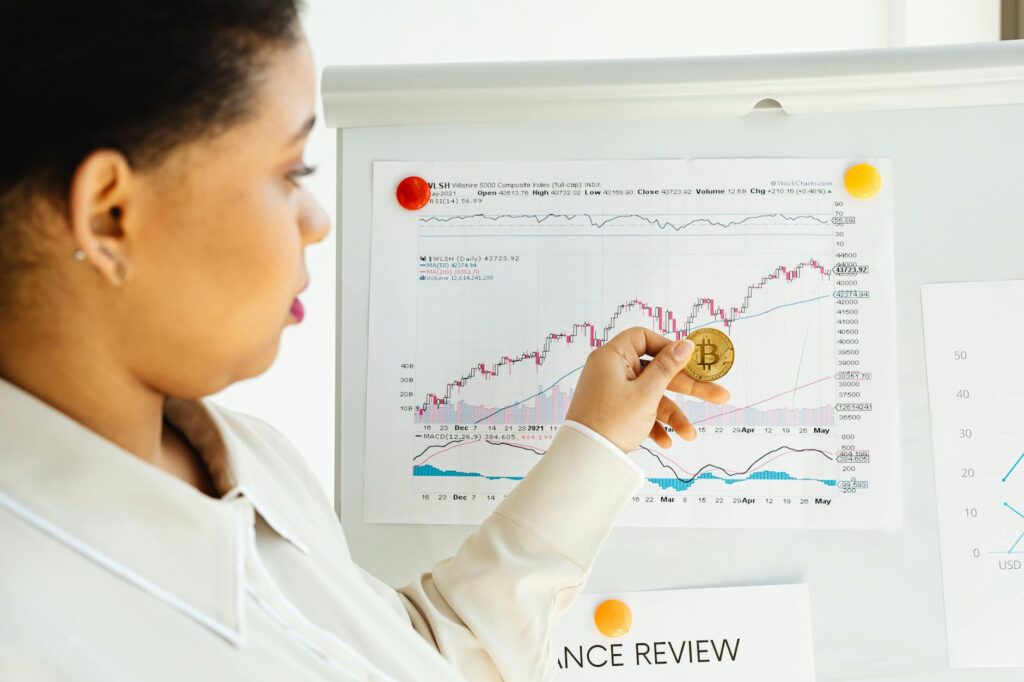
Declining Gallery Revenues
The buyer’s market has compressed primary market margins. Data from the 2025 Art Market Recap show that average gallery commissions fell from 45% to 38% of sale price, while the median price of works sold through galleries dropped 18% year‑over‑year [3]. The contraction forced 47 mid‑tier galleries in Europe and North America to shutter between January and September 2025, a closure rate unseen since the post‑2008 recession period.
The Museum of Modern Art (MoMA) announced a $45 million “Digital Futures” fund in March 2025 to acquire blockchain‑verified works, signaling an institutional endorsement of the new valuation regime [1].
Platform‑Centric Distribution
You may also like
 Business Insights
Navigating Business Trends in 2026: Strategies for Success
Discover the essential business trends shaping 2026 and actionable strategies to navigate challenges and seize opportunities.
Read More →Digital platforms—ranging from established auction house marketplaces to decentralized NFT marketplaces—have supplanted traditional gatekeepers. The Art Basel report notes that 57% of artists who sold more than $100,000 in 2025 cited platform analytics as a primary driver of buyer acquisition, compared with 19% in 2022 [2]. This shift is underpinned by algorithmic recommendation engines that prioritize engagement metrics (likes, shares, watch time) over curatorial endorsement, effectively re‑coding the “quality signal” that historically derived from gallery representation.
Institutional Reorientation
Major institutions have responded by integrating digital strategies into their acquisition and exhibition policies. The Museum of Modern Art (MoMA) announced a $45 million “Digital Futures” fund in March 2025 to acquire blockchain‑verified works, signaling an institutional endorsement of the new valuation regime [1]. Such leadership decisions recalibrate the power balance between legacy institutions and emergent digital intermediaries, redefining the pathways through which artists accrue institutional legitimacy.
Systemic Implications: Institutional Realignment and Regional Disparities
Recalibrated Power Structures
The erosion of gallery dominance redistributes bargaining power toward platforms and collectors who can leverage data analytics. Auction houses, already wielding significant market influence, have accelerated their digital integration, launching proprietary online viewing rooms that capture 42% of their 2025 sales volume [2]. This consolidation intensifies the asymmetry between platform‑enabled artists and those lacking digital fluency, creating a bifurcated system where career capital is increasingly contingent on algorithmic visibility.
Geographic Re‑distribution
Digital channels have lowered entry barriers for artists outside traditional art capitals. A case study of the Detroit‑based collective “Pixel Pulse” illustrates this trend: leveraging an NFT marketplace, the group generated $3.2 million in sales within six months, outpacing the average primary market revenue of mid‑tier galleries in the same period [3]. Yet, the same data reveal a “digital divide”—artists in regions with limited broadband infrastructure experience a 27% lower probability of achieving platform visibility [4]. Consequently, while digitalization expands the geographic footprint of the market, it also entrenches existing infrastructural inequities.
Labor Market Effects
The buyer’s market compresses artists’ income streams, prompting a shift toward portfolio careers. The 2025 Art Market Update reports that 62% of surveyed artists supplemented their practice with teaching, consulting, or corporate creative roles, up from 48% in 2022 [1]. This diversification reflects a structural necessity: creative confidence now hinges on the ability to translate artistic skills into broader economic mobility, rather than relying solely on sales of artworks.
Human Capital Impact: Redistribution of Creative Confidence

Winners: Platform‑Savvy Creators and Institutional Leaders
Artists who master platform analytics and community building accrue disproportionate career capital. The rise of “creator‑entrepreneurs” such as digital sculptor Maya Lin (not to be confused with the architect) demonstrates this shift: by integrating AI‑generated motifs and maintaining a 4.7‑star rating on a leading NFT marketplace, Lin secured a $7 million private collection acquisition, translating digital metrics into institutional validation [2].
This diversification reflects a structural necessity: creative confidence now hinges on the ability to translate artistic skills into broader economic mobility, rather than relying solely on sales of artworks.
You may also like
 Digital Innovation
LG Unveils ‘Aerominum’ for Next-Gen Ultralight Laptops
LG has announced its new ultralight Gram laptops featuring a proprietary material called 'Aerominum', designed for enhanced portability and durability.
Read More →Institutional leaders who champion digital integration also gain strategic capital. Museum directors who successfully navigate the hybrid model—balancing physical exhibitions with virtual programming—enhance their organizations’ relevance and secure funding streams tied to technology grants, as evidenced by the $12 million “Cultural Tech” grant awarded to the Tate Modern in late 2025 [1].
Losers: Traditional Gatekeepers and Marginalized Creators
Mid‑tier galleries, especially those lacking robust e‑commerce capabilities, face existential threats. The closure of London’s “Grey Matter Gallery” in August 2025, after a 15‑year run, underscores the vulnerability of institutions that cannot pivot to digital sales models [3].
Artists from underrepresented backgrounds who lack access to high‑speed internet or capital for minting NFTs encounter a systemic barrier to entry. A survey by the National Endowment for the Arts found that 38% of Black and Latino artists reported “insufficient digital resources” as a primary obstacle to market participation in 2025, a figure that has remained static since 2020 despite increased public funding [4].
Implications for economic mobility
The reconfiguration of career capital alters the mobility ladder. Where previously gallery representation served as a relatively meritocratic gateway, the new model privileges digital literacy and network effects, creating asymmetric pathways to wealth accumulation. This shift risks entrenching socioeconomic stratification within the creative sector unless corrective policies—such as subsidized broadband for artist studios and platform‑level transparency mandates—are enacted.
Outlook: Structural Trajectory Through 2029
Projecting forward, three interlocking trends will shape the art ecosystem’s structural trajectory.
Implications for economic mobility The reconfiguration of career capital alters the mobility ladder.
- Platform Consolidation and Data Governance – By 2027, the top five digital marketplaces are expected to control 68% of online art sales, prompting antitrust scrutiny and potential regulatory frameworks that could mandate algorithmic transparency [2].
- Institutional Hybridization – Museums and galleries will increasingly adopt “phygital” models, allocating up to 30% of exhibition budgets to virtual reality installations and digital acquisition funds by 2029, thereby redefining the institutional definition of legitimacy [1].
- Policy‑Driven Equity Interventions – In response to documented disparities, the U.S. Department of Education plans a $250 million “Creative Connectivity” grant program targeting underserved artist communities, aiming to raise digital participation rates by 15% over the next five years [4].
If these dynamics unfold as projected, career capital will become a composite of traditional reputation, digital metrics, and policy‑enabled resources. Artists who can navigate this multidimensional landscape will command asymmetric leverage, while those excluded from digital infrastructure will face a widening confidence gap. The structural shift thus reframes artistic development from a singular focus on aesthetic mastery to a systemic negotiation of technology, institutional power, and socioeconomic policy.
You may also like
 Career Development
Germany’s Record €512 Billion Debt Sales: What It Means for Your Career
Germany's decision to lift debt sales to €512 billion will reshape job markets and career opportunities. Discover the implications for your career.
Read More →Key Structural Insights
[Insight 1]: The buyer’s market and digital disintermediation have redefined career capital, making algorithmic visibility a core asset for artistic success.
[Insight 2]: Institutional power is migrating from legacy galleries to platform‑centric ecosystems, amplifying asymmetries in economic mobility for creators.
- [Insight 3]: Policy interventions targeting digital equity are essential to prevent a systemic confidence gap that could entrench socioeconomic stratification in the creative sector.