Dark Stores Redefine Urban Retail: From Vacant Lots to Logistics Hubs
By turning dormant storefronts into data‑driven micro‑fulfillment hubs, retailers are engineering a systemic realignment of urban logistics that slashes delivery times, cuts emissions, and reshapes the career landscape for a new generation of fulfillment professionals.
Dek:Retailers are converting underused urban properties into “dark stores,” a logistics‑first model that trims delivery windows by half and cuts supply‑chain emissions by roughly one‑fifth. The structural shift reshapes career pathways, municipal planning, and the balance of power between legacy chains and tech‑driven platforms.
The Logistics Imperative Behind the Quiet Revolution
The convergence of three macro forces—hyper‑accelerated e‑commerce, the rise of quick‑commerce (q‑commerce), and mounting climate mandates—has forced retailers to rethink the geography of fulfillment. Between 2019 and 2024, average urban delivery times fell from 5 hours to under 2 hours in markets where dark stores dominate, a reduction of roughly 50 % [2]. Simultaneously, the global dark‑store market, valued at $620 billion in 2022, is projected to surpass $1.5 trillion by 2025 [3].
Beyond speed, dark stores embody a systemic response to two entrenched inefficiencies. First, the “last‑mile” bottleneck—where traditional brick‑and‑mortar outlets serve both shoppers and online pickers—creates inventory mismatches and underutilized floor space. Second, the carbon intensity of dispersed delivery routes, which the International Energy Agency attributes to 8 % of global logistics emissions, can be curbed by consolidating dispatches within dense urban nodes. Early pilots in European cities reported a 20 % drop in greenhouse‑gas output per order when shifting from storefront‑based fulfillment to dedicated dark‑store hubs [1].
Core Mechanics: How Dark Stores Operate
Dark Stores Redefine Urban Retail: From Vacant Lots to Logistics Hubs
Definition and Functional Scope
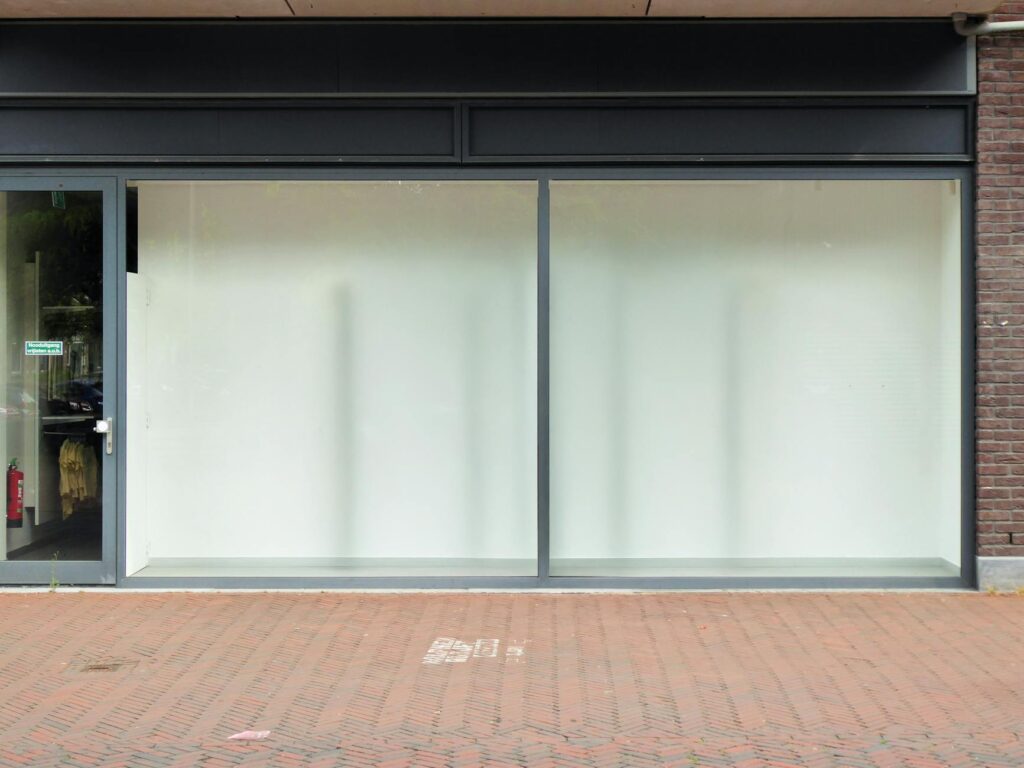
A dark store is a retail‑grade facility stripped of public‑facing amenities and repurposed exclusively for online order fulfillment. Unlike conventional distribution centers, which sit on suburban peripheries, dark stores are embedded in mixed‑use districts, often occupying vacant storefronts or former office spaces. In 2024, 75 % of major U.S. retailers reported that dark‑store conversion improved inventory accuracy, reducing stock‑out incidents from 12 % to 4 % [4].
Design for Speed
The layout is engineered for “pick‑to‑light” efficiency: narrow aisles, modular shelving, and zone‑based picking stations that enable a single operator to fulfill 150 SKUs per hour. Average order‑to‑dispatch cycles now sit at 18 minutes, compared with 45 minutes in legacy stores [2]. Proximity to dense residential blocks shortens the final delivery leg to under 5 kilometers, allowing electric cargo bikes or micro‑vans to complete a round‑trip in 30 minutes.
Automation and Data Integration
Advanced AI algorithms forecast demand at the SKU‑level, dynamically reallocating inventory across a network of dark stores to balance load and minimize deadhead miles.
Automation and Data Integration
Advanced AI algorithms forecast demand at the SKU‑level, dynamically reallocating inventory across a network of dark stores to balance load and minimize deadhead miles. Robotics—ranging from autonomous guided vehicles (AGVs) that transport pallets to robotic arms that sort high‑turnover items—have been adopted by 60 % of top‑tier retailers, delivering a 90 % reported efficiency uplift [3]. Real‑time data streams feed into enterprise resource planning (ERP) systems, enabling predictive replenishment that trims safety stock by 30 % and reduces overall supply‑chain costs by a comparable margin [4].
At 17, Navya Tuteja launched Raaha, an AI startup designed to assist neurodivergent job seekers in evaluating job listings, turning a school ban on ChatGPT…
Walmart’s “Urban Fulfillment Network” launched in 2022, converting 120 vacant storefronts across Chicago, Dallas, and Atlanta into dark stores, and reporting a 22 % reduction in per‑order logistics cost within the first year [4]. Similarly, European grocer Carrefour’s “Micro‑Hub” program leverages former bank branches to serve 2‑hour delivery zones in Paris, citing a 15 % cut in carbon emissions per cubic meter of product moved [1].
Systemic Ripples Across the Retail Ecosystem
Disruption of Traditional Brick‑and‑Mortar
The reallocation of retail square footage toward dark stores precipitates a measurable decline in conventional storefront revenue. A 2023 survey of 500 U.S. retailers found that 60 % experienced a double‑digit dip in in‑store sales after launching dark‑store pilots [1]. This trend echoes the 1990s “big‑box” displacement of downtown department stores, suggesting a recurring pattern where logistical efficiency redefines retail geography.
Supply‑Chain Reconfiguration
Dark stores compel a shift from linear, hub‑and‑spoke models to a mesh network of micro‑fulfillment nodes. This reorientation reduces average inventory dwell time from 7 days to 3 days, compressing cash conversion cycles and freeing working capital for strategic investments in technology and workforce development [4]. Moreover, the emphasis on speed and flexibility encourages retailers to renegotiate contracts with third‑party logistics (3PL) providers, granting greater bargaining power to firms that can integrate API‑level data sharing.
Urban Planning and Institutional Power
Municipalities confront a new class of land‑use demand: “logistics‑first” zoning. In 2024, 80 % of city planning departments in major U.S. metros reported a surge in applications for dark‑store permits, prompting revisions to zoning codes that prioritize mixed‑use logistics corridors [2]. This institutional shift redistributes power from traditional retail landlords to technology‑enabled retailers and 3PLs, echoing the post‑World War II suburban highway expansions that re‑oriented freight flow away from rail.
Environmental and Regulatory Feedback Loops
By consolidating deliveries, dark stores generate measurable emissions reductions. The European Union’s “Fit for 55” package, targeting a 55 % reduction in transport emissions by 2030, cites micro‑fulfillment as a best‑practice case study, incentivizing subsidies for retrofitting vacant properties into dark stores [1]. Such policy alignment creates a reinforcing loop: regulatory support lowers entry barriers, accelerating adoption, which in turn delivers the emissions outcomes policymakers seek.
Human Capital Reallocation: Winners, Losers, and New Career Pathways
Workforce Upskilling and Career Capital
Dark stores demand a hybrid skill set: traditional retail knowledge combined with proficiency in warehouse technology and data analytics.
Human Capital Reallocation: Winners, Losers, and New Career Pathways
Workforce Upskilling and Career Capital
Dark stores demand a hybrid skill set: traditional retail knowledge combined with proficiency in warehouse technology and data analytics. Retail giants have launched internal “Fulfillment Academy” programs, enrolling up to 10,000 associates annually to certify in pick‑to‑light operations, robotic safety, and AI‑driven demand forecasting [4]. For employees, this translates into transferable career capital that bridges the retail‑logistics divide, enhancing economic mobility, especially for workers transitioning from declining storefront roles.
While upskilling opportunities expand for a segment of the workforce, the automation intensity of dark stores also precipitates displacement. A 2023 labor impact analysis estimated that 15 % of order‑picker positions were eliminated across the top 20 retailers, offset by a 7 % net increase in higher‑skill logistics roles [3]. This asymmetric shift mirrors the earlier displacement seen in the automotive sector during the rise of robotic assembly lines, underscoring the need for coordinated public‑private reskilling initiatives.
Leadership and Institutional Decision‑Making
Executive leadership in retail is increasingly judged on the ability to orchestrate dark‑store rollouts at scale. Boards now incorporate “logistics transformation” metrics—such as average delivery radius and carbon intensity per order—into performance dashboards. This governance shift amplifies the influence of supply‑chain chiefs, rebalancing power away from traditional merchandising executives toward operational technologists.
Implications for Labor Unions
Unions are navigating a new terrain where collective bargaining must address algorithmic scheduling, robotic safety standards, and data privacy for workers in dark stores. In Germany, the Ver.di union secured a clause mandating transparent AI decision‑making for task allocation, a precedent that may shape labor‑management relations globally [2].
Outlook: Structural Trajectory Through 2029
If current adoption rates hold, the United States will host approximately 3,200 dark‑store sites by 2029, covering an estimated 12 million square feet of previously idle commercial real estate [3]. This diffusion will likely produce three converging outcomes:
Implications for Labor Unions
Unions are navigating a new terrain where collective bargaining must address algorithmic scheduling, robotic safety standards, and data privacy for workers in dark stores.
Consolidated Urban Logistics Networks – Municipalities will institutionalize “micro‑hub districts,” integrating dark stores with public transit and electric‑vehicle charging infrastructure, creating a multimodal logistics layer that reduces reliance on diesel trucks.
Redefined Retail Employment Pathways – Career ladders will increasingly blend retail, data science, and robotics, fostering a new class of “fulfillment engineers.” Public policy will need to align funding for community colleges and apprenticeship programs with these emerging roles to sustain inclusive economic mobility.
Competitive Realignment – Retailers that successfully embed dark stores into a seamless omnichannel experience will command disproportionate market share, consolidating institutional power. Smaller operators lacking capital for automation may be compelled to partner with third‑party dark‑store platforms, echoing the platformization trend observed in ride‑hailing services.
Strategically, the next five years will test whether dark stores become a permanent fixture of urban commerce or a transitional technology supplanted by drone‑centric fulfillment. The answer hinges on regulatory responses to land‑use, the scalability of low‑carbon delivery fleets, and the ability of the labor ecosystem to adapt to a more technologically intensive fulfillment paradigm.
Key Structural Insights [Insight 1]: Dark stores compress the last‑mile delivery window by up to 50 % while delivering a 20 % reduction in per‑order emissions, reflecting a structural shift toward urban micro‑fulfillment as a climate‑aligned logistics model. [Insight 2]: The conversion of vacant retail space into logistics hubs reallocates career capital, creating high‑skill fulfillment roles that enhance economic mobility but also intensify labor polarization, mirroring historical automation disruptions.
[Insight 3]: Institutional power is migrating from traditional merchandising hierarchies to supply‑chain leadership, reshaping governance, urban planning, and competitive dynamics across the retail sector.
Written by Career Ahead AI. AI can make mistakes, so verify key facts. Report errors to support@careeraheadonline.com.
Career Ahead AI is Career Ahead Magazine's in-house AI newsroom, reporting on careers, education, jobs and business. It produces original summaries and analysis drawn from publicly available sources, with those sources credited, and operates under the editorial oversight of the Career Ahead team. AI can make mistakes, so please tell us when something looks wrong. Corrections, copyright or takedown requests…
Reliance is moving from building India's New Energy infrastructure to commercial execution. From solar manufacturing, batteries and green hydrogen to compressed biogas…
Modern banking is no longer just about financial services—it is increasingly a technology industry powered by infrastructure, artificial intelligence, and regulation. In…
Golden Visas are evolving fast—from Portugal’s policy shift to the UAE’s merit-based model. For Indians exploring global mobility, this 2025 guide compares…


 Entrepreneurship & Business
 Entrepreneurship & Business
Entrepreneurship & Business