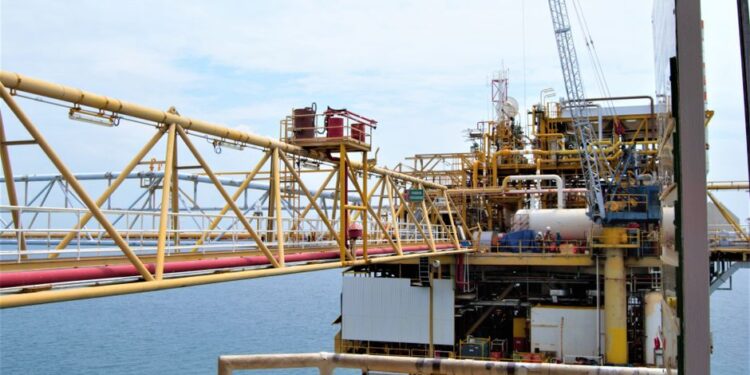
The Indian government has raised the price ceiling for deepwater gas to $9.89 per million British thermal units (MMBtu), effective from October 1, 2026, to encourage investment in offshore gas fields.
The Indian government has raised the price ceiling for deepwater gas to $9.89 per million British thermal units (MMBtu). This change is effective from October 1, 2026. The increase aims to attract investment in offshore gas fields, especially in the Krishna-Godavari basin. This area includes the important KG-D6 block operated by Reliance Industries and BP. The previous ceiling was $8.90 per MMBtu.
This adjustment boosts potential profits for producers. It also shows a shift in government policy to encourage more exploration and production of natural gas. The new ceiling will last until March 31, 2027, giving a clearer investment framework. The Hindu reported that this decision is expected to spark interest in deepwater projects. These projects have faced high operational costs and technical challenges in the past.
Implications for Investment Strategies in Gas Exploration
The increase in the deepwater gas price ceiling will likely impact investment decisions in the gas exploration sector. Companies like Reliance Industries, which operate in the KG-D6 block, can expect higher revenues. This could lead to more investment in exploration and production activities. The higher price is crucial due to the technical challenges and costs of deepwater drilling, which are usually higher than onshore operations. According to analysis from Career Ahead, this price increase may cause gas exploration companies to reassess project viability. They might allocate more capital to deepwater gas projects.
Additionally, the new pricing structure may attract new players to the market. It makes previously marginal projects more appealing. Investors will likely see this as a positive sign, indicating a better regulatory environment for deepwater gas production. The price difference between deepwater projects and the APM (Administered Price Mechanism) cap for gas from legacy fields, which remains at $7 per MMBtu, could shift investment focus. Companies may prioritize deepwater projects over traditional onshore fields, as the potential for higher returns becomes clearer.
The Hindu noted that this could lead to innovations in drilling techniques and resource management, which are vital for maximizing output in tough offshore conditions.
California has enacted new laws to protect workers from AI-related job displacement, prohibiting employers from solely relying on AI for layoffs and mandating transparency in…
With this new pricing environment, companies in deepwater gas exploration must review their strategic plans. The increased ceiling offers a chance for better profits but also requires careful analysis of operational costs and market dynamics. Firms may invest in advanced technologies and methods to improve production efficiency and cut costs in deepwater projects. The Hindu noted that this could lead to innovations in drilling techniques and resource management, which are vital for maximizing output in tough offshore conditions.
Wider Economic and Policy Implications
The decision to raise the deepwater gas price ceiling is part of a larger government strategy. This strategy aims to enhance energy security and support economic growth. Natural gas is essential for various sectors, including power generation and fertilizer production. Thus, this policy change is significant for the overall economy. As the government seeks to boost domestic gas production, the new pricing policy may lead to a more stable energy supply and reduce reliance on imports. This aligns with India’s long-term energy goals of increasing domestic production to meet growing demand.
Moreover, this policy may indicate a long-term commitment to developing India’s hydrocarbon resources, especially in challenging offshore areas. By providing a clearer pricing framework, the government aims to attract both domestic and foreign investments in the energy sector. This could foster innovation and technological advancements, enhancing India’s energy competitiveness. The BBC noted that such changes could create a more dynamic market, as companies respond to new price signals and seek partnerships with public entities to develop new gas reserves.
However, the impact of this policy change may not be entirely positive. The price gap between deepwater and legacy fields could create tension among stakeholders, especially those invested in traditional gas production. The long-term effects of this pricing strategy will depend on how well the government manages these competing interests while promoting a strong investment climate. Energy sector stakeholders must watch how these changes unfold in the coming months. The government must balance the need for increased domestic production with environmental concerns.
The new pricing structure for deepwater gas raises questions about the future of India’s energy policy. As the government navigates the complexities of energy independence, the effectiveness of this approach will be crucial. Companies will need to stay agile, adapting to the new environment while seeking growth and innovation opportunities. The changes in pricing policy are expected to influence investment patterns and overall market dynamics in the natural gas sector, potentially reshaping the landscape for years.
The anticipated tightening of monetary policy is particularly pertinent for financial analysts and corporate treasurers who must adapt their strategies to the evolving economic landscape.
Companies will need to stay agile, adapting to the new environment while seeking growth and innovation opportunities.
Frequently Asked Questions
How will the new gas price ceiling affect energy market trends?
The increase in the deepwater gas price ceiling is likely to create a better investment climate. This may lead to more exploration and production activities in India. It could also affect supply dynamics in the natural gas market as companies respond to the new pricing signals.
What are the implications of the APM gas cap for investors?
The APM gas cap staying at $7 per MMBtu for legacy fields may shift investment towards deepwater projects. Companies may seek to maximize their returns, creating a competitive imbalance in the market. This could prompt discussions among stakeholders about the future of legacy gas production.
What should deepwater gas exploration companies consider in light of the new price ceiling?
Deepwater gas exploration companies should reassess their investment strategies. They need to evaluate the profitability of ongoing and planned projects under the new pricing regime. The increased ceiling offers a chance for better returns, but companies must also consider the operational challenges of deepwater drilling.



 Government & Policy
Government & Policy