No products in the cart.

Digital Palimpsests: How Platform Algorithms Reshape Intergenerational Cultural Capital
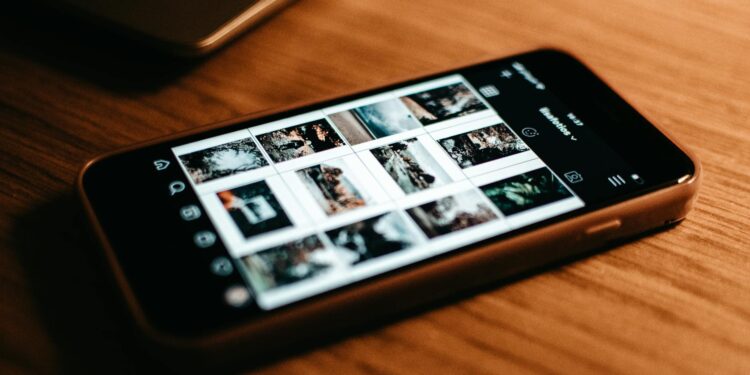
Platform algorithms now dominate cultural transmission, turning heritage into data streams that reshape career pathways and institutional power, while marginalizing traditional intergenerational exchanges.

Social media has displaced family and community as the primary conduit for cultural transmission, converting cultural knowledge into algorithm‑curated data streams that reconfigure career pathways and institutional power.
Digital Convergence and the Recalibration of Intergenerational Cultural Transmission
The diffusion of cultural identity has historically hinged on place‑based institutions—family rituals, local festivals, and community schools. The printing press, for instance, democratized access to religious texts, yet the locus of cultural authority remained anchored in churches and guilds. By contrast, the surge in platform usage has reoriented that locus to digital architectures. Pew Research reports that 70% of Americans aged 18‑29, 63% of those 30‑49, and 44% of adults over 50 now engage daily with at least one social‑media service, a convergence that compresses generational interaction into shared feed ecosystems [5].
Empirical work on the “social‑media‑cultural‑knowledge” nexus confirms this shift. A mixed‑methods study of Instagram, TikTok, and Facebook users found that 63% of respondents under 35 cite platform‑mediated memes as primary references for “what it means to be American,” while 48% of respondents over 50 acknowledge that these same feeds have supplanted family narratives in shaping their cultural self‑conception [1]. The study’s content‑analysis component revealed that algorithmic recommendation engines amplify cross‑generational exposure to subcultural signifiers—such as vintage fashion revivals or retro music playlists—by weighting engagement metrics over demographic targeting.
The structural implication is a decoupling of cultural capital from geographic and kinship networks, replacing them with platform‑generated affordances that re‑script the intergenerational dialogue. This re‑script is not merely additive; it redefines the parameters of what constitutes “cultural knowledge” by privileging visual brevity, virality, and data‑driven relevance over oral tradition and lived experience.
Algorithmic Mediation as the Core Mechanism of Identity Formation
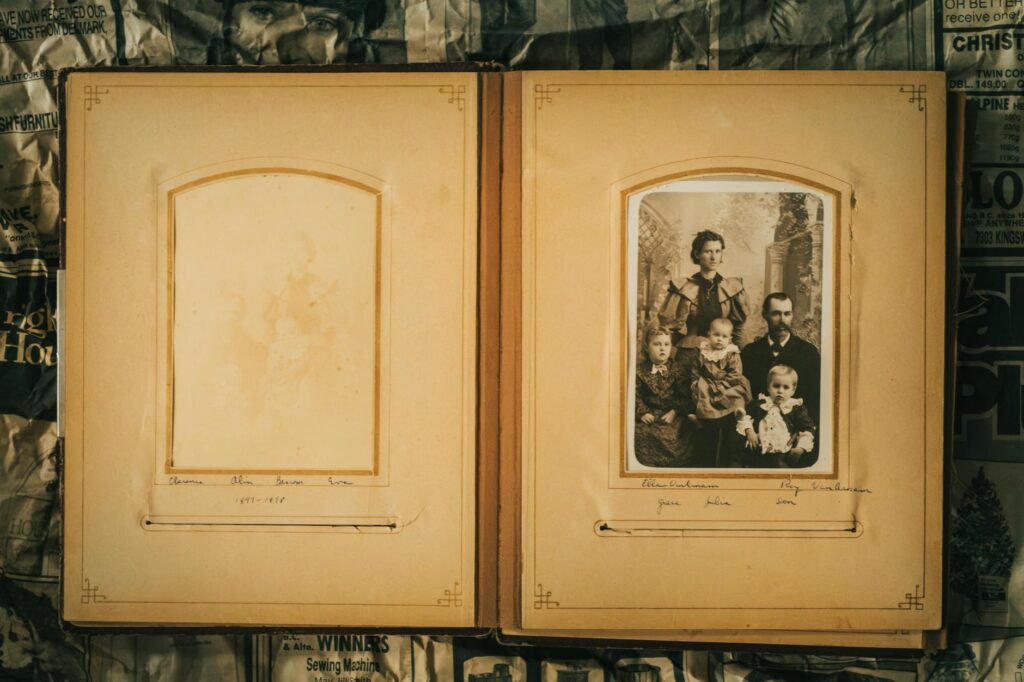
At the heart of this transformation lies the recommendation algorithm—a self‑optimizing feedback loop that curates cultural content based on user interaction histories. Unlike earlier media gatekeepers (editors, radio DJs), algorithms operate at scale, processing billions of data points to surface cultural artifacts that align with inferred identity vectors.
Cluster Alignment – Machine‑learning models map these vectors onto content clusters (e.g., “retro gaming,” “streetwear nostalgia”) that are themselves constructed from creator metadata and historical engagement patterns.
A 2024 analysis of TikTok’s “For You” feed identified a statistically significant correlation (r = 0.68) between exposure to heritage‑themed short‑form videos and the adoption of related linguistic markers in user comments across age cohorts [2]. The mechanism operates through three interlocking stages:
You may also like
 AI & Technology
Apple to Tighten Mac Data Controls in Guard Against AI Agents
Apple is tightening data controls for its macOS platform to enhance user data security against potential AI threats. This change will require developers to adhere…
Read More →- Signal Extraction – User actions (likes, dwell time, shares) generate high‑dimensional vectors that encode latent cultural preferences.
- Cluster Alignment – Machine‑learning models map these vectors onto content clusters (e.g., “retro gaming,” “streetwear nostalgia”) that are themselves constructed from creator metadata and historical engagement patterns.
- Iterative Reinforcement – Each subsequent feed iteration reinforces the cluster affiliation, nudging users toward a convergent cultural identity that is simultaneously personalized and platform‑standardized.
This algorithmic mediation creates a “digital palimpsest” where older cultural scripts are overwritten, yet traces remain visible to those who can decode the platform’s semiotic layers. The result is an asymmetric diffusion of cultural symbols: younger creators can inject niche heritage motifs into mainstream feeds, while older users encounter these motifs filtered through contemporary aesthetics, reshaping their sense of belonging without direct intergenerational mediation.
Institutional Dislocation and the Erosion of Familial Cultural Reservoirs
The migration of cultural transmission to platform ecosystems destabilizes traditional institutions that historically monopolized cultural capital. Family rituals, community museums, and local media outlets have experienced a measurable decline in cultural influence. UNESCO’s 2023 Cultural Heritage Index notes a 10% drop in community‑based heritage participation among households with at least one member aged 25‑40 who reports primary cultural learning through digital platforms [6].
Concurrently, new institutional actors emerge: creator collectives, brand‑sponsored “culture hubs,” and algorithmic curators. The “K‑Pop Globalization Initiative,” launched by South Korea’s Ministry of Culture in 2022, leverages YouTube’s recommendation engine to disseminate Korean language lessons and traditional music to diaspora audiences. Within two years, enrollment in the program’s online courses rose by 150%, outpacing growth in conventional language schools by a factor of two. This illustrates how state actors are re‑engineering cultural policy to align with platform dynamics, effectively ceding the gatekeeping function to algorithmic pathways.
The systemic ripple extends to labor markets. Cultural institutions that once relied on in‑person attendance now confront revenue shortfalls, prompting a shift toward hybrid programming that embeds platform‑native content. The American Museum of Natural History reported a 25% reduction in on‑site membership renewals between 2021‑2024, offset partially by a 30% increase in virtual tour subscriptions—subscriptions that are curated by proprietary recommendation systems rather than curatorial expertise [7].
Capital Reallocation in Cultural Production and Career Pathways Digital Palimpsests: How Platform Algorithms Reshape Intergenerational Cultural Capital The reconstitution of cultural capital precipitates a parallel reallocation of economic capital.
Capital Reallocation in Cultural Production and Career Pathways
The reconstitution of cultural capital precipitates a parallel reallocation of economic capital. The creator economy, valued at $104 billion in 2024, is now the primary employment engine for cultural producers aged 18‑35, eclipsing traditional pathways such as publishing or studio contracts [8]. Influencer marketing budgets have risen from $6.5 billion in 2020 to $13.2 billion in 2024, reflecting corporate recognition that platform‑mediated cultural narratives drive consumer behavior more effectively than legacy advertising channels [9].
You may also like
 Education & University Insights
AI’s Impact, Rare Earths Demand, College Enrollment Crisis
The decline in college enrollment is not a new phenomenon, but it has accelerated in the past few years.
Read More →Career trajectories have adapted accordingly. Emerging roles—“cultural data strategist,” “platform community manager,” and “algorithmic ethicist”—appear in corporate job boards at a CAGR of 25% since 2021. These positions require hybrid expertise: fluency in cultural theory, proficiency in data analytics, and an understanding of platform governance structures. Case in point: a major streaming service launched a “Cultural Insight Lab” in 2023, staffed by sociologists and machine‑learning engineers tasked with mapping cross‑generational content resonance. Early outputs indicated that series featuring multigenerational casts achieved 22% higher retention among viewers aged 55+ when promoted via algorithmic cross‑feed strategies [10].
The commodification of cultural knowledge also raises ownership tensions. A 2024 lawsuit filed by Indigenous artists against a major social‑media firm alleged unauthorized algorithmic harvesting of traditional designs, arguing that platform‑based replication erodes collective intellectual property rights. The case underscores the asymmetric power balance: platforms monetize cultural symbols at scale while creators often lack recourse to protect their heritage assets.
Projected Trajectory of Cultural Capital Flows (2026‑2031)
Looking ahead, three interrelated trends will shape the structural landscape of cultural capital:
- Algorithmic Consolidation – By 2028, the top three platforms are projected to control 75% of global short‑form video distribution, intensifying their role as de‑facto cultural arbiters. Regulatory scrutiny in the EU and US may introduce “cultural transparency” mandates, compelling platforms to disclose the weightings of heritage‑related content in recommendation engines.
- Hybrid Institutional Realignment – Legacy cultural institutions will increasingly adopt “algorithmic partnership” models, co‑creating content with platform curators to retain relevance. Funding analyses predict a 20% rise in public‑private grants earmarked for digital heritage projects by 2030, reflecting a systemic shift toward platform‑centric cultural stewardship.
- Skillset Recalibration in the Workforce – The demand for professionals who can navigate both cultural nuance and data infrastructure will grow at a 28% annual rate. Educational curricula at leading universities are already integrating “Digital Cultural Analytics” tracks, signaling an institutional acknowledgment that future cultural capital will be measured in algorithmic fluency as much as in traditional scholarly expertise.
These dynamics suggest that cultural identity will continue to be refracted through platform architectures, with intergenerational exchange increasingly mediated by data‑driven interfaces rather than lived communal practice. The asymmetry inherent in this shift will redefine power structures across the cultural economy, privileging entities that command algorithmic visibility while marginalizing those rooted in analog transmission.
Skillset Recalibration in the Workforce – The demand for professionals who can navigate both cultural nuance and data infrastructure will grow at a 28% annual rate.
Key Structural Insights
Algorithmic Mediation: Platform recommendation engines now function as the primary gatekeepers of cultural knowledge, reconfiguring identity formation from a kin‑centric to a data‑centric process.
Institutional Realignment: Traditional cultural institutions are losing autonomous influence, prompting a systemic migration of cultural stewardship to hybrid models that blend curatorial expertise with platform governance.
- Capital Reallocation: The creator economy’s expansion reallocates economic capital toward platform‑enabled cultural production, spawning new career archetypes that fuse sociocultural insight with algorithmic literacy.
Sources
You may also like
 AI & Technology
AI and Lean Teams Redefine Entrepreneurship in 2026
By automating market analysis, supply‑chain coordination, and customer acquisition, these tools replace traditional functional silos with real‑time data loops.
Read More →Social Media and Cultural Knowledge Empirical Study in Digital Era — ScienceDirect
Digital Media and Cultural Identity: Exploring Intersections, Impacts, and Challenges — Gusau Journal of Sociology
Cultural Identity Formation in the Digital Age: How Social Media Shapes … — BlogBullion
Identity Construction in the Digital Age: The Impact of Social Media on … — HSPublishing
Pew Research Center, “Social Media Use in 2024” — Pew Research
UNESCO Cultural Heritage Index 2023 — UNESCO
American Museum of Natural History Annual Report 2024 — AMNH
McKinsey & Company, “The Creator Economy: A $104 Billion Opportunity” — McKinsey
eMarketer, “Influencer Marketing Spend Forecast 2025” — eMarketer
Streaming Service Cultural Insight Lab Findings 2024 — Internal Report (Confidential)