No products in the cart.

DOE Allocates $100 Million to Strengthen Mining Education Through PROSPECT Program
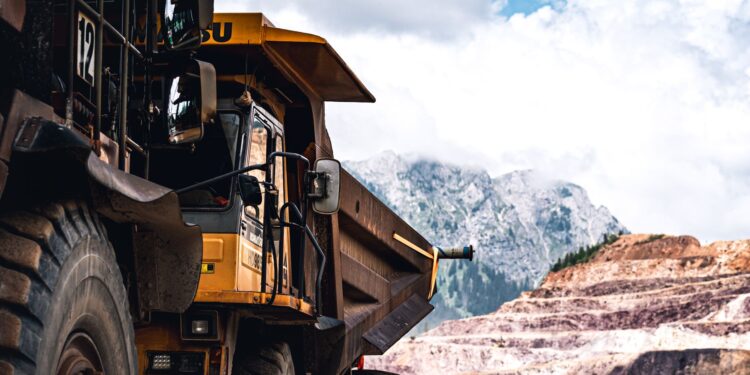
Department of Energy announced a $100 million investment in a new mining-education initiative called PROSPECT.

The U.S. Department of Energy announced a $100 million investment in a new mining-education initiative called PROSPECT. The funding will be distributed to 14 mining schools nationwide beginning in August 2026.
The Department of Energy (DOE) confirmed a $100 million allocation to support the Providing Opportunities for Specialized Education in Critical Technologies (PROSPECT) program, aimed at expanding training in critical minerals and mining technologies [1]. The announcement was made public in early August 2026, following a roundtable on mining policy convened by the Department of Energy on August 7, 2026 [3]. The investment targets 14 designated mining schools across the United States and is administered by the DOE’s Office of Critical Minerals and Energy Innovation (CMEI) [2].
The primary stakeholders include the DOE, its CMEI office, the 14 participating mining schools, and the federal administration [2]. Funding will be channeled through CMEI to each institution to expand curricula, develop new laboratory facilities, and create apprenticeship pipelines that address documented workforce shortages in the critical minerals sector [1]. The program’s design follows a federal-level commitment to bolster domestic energy and mineral independence [3].
These components are intended to align student skill sets with employer needs, reducing the lag between graduation and job placement in the mining sector [4].
Program Details and Funding Distribution
The PROSPECT program outlines a multi-year plan to allocate the $100 million across the 14 schools, with each institution receiving a portion proportional to its enrollment capacity and regional mining activity [2]. Funds are earmarked for curriculum development in mineral extraction, processing, and sustainability, as well as for the acquisition of advanced simulation equipment and field training resources [1].
In addition to academic enhancements, the program includes provisions for industry-partnered internships and cooperative education experiences. These components are intended to align student skill sets with employer needs, reducing the lag between graduation and job placement in the mining sector [4]. The DOE has stipulated reporting requirements to monitor enrollment growth, graduation rates, and post-graduation employment outcomes for participants in the PROSPECT initiative [2].
Administration and Institutional Participation

CMEI, a subdivision of the DOE focused on critical minerals and energy innovation, will oversee the disbursement of funds and the coordination of program activities [2]. The office will work directly with the administrations of the 14 mining schools, which include historically established programs such as the Colorado School of Mines, the University of Arizona’s School of Mining Engineering, and the Montana Tech of the University of Montana [1].
Each school is required to submit a detailed implementation plan outlining how the allocated resources will be used to expand faculty, develop new courses, and integrate hands-on training modules. The DOE will conduct quarterly reviews of progress reports to ensure compliance with federal objectives and to adjust allocations if necessary [2].
Immediate Impact on Students and Industry
The infusion of $100 million is expected to create new enrollment slots for students pursuing degrees in mining engineering, geology, and related fields [1]. Existing students will gain access to upgraded laboratory facilities and field-based learning opportunities, potentially shortening the time required to achieve competency in critical mineral extraction techniques [4].
For the mining industry, the program addresses a documented shortage of qualified workers, a condition that has constrained production capacity for essential minerals such as lithium, cobalt, and rare earth elements [2]. By establishing a pipeline of graduates equipped with modern, sustainability-focused training, the initiative aims to support domestic supply chains and reduce reliance on foreign sources [3].
Educational institutions in regions with active mining operations may experience increased local economic activity as new programs attract students and faculty, generating ancillary demand for housing, services, and research collaborations [4].
Key Facts
Existing students will gain access to upgraded laboratory facilities and field-based learning opportunities, potentially shortening the time required to achieve competency in critical mineral extraction techniques [4].
What: DOE invests $100 million in the PROSPECT program to expand mining education at 14 U.S. schools.
When: Announcement in early August 2026, following a roundtable on mining policy convened by the Department of Energy on August 7, 2026.
Impact: Provides new training capacity for students and addresses workforce shortages in the U.S. critical minerals sector.
Sources
- DOE invests $100M in US mining education – news.arizona.edu
- DOE launches PROSPECT program to build critical minerals workforce – northamericanmining.com
- Fact Sheet: President Donald J. Trump Announces Billions in New Deals … – whitehouse.gov
- $100 Million Initiative Launched to Build America’s Critical Minerals Workforce – ntd.com
Related Articles
Written by Career Ahead AI. AI can make mistakes, so verify key facts. Report errors to support@careeraheadonline.com.