No products in the cart.

Emotional Labor in the AI Age: How Chatbots Reshape Workload, Stress and Career Capital

AI-Mediated Emotional Labor Landscape The diffusion of generative AI chatbots and virtual assistants across retail, finance, health care,…

AI-driven conversational agents are reallocating the affective load of service work, creating a structural shift that compresses routine empathy while amplifying high-stakes emotional negotiations.
AI-Mediated Emotional Labor Landscape
The diffusion of generative AI chatbots and virtual assistants across retail, finance, health care, and public services has moved from experimental pilots to enterprise-wide deployments. Gartner estimates that by 2025, 70% of customer-facing interactions will be mediated by AI, up from 45% in 2022 [1]. This macro-level adoption rewires the affective architecture of work: routine affective scripts—politeness, reassurance, de-escalation—are increasingly encoded in algorithmic response libraries, while human agents are left to navigate “the messy edge” of emotion.
Historical parallels are instructive. The introduction of ATMs in the 1970s displaced tellers from cash-handling but created a new class of “customer experience specialists” who managed exceptions and complex service narratives. Similarly, the telephone’s rise in the early 20th century shifted “voice work” from in-person clerks to switchboard operators, who then faced intensified emotional regulation demands due to higher call volumes and anonymity [2]. The AI wave reproduces this pattern at scale: the automation of affective scripts reduces low-value emotional labor but concentrates high-value affective risk in a shrinking human cohort.
Empirical evidence confirms the shift. Heo’s analysis of U.S. call-center data shows that chatbot triage cuts average handling time by 22%, yet human agents report a 15% rise in self-rated emotional exhaustion when handling escalated cases that the bot cannot resolve [1]. The American Psychological Association notes that digital companions—especially those marketed as “emotional support” bots—blur the boundary between professional empathy and algorithmic interaction, amplifying workers’ sense of responsibility for outcomes they cannot control [3].
Redistributive Mechanics of Chatbot Integration
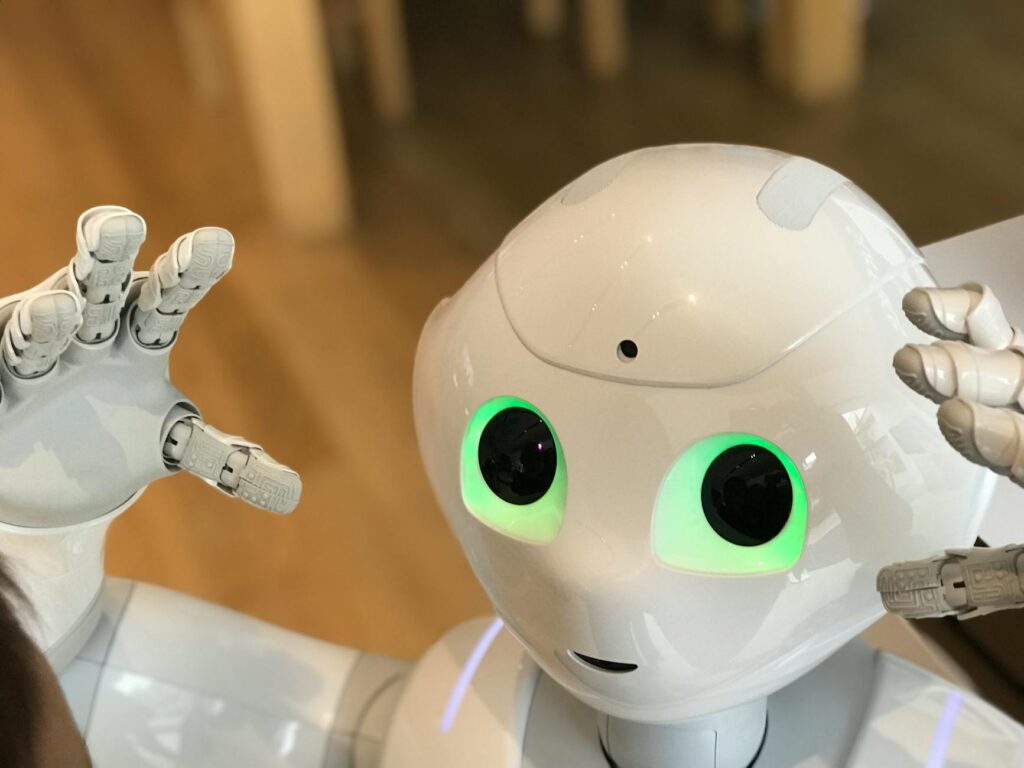
Automation of Routine Affective Scripts
Chatbots excel at deterministic empathy: scripted apologies, order confirmations, and status updates. By offloading these interactions, firms achieve cost efficiencies—McKinsey quantifies a 30% reduction in labor expenses per 1,000 interactions—but the remaining human touchpoints become disproportionately complex. Workers must now interpret nuanced sentiment, negotiate conflict, and provide “human-only” reassurance. This emotional labor redistribution is asymmetric: the marginal benefit of automation accrues to the organization, while the marginal cost—psychological strain—accrues to frontline staff.
Workers must now interpret nuanced sentiment, negotiate conflict, and provide “human-only” reassurance.
Emergent Emotional Labor of AI Stewardship
A second, less visible layer arises from the need to manage AI’s limitations and biases. Employees act as de-facto “AI interpreters,” troubleshooting misclassifications, correcting tone mismatches, and explaining opaque decision logic to customers. A 2023 study of a multinational insurance firm found that 23% of agent time was spent on “AI-error remediation,” a task with no precedent in pre-AI workflows [4]. This creates a novel affective burden: agents must maintain composure while confronting algorithmic failures that can trigger customer anger, thereby amplifying stress without commensurate compensation.
You may also like
 Future Skills & Work
Cognitive biases anchor workers in outdated careers
The convergence of AI‑driven skill shifts and a BLS‑recorded quit rate near 3 % per month creates pressure on institutions to redeploy talent quickly.
Read More →Cross-Functional Emotional Gatekeeping
Beyond direct service, AI integration reshapes internal collaboration. In technology firms, product managers must convey empathy to algorithmic stakeholders—datasets, model outputs, and compliance officers—translating technical risk into human impact narratives. This cross-functional emotional gatekeeping expands the definition of emotional labor beyond frontline roles, embedding affective demands into engineering, compliance, and data-governance functions.
Institutional Cascades: Market and Culture
Labor Market Reconfiguration
The structural shift in emotional labor has measurable labor market implications. The World Economic Forum projects that AI will displace 85 million jobs globally by 2025, while creating 97 million new roles centered on AI development, oversight, and human-AI interaction design [5]. However, the net effect is not a simple substitution; it is a re-skilling asymmetry. Workers displaced from low-skill, routine affective roles often lack the credentials to transition into “AI-trainer” or “AI-ethicist” positions, which typically require advanced degrees or specialized certifications.
Empirical data from the U.K.’s Office for National Statistics shows that service occupations with high emotional labor intensity (e.g., hospitality, retail) experienced a 12% higher turnover rate post-AI rollout compared with occupations less reliant on affective interaction [5]. This suggests that the redistribution of emotional labor contributes to career capital erosion for workers lacking institutional pathways to upskill.
Organizational Culture Realignment
Companies responding to these pressures are redesigning cultural frameworks. A case study of a European telecom provider illustrates a “Hybrid Empathy Model”: the firm instituted mandatory “AI-Interaction Literacy” workshops, paired with resilience coaching for agents handling escalations. Post-implementation surveys indicated a 9% reduction in reported burnout and a 4% uplift in Net Promoter Score, highlighting the systemic payoff of aligning culture with the new affective architecture [4].
Organizational Culture Realignment Companies responding to these pressures are redesigning cultural frameworks.
Conversely, firms that neglect cultural adaptation face heightened risk. In 2024, a major U.S. retailer’s abrupt chatbot deployment led to a 30% spike in employee grievance filings related to “emotional overload,” prompting a costly settlement and a subsequent slowdown in AI rollout plans. This episode underscores the institutional power of labor regulations and collective bargaining in shaping the pace and design of AI integration.
Human Capital Recalibration in the AI Epoch

Re-valuing Emotional Intelligence
You may also like
 Future Skills & Work
Three tasks where team‑based collaboration beats solo effort
Complex problem solving, cross‑functional integration, and high‑stakes projects consistently outperform solo work when teams apply the Collaboration Amplification Effect, reshaping career paths and retention.
Read More →As AI assumes deterministic empathy, human emotional intelligence (EI) becomes a scarce, high-value asset. The OECD’s Skills Outlook (2023) ranks “complex problem solving” and “social and emotional skills” as the top competencies for future employability, with a projected 15% wage premium for workers scoring in the top quartile of EI assessments [5]. Firms are therefore incentivizing EI development through internal credentialing, such as “Certified Human-AI Interaction Specialist” programs launched by several Fortune 500 firms.
Credential Inflation and Access Barriers
The rise of AI-centric credentials creates a credential inflation loop. Universities have introduced master’s programs in “Human-Centred AI Design,” yet enrollment remains limited to candidates with existing advanced degrees. This deepens structural inequities: workers from low-skill backgrounds, who are most exposed to intensified emotional labor, encounter higher barriers to acquiring the career capital necessary for upward mobility.
Institutional Responses: Policy and Training
Policy interventions are emerging. The European Commission’s 2024 “AI-Workplace Directive” mandates that employers provide “emotional impact assessments” alongside traditional risk assessments, obligating firms to disclose expected changes in affective workload and to fund remedial training. Early adopters report 12% lower absenteeism among staff subject to the assessment, indicating that institutionalizing emotional labor metrics can mitigate stress.
Projected Structural Trajectory (2026-2031)
- Standardization of Emotional Labor Metrics – By 2028, major industry bodies (e.g., International Labour Organization, IEEE) are expected to publish uniform affective workload indices, enabling cross-company benchmarking and regulatory oversight.
- Hybrid Workforce Stratification – A bifurcated labor market will crystallize: a high-EI tier (AI-interaction designers, ethicists, senior service agents) commanding premium wages, and a baseline tier of workers performing residual routine tasks with limited upward mobility.
- Institutionalization of Resilience Infrastructure – Organizations will embed psychological safety frameworks (e.g., continuous debriefing, AI-error disclosure protocols) as core governance components, reducing turnover and aligning with ESG reporting standards.
- Career Capital Reallocation – Workers who acquire AI-interaction credentials will experience accelerated trajectory gains (average salary growth of 8% per annum), while those remaining in legacy affective roles will face stagnating or declining earnings.
- Regulatory Equilibrium – Anticipated revisions to the U.S. Fair Labor Standards Act will incorporate emotional labor hours into overtime calculations, potentially reshaping compensation structures for service workers.
The convergence of these forces suggests that emotional labor will become a central axis of career capital formation, with systemic implications for economic mobility, leadership pipelines, and institutional power dynamics. Companies that proactively redesign workflows, invest in EI development, and institutionalize affective risk governance will capture asymmetric advantages in talent retention and brand reputation.
The convergence of these forces suggests that emotional labor will become a central axis of career capital formation, with systemic implications for economic mobility, leadership pipelines, and institutional power dynamics.
Key Structural Insights
[Insight 1]: AI automates deterministic empathy, compressing routine affective work while amplifying high-stakes emotional negotiations for human staff.
[Insight 2]: The emergent “AI-steward” role adds a novel layer of emotional labor—managing algorithmic bias and error—that is un-compensated in most current compensation models.
- [Insight 3]: Institutionalizing emotional impact assessments and EI credentialing will become a competitive differentiator, reshaping career trajectories and widening the gap in career capital.
Sources
You may also like
 Future Skills & Work
AI content reshapes workplace diversity and inclusion
Natural‑language processing also evaluates DEI training modules, customizing content to address.
Read More →Rethinking Emotional Labor: AI’s Role in Shaping Consumer and Worker Well-being — Journal of Consumer Affairs (Wiley)
Artificial intelligence, emotional labor, and the quest for sociological imagination — Policy & Society (Oxford University Press)
AI chatbots and digital companions are reshaping emotional connection — APA Monitor (American Psychological Association)
Generative AI and employee well-being: Exploring the emotional, social … — ScienceDirect (Elsevier)
World Economic Forum, The Future of Jobs Report 2023 — World Economic Forum