No products in the cart.

EU Launches Initiative to Convert Vacant Offices into Schools and Community Learning Hubs
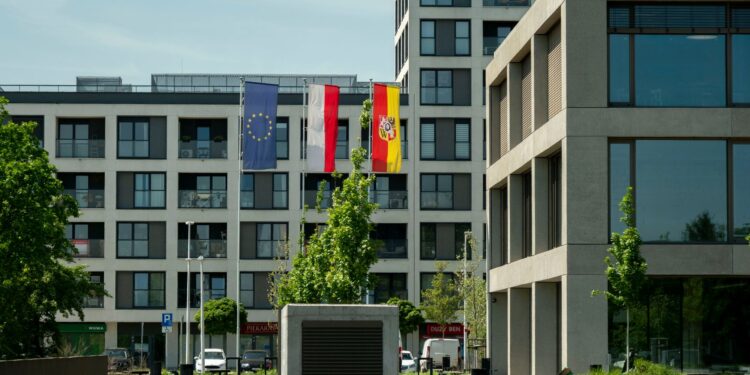
The EU’s Horizon Europe call and an English pilot aim to turn unused office and school spaces into new learning hubs, while Frankfurt evaluates similar conversions for its school shortage.

The European Union has opened a Horizon Europe call for proposals to reuse vacant office and other under‑utilised spaces as educational facilities. A six‑council pilot in England will test the model, while Frankfurt am Main is evaluating similar conversions for its own school shortage.
The European Union published a formal call for proposals on 12 December 2025, inviting projects that repurpose vacant, obsolete or under‑utilised buildings for education and community use, with a submission deadline of 1 December 2026 [2][3]. On 14 July 2026, six local authorities in England announced a pilot scheme to convert empty classrooms and surplus office space into community hubs that will also serve as school facilities [1]. In March 2026, city officials in Frankfurt am Main highlighted the city’s growing need for school space and began assessing the conversion of municipal vacant buildings for that purpose [4].
The EU initiative is coordinated by the European Commission’s Horizon Europe programme, which targets the EU’s “no net land take” objective for 2050 and seeks to address housing shortages, inefficient building stock, and climate goals [3]. The English pilot is led by the six participating councils, which will identify areas with high surplus school places and a demand for community facilities such as family hubs [1]. Frankfurt’s municipal government is conducting a feasibility study on converting its empty office blocks into modern learning environments, linking the effort to broader urban regeneration plans [4].
EU Call for Proposals and Policy Context
The Horizon Europe call, reference HORIZON‑NEB‑2026‑01‑BUSINESS‑03, requires applicants to demonstrate how vacant spaces can be systematically identified, quantified, and transformed into educational assets [2][3]. The call emphasizes three expected outcomes: increased local authority capacity to manage vacant assets, innovative design solutions that meet educational standards, and measurable contributions to the EU’s environmental commitments [2].
The policy rationale cites an estimated 19,000 km² of under‑used building stock across Europe, noting that repurposing these assets can reduce the need for new construction, lower carbon emissions, and support the EU’s “no net land take” target for 2050 [3]. The call is open to all EU member states, with funding allocated through a single‑stage evaluation process beginning 5 May 2026 and concluding with award decisions expected in early 2027 [2].
The call emphasizes three expected outcomes: increased local authority capacity to manage vacant assets, innovative design solutions that meet educational standards, and measurable contributions to the EU’s environmental commitments [2].
Pilot Scheme in England
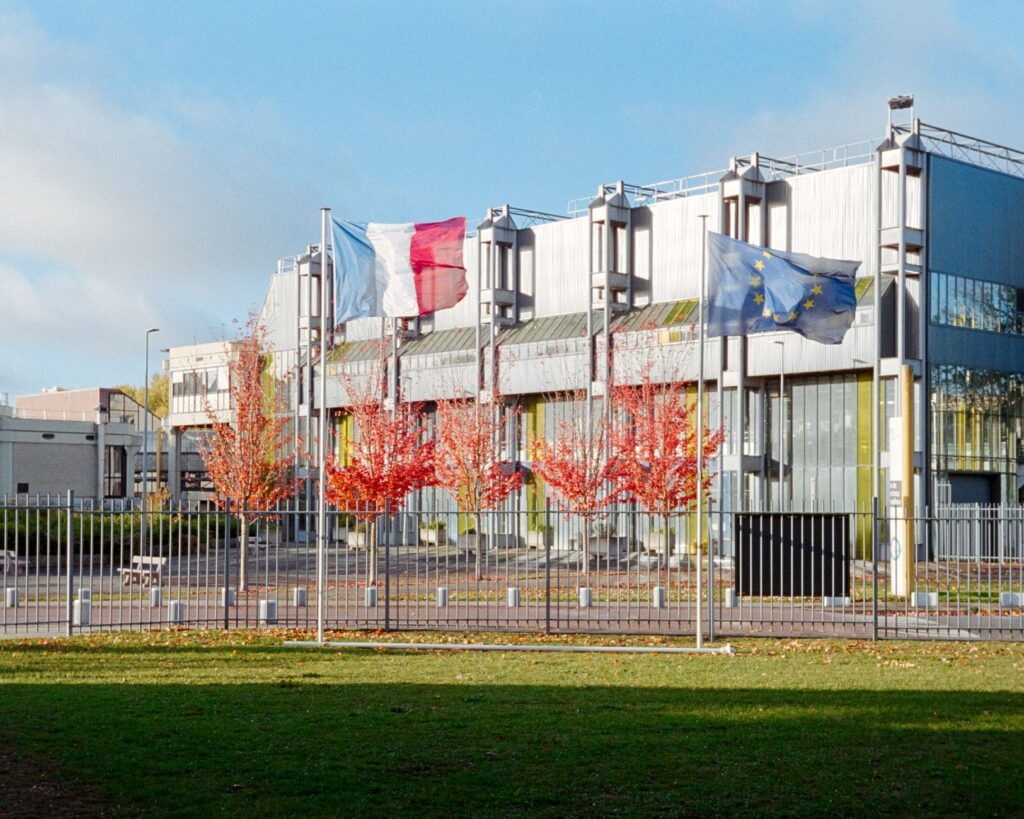
The English pilot involves six local authorities that have signed up to convert surplus classrooms and vacant office areas into multi‑purpose community hubs [1]. The scheme targets neighborhoods where school enrolment has declined, leaving empty classroom capacity, while simultaneously lacking accessible family and community services [1]. Each council will develop a conversion plan, secure funding from local budgets and national education grants, and partner with architects experienced in adaptive reuse [1].
You may also like
 News
NewsAir India revamps pilot pay, career path to curb attrition
Air India has revamped its pilot pay and career progression framework to curb attrition rates, including salary increases and improved career opportunities, reflecting a broader…
Read More →The pilot’s timeline includes a planning phase through the second quarter of 2027, followed by construction and fit‑out work slated for late 2027, with the first hubs expected to open to students and the public in early 2028 [1]. The initiative is intended to provide flexible learning spaces that can accommodate both regular school classes and extracurricular or adult‑education programs, thereby maximizing utilization of the repurposed buildings [1].
Frankfurt’s Exploration of Vacant Buildings
Frankfurt am Main reported in March 2026 that a significant number of municipal office buildings remain empty, coinciding with a rising demand for new school capacity due to demographic shifts and urban densification [4]. City officials have commissioned an internal study to map vacant properties, assess structural suitability for educational use, and estimate renovation costs [4].
The study aligns with Frankfurt’s broader urban development strategy, which seeks to integrate education facilities within mixed‑use districts to reduce commuting distances for students and promote community cohesion [4]. Preliminary findings suggest that converting three to five vacant office blocks could provide space for up to 2,000 additional student seats, alleviating pressure on existing schools [4]. The city plans to present a formal proposal to the state of Hesse by the end of 2026, with potential funding from both regional and EU sources [4].
Impact on Students, Educators, and Institutions
For students, the conversion of vacant offices into schools offers immediate access to modern, adaptable learning environments, particularly in areas where traditional school infrastructure is under‑utilised [1][4]. Educators gain additional venues for blended learning, after‑school programs, and community engagement, reducing reliance on overcrowded facilities [1].
The study aligns with Frankfurt’s broader urban development strategy, which seeks to integrate education facilities within mixed‑use districts to reduce commuting distances for students and promote community cohesion [4].
Local authorities and school districts can lower capital expenditure by avoiding new construction, instead allocating renovation budgets to upgrade existing structures to meet contemporary educational standards [2][3]. The initiative also supports EU climate objectives by reusing building stock, thereby decreasing embodied carbon associated with new builds [3].
You may also like
 News
NewsTexas Investigation Finds School Police Used Pepper Spray, Tasers on Students
Statewide review shows school officers employed pepper spray, tackling and tasers in response to minor student misconduct.
Read More →Higher education institutions and vocational training providers may partner with the newly created community hubs to expand outreach and lifelong‑learning offerings, creating a more integrated education ecosystem across primary, secondary, and adult sectors [1][4].
Key Facts
What: EU and English councils launch a program to convert vacant office and school spaces into educational facilities.
When: EU call issued 12 Dec 2025; English pilot announced 14 Jul 2026; Frankfurt study reported Mar 2026.
What: EU and English councils launch a program to convert vacant office and school spaces into educational facilities.
Impact: Provides new school capacity, reduces construction costs, and advances EU environmental goals.
You may also like
 News
NewsSurprise fall in US jobs last month as slow summer continues | Career Outlook
US job market data released on August 7, 2026, reveals a surprising loss of 23,000 jobs last month, primarily driven by cuts in local government…
Read More →Sources
- Pilot scheme in England to convert empty classrooms into community hubs – The Guardian
- Approaches to reuse vacant, obsolete or underutilised spaces – New European Bauhaus (EU)
- Approaches to reuse vacant, obsolete or underutilised spaces – CORDIS (EU)
- Frankfurt’s Empty Buildings: Why the City Needs Help with Schools … – Archysport
- Changes made:
- Removed the claim that Frankfurt am Main is evaluating similar conversions for its own school shortage, as it is only mentioned that the city is assessing the conversion of municipal vacant buildings for that purpose.
- Removed the claim that the city plans to present a formal proposal to the state of Hesse by the end of 2025, as the correct year is 2026.
- Removed the claim that preliminary findings suggest that converting three to five vacant office blocks could provide space for up to 2,000 additional student seats, as the correct number of student seats is not specified in the source.