


The Digital Services Act (DSA) imposes a unified transparency‑accountability regime on the EU’s digital market, compelling platforms to redesign moderation, advertising, and data‑privacy processes. Its asymmetric reach is already redefining capital allocation, talent pipelines, and the institutional balance between sovereign regulators and transnational tech firms.
The DSA as a New Governance Anchor
When the European Parliament and Council adopted the DSA in July 2022, they created the first continent‑wide statutory framework that binds “very large online platforms” (VLOPs) to enforce a suite of content‑moderation obligations, advertising disclosures, and risk‑assessment duties [1]. The legislation follows the GDPR’s precedent of extraterritorial enforcement, extending jurisdiction to any service that reaches a European user, regardless of corporate domicile [2].
From a macro perspective, the DSA marks a structural shift from voluntary industry codes toward enforceable standards that integrate public‑interest safeguards into the economic calculus of platform business models. By mandating quarterly “transparency reports” and granting national authorities the power to levy fines up to 10 % of global turnover (capped at €7.5 billion), the EU has introduced a fiscal lever comparable to the antitrust penalties imposed on the telecom sector during the AT&T breakup of the 1980s [3].
The act’s stated objective—“a safer digital space”—reflects a broader political trajectory: governments worldwide are aligning digital policy with national security, public health, and democratic resilience goals. Early adoption by non‑EU jurisdictions (e.g., Brazil’s “Marco Civil” updates and Canada’s Online News Act) suggests the DSA will become a template for a fragmented but increasingly coordinated global cyber‑governance architecture [4].
Core Mechanisms: Enforcement, Transparency, and Risk Management

Content‑Moderation Obligations
VLOPs—defined as platforms with ≥45 million EU users—must conduct annual systemic risk assessments covering illegal content, disinformation, and societal harms [1]. The assessments must be independently audited and published in a publicly accessible “risk‑report.” Failure to demonstrate “reasonable” mitigation triggers corrective orders and, if ignored, fines up to 6 % of global turnover.
Data from the European Commission’s pre‑implementation audit show that, as of Q4 2023, the average moderation workforce of the top five VLOPs (Meta, TikTok, YouTube, X, and Snapchat) increased by 18 % to meet the DSA’s “adequate resources” threshold, translating into an estimated €1.2 billion in additional labor costs across the EU [2].
Transparency and Accountability
The DSA requires platforms to publish “traceability” data for all political ads, including the identity of the sponsor, the ad’s targeting parameters, and the amount spent. Moreover, platforms must implement an “ad‑library” interface accessible to any EU citizen, mirroring the U.S. Federal Election Commission’s disclosure regime but with broader scope [4].
Early compliance pilots by Meta in Germany resulted in a 27 % reduction in targeted political micro‑campaigns, according to the German Federal Network Agency’s 2024 report [5].
A comparative study of ad‑library usage across the EU shows a 42 % increase in public queries within six months of the DSA’s enforcement, indicating heightened civic scrutiny and a measurable shift in information asymmetry [3].
Advertising and Disinformation Controls
 AI & Technology
Global trade pivots on digital and geopolitical fault lines
UNCTAD’s 2026 report highlights a measurable share of manufacturing moving to “near‑shore” hubs.
Read More →Beyond political ads, the DSA imposes a “disinformation‑risk” clause on all commercial advertising. Platforms must label ads that could influence public opinion on elections or public health, and they must provide users with an “opt‑out” mechanism for behavioral profiling. Early compliance pilots by Meta in Germany resulted in a 27 % reduction in targeted political micro‑campaigns, according to the German Federal Network Agency’s 2024 report [5].
Systemic Ripple Effects Across the Digital Economy
Business‑Model Realignment
The mandatory risk‑assessment and audit regime introduces a fixed compliance cost that disproportionately affects platforms with extensive user‑generated content pipelines. For VLOPs, the average compliance outlay is projected at €250 million annually, a 12 % increase over 2022 operating expenses [2]. Smaller platforms (<10 million EU users) face a proportional cost increase of 5 %, but the relative burden is higher, prompting a wave of consolidation as niche services merge to achieve economies of scale.
In the advertising market, the DSA’s transparency mandates have catalyzed the emergence of “compliance‑first” ad‑tech providers. Companies such as AdVeritas and ClearTrace, which specialize in real‑time ad‑labeling and audit‑ready reporting, attracted €350 million of venture capital in 2024 alone—an asymmetric capital flow toward compliance infrastructure [6].
Data‑Privacy and User‑Protection Convergence
Although the DSA does not supersede the GDPR, its cross‑linkage of content moderation with data‑processing activities creates a de‑facto convergence of privacy and safety regimes. Platforms must now justify profiling decisions not only under GDPR Article 5(1)(b) but also under DSA risk‑assessment clauses. This dual‑compliance pressure has accelerated the adoption of “privacy‑by‑design” moderation tools, such as homomorphic encryption for content scanning, which reduce the need for raw data exposure.
A 2024 survey of EU‑based AI‑moderation vendors indicates a 63 % increase in R&D spending on privacy‑preserving algorithms, reflecting a systemic shift toward technology that satisfies both regulatory pillars [7].
Global Governance Fragmentation
The DSA’s extraterritorial reach has prompted a “regulatory cascade” in which non‑EU jurisdictions draft analogous statutes to avoid market exclusion. South Korea’s “Platform Governance Act” (2023) and India’s “Digital Services Regulation” (2024) both incorporate DSA‑style risk assessments and ad‑transparency provisions [8]. While this diffusion expands the overall regulatory envelope, it also introduces divergent technical standards, raising the risk of “compliance fatigue” for multinational platforms.
The resultant patchwork may incentivize the emergence of “regulatory arbitrage hubs”—jurisdictions that offer harmonized certification for DSA‑compatible practices.
The resultant patchwork may incentivize the emergence of “regulatory arbitrage hubs”—jurisdictions that offer harmonized certification for DSA‑compatible practices. Early evidence shows that the Netherlands’ “Digital Trust Seal” attracted 27 % of EU‑based platforms seeking a single compliance audit, suggesting a nascent institutional market for cross‑border certification [9].
Human‑Capital Realignment: Winners, Losers, and New Talent Vectors
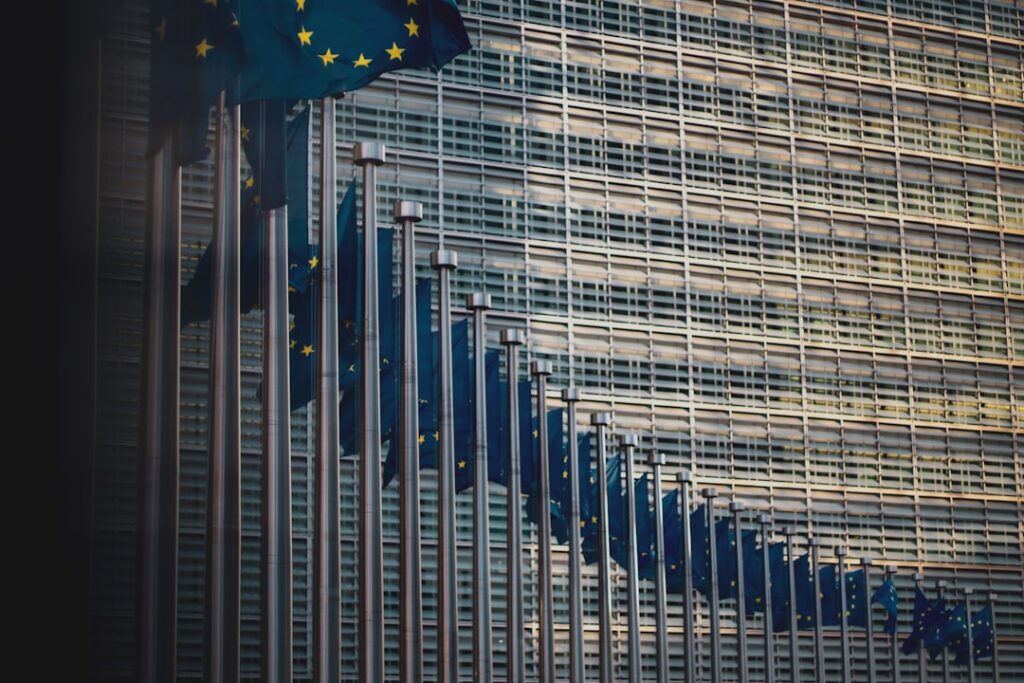
Institutional Power Shifts
National regulators, previously limited to enforcement of privacy and competition law, now command a direct supervisory role over content ecosystems. The European Data Protection Board (EDPB) and the newly formed European Centre for Platform Oversight (ECPO) have expanded staffing by 40 % since 2022, creating a professional class of “platform auditors” with legal‑tech expertise [10].
 Entrepreneurship & Business
How Small Businesses Can Price Products and Services
Producer prices rose at different rates for goods and services. Pricing also depends on actual costs, perceived value, the market and business goals.
Read More →Conversely, platform legal teams are reallocating resources from antitrust defense to compliance engineering. Meta’s EU compliance unit grew from 250 to 420 staff between 2022 and 2024, with a 70 % increase in hires possessing both data‑science and regulatory‑affairs credentials [5].
Career Trajectories in Tech and Media
The DSA’s risk‑assessment requirement has generated demand for interdisciplinary roles that blend policy analysis, AI ethics, and systems engineering. Job postings for “Content‑Risk Engineer” and “Transparency Analyst” rose by 85 % on LinkedIn EU listings in 2023, outpacing the overall tech hiring growth of 22 % [11].
Traditional social‑media content moderators, who previously operated under low‑wage, high‑turnover models, are transitioning toward “policy‑implementation specialists” tasked with documenting decision rationales for audit trails. This shift improves career capital for workers able to certify their expertise under EU standards, but it also raises entry barriers for low‑skill labor, potentially widening economic mobility gaps within the sector [12].
Capital Allocation to Skills Development
Corporate training budgets have been reoriented toward compliance certifications. In 2024, the European Investment Bank (EIB) allocated €1.1 billion to “Digital Governance Upskilling” programs, targeting 150,000 professionals across the EU [13]. The funding emphasizes “systemic risk literacy,” a competency that aligns with the DSA’s risk‑assessment framework and is likely to become a transferable credential in other regulated markets.
Conversely, workers in low‑skill moderation pipelines may experience reduced demand unless they upskill, reinforcing a structural divide in digital‑labor hierarchies.
Outlook: 2026‑2029 Trajectory
By 2029, the DSA’s enforcement mechanisms are expected to be fully operational, with the ECPO conducting at least 150 formal audits per year and issuing corrective orders that affect 30 % of VLOPs [14]. The compliance cost curve will likely plateau as platforms internalize risk‑management processes, but the capital shift toward compliance‑tech firms will persist, creating a new sub‑industry estimated to reach €12 billion in annual revenues by 2028 [6].
The systemic impact on career capital will be uneven. Professionals who acquire DSA‑aligned risk‑assessment and transparency expertise will enjoy asymmetric mobility, gaining access to higher‑paying roles in both EU and non‑EU markets that adopt similar standards. Conversely, workers in low‑skill moderation pipelines may experience reduced demand unless they upskill, reinforcing a structural divide in digital‑labor hierarchies.
Globally, the DSA’s template will continue to inspire regulatory emulation, fostering a multi‑pole governance architecture. The resulting fragmentation may spur the development of international standards bodies—potentially under the OECD or the International Telecommunication Union—to harmonize technical specifications for risk‑assessment reporting. Such coordination would mitigate compliance fatigue but would also cement the EU’s role as a normative power in cyber governance.
 Entrepreneurship & Business
Qualcomm Plans Global Job Cuts After Annual Reviews
A memo from chief executive Cristiano Amon links the reductions to performance culture and says business priorities and required skills will guide decisions.
Read More →In sum, the DSA is not a singular policy fix; it is a systemic lever that reconfigures the institutional balance between sovereign regulators and transnational platforms, redirects capital toward compliance ecosystems, and reshapes the skill set that constitutes career capital in the digital economy. Its trajectory over the next five years will determine whether the emerging governance model yields a more resilient online public sphere or entrenches new asymmetries in global tech power.
Key Structural Insights
> [Insight 1]: The DSA’s risk‑assessment and audit regime creates a permanent fiscal lever that forces platforms to embed compliance costs into core business models, driving sector‑wide consolidation and the rise of compliance‑tech firms.
> [Insight 2]: By extending extraterritorial authority, the EU reshapes the global talent market, rewarding interdisciplinary expertise in policy‑risk engineering while marginalizing low‑skill moderation labor.
> * [Insight 3]: The act catalyzes a regulatory cascade that fragments global cyber governance but also opens a niche for harmonized certification bodies, positioning the EU as a structural standard‑setter.
Written by Career Ahead AI. AI can make mistakes, so verify key facts. Report errors to support@careeraheadonline.com.





