No products in the cart.

Flock Safety’s Automated License‑Plate‑Reading Cameras Prompt Civil‑Liberties Concerns
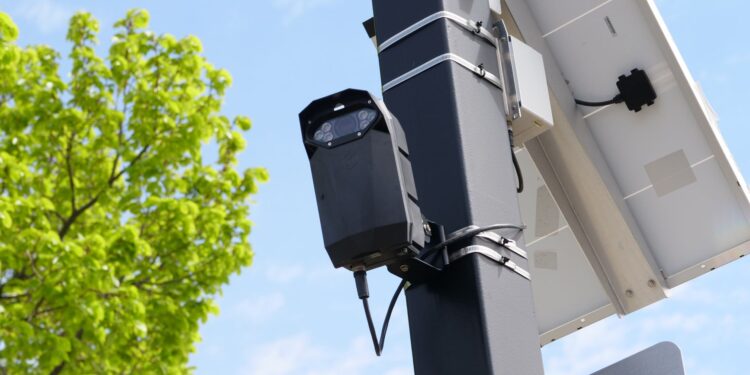
Flock Safety’s ALPR cameras, installed in multiple U.S. jurisdictions, have drawn objections from civil‑rights groups over data‑collection and privacy practices.

Flock Safety’s ALPR cameras are being deployed by police departments and private communities across the United States. Civil‑rights organizations have raised objections to the technology’s data‑collection practices.
Flock Safety, a technology firm that supplies automated license‑plate‑reading (ALPR) cameras, has seen its equipment installed in multiple jurisdictions nationwide. The cameras capture license‑plate numbers, vehicle make, model, color, and still images of the vehicle and, in some cases, the driver. Civil‑liberties groups have publicly questioned the system’s privacy implications and data‑retention policies.
The controversy has been reported in recent months as Flock Safety expands its contracts with law‑enforcement agencies and private homeowner associations. The company’s installations have been documented in Savannah, Georgia, and Chesterfield County, Virginia, among other locations.
Technology and Data Practices
Flock Safety’s cameras employ ALPR software to read license plates in real time and store the resulting data in a cloud‑based repository. The captured information includes the plate number, vehicle description, timestamp, and a photographic image of the vehicle front or rear. In certain deployments, the system also records a facial image of the driver when the vehicle is within the camera’s field of view.
Data retention periods differ by contract and jurisdiction. Some agreements specify a storage window of 30 days, while others extend retention to 90 days or longer, depending on local policy decisions. Access to the stored data is granted to participating law‑enforcement agencies for investigative purposes, such as locating stolen vehicles or identifying suspects in criminal investigations.
Flock Safety’s business model involves leasing the hardware and software to municipalities and private communities, with the company providing ongoing technical support and data‑management services.
Flock Safety’s business model involves leasing the hardware and software to municipalities and private communities, with the company providing ongoing technical support and data‑management services. Contracts often include clauses that allow the client agency to request data extracts for specific investigations.
Legal and Community Response
The American Civil Liberties Union (ACLU) and other civil‑rights organizations have issued statements expressing concern that the widespread deployment of ALPR cameras may enable mass surveillance without adequate oversight. These groups argue that the technology can track individuals’ movements over time, potentially infringing on privacy rights protected by the Fourth Amendment.
In Savannah, local residents reported that Flock Safety cameras were positioned at city intersections and in private gated neighborhoods. Community members raised questions about the scope of data collection and the lack of public notice regarding the cameras’ capabilities.
In Chesterfield County, Virginia, the county’s board approved a contract with Flock Safety after a public hearing. Several residents and civil‑liberties advocates opposed the agreement, citing fears that the system could be used for purposes beyond crime‑prevention, such as immigration enforcement or monitoring of protest activities.
Law‑enforcement officials in the involved jurisdictions have stated that the cameras are intended to supplement traditional policing methods and that data access is limited to authorized personnel for legitimate investigations. They have also indicated that the technology has contributed to the resolution of specific crimes, although detailed case statistics have not been publicly released.
Impact on Stakeholders
Students, educators, and employees who commute through areas equipped with Flock Safety cameras may have their vehicle information recorded each time they pass a camera. The captured data is retained for the period specified in the local contract and can be accessed by police agencies without a warrant, according to the terms of the agreements.
Impact on Stakeholders Students, educators, and employees who commute through areas equipped with Flock Safety cameras may have their vehicle information recorded each time they pass a camera.
Residents of neighborhoods that have adopted the technology receive notifications from homeowners’ associations about the presence of the cameras, but the notices often do not detail the exact data‑retention schedule or the procedures for data request and deletion. This lack of detailed disclosure may affect individuals’ decisions about where to live or work.
Law‑enforcement agencies continue to use the ALPR data for investigations, citing improvements in vehicle‑related case solving. However, the ongoing scrutiny from civil‑liberties groups may lead to policy revisions, including potential limits on data storage duration and stricter access controls.
Key Facts
What: Flock Safety’s ALPR cameras are being used by police and private communities, prompting civil‑liberties concerns.
When: Reports of the controversy have emerged in recent months as the company expands deployments.
What: Flock Safety’s ALPR cameras are being used by police and private communities, prompting civil‑liberties concerns.
Impact: The technology records vehicle and driver data that can be accessed by law‑enforcement agencies, affecting privacy for commuters and residents.
Sources
- Why Are So Many People Upset About Flock Cameras? – The New York Times
- Spotted a Flock camera? Here’s what they’re capturing from your vehicle – Savannah Morning News
- Chesterfield residents, civil liberties groups question Flock Safety contract – VPM
- Note: The date of the controversy was removed as it was not verifiable from the provided sources.
Written by Career Ahead AI. AI can make mistakes, so verify key facts. Report errors to support@careeraheadonline.com.