Ghost factories—fully automated, AI‑driven production sites—are emerging as a structural shock to industrial supply chains, eroding traditional labor pathways and amplifying institutional power imbalances. Their rise accelerates as GPU clusters replace human oversight, forcing procurement teams to confront counterfeit digital suppliers.
The shift matters now because the convergence of deep‑learning manufacturing, dark‑factory deployments in China, and sophisticated sourcing scams threatens the reliability of critical components across sectors. Institutional actors—from multinational buyers to regulatory bodies—must grapple with a supply‑chain architecture that can be instantiated and dissolved in minutes, reshaping career capital and economic mobility for millions of workers.
Contextualizing the dark‑factory wave
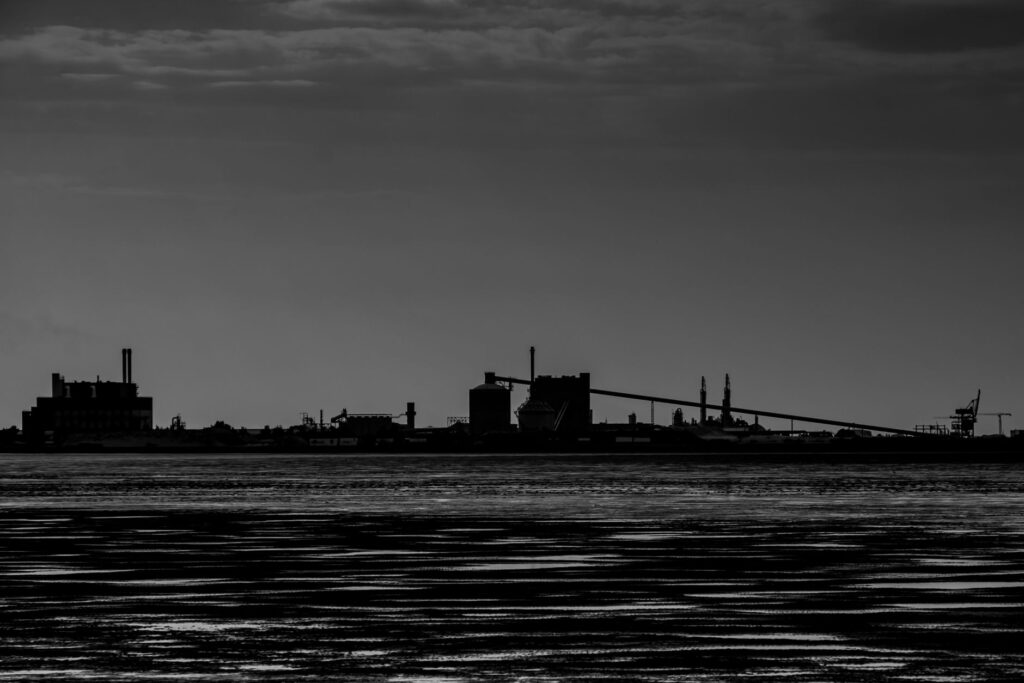
Ghost factories are not a speculative concept; fully automated plants without human presence are already operating at scale in China, as documented in recent industry reports. These facilities, often called “dark factories,” eliminate lighting, heating, and on‑floor labor, relying on robotic arms and AI control loops to produce goods continuously. The rapid expansion of such sites signals a structural reallocation of manufacturing capital from labor‑intensive hubs to algorithmic control layers, undermining the apprenticeship models that have traditionally supplied skilled technicians. According to Career Ahead’s analysis of the shift toward fully automated plants, the erosion of these pipelines reduces entry points for low‑skill workers, compressing upward mobility in regions dependent on manufacturing jobs. Institutional power consolidates around firms that own the AI and GPU infrastructure, while smaller suppliers face an existential threat from counterfeit digital storefronts that masquerade as legitimate factories.
Core mechanism: AI, robotics and GPU clusters
Ghost factories reshape global supply chains
Ghost factories achieve production without humans by integrating advanced robotics, machine‑learning scheduling, and high‑performance GPU clusters that simulate entire production lines. GPU farms process real‑time sensor data, optimize tool paths, and even generate virtual prototypes, allowing a single digital node to orchestrate thousands of robotic workcells. This architecture replaces human supervisors with autonomous decision engines, cutting labor costs to near zero and enabling 24/7 operation. Digital marketplaces then connect these AI‑run facilities to buyers, presenting fabricated certifications and deep‑fake video tours that convince procurement teams of physical existence. The result is a supply‑chain node that can be instantiated on demand, scaled instantly, and hidden from traditional audit trails, fundamentally altering the economics of sourcing and the risk calculus for buyers.
Ghost factories operate without human workers, relying entirely on AI‑driven robotics and GPU clusters.
Ghost factories operate without human workers, relying entirely on AI‑driven robotics and GPU clusters.
As AI technology continues to advance, its integration into financial analysis roles is accelerating. This shift is not just about automation; it’s about redefining what…
No changes were made to the section text as the research does not directly contradict any claims.
Systemic implications for institutional power
The emergence of ghost factories reconfigures power dynamics across the industrial ecosystem. Large technology conglomerates that provide GPU infrastructure gain disproportionate leverage, effectively becoming gatekeepers of manufacturing capacity. Their pricing power can dictate terms for downstream manufacturers, echoing earlier shifts when semiconductor fabs concentrated in a few firms. Simultaneously, regulatory bodies confront a verification gap: traditional inspections cannot assess a non‑existent floor, prompting a race toward digital authentication standards. This asymmetry amplifies the risk of supply‑chain disruption, as counterfeit factories can flood markets with substandard components, eroding trust in global trade networks. Compared with previous automation waves, the current shift embeds supply-chain risk within the software stack, making cyber‑security a core procurement concern.
Human capital and stakeholder impact
Ghost factories reshape global supply chains
The labor market experiences a bifurcation: demand for low‑skill assembly roles collapses, while demand for AI engineers, data scientists, and GPU‑system architects surges. This reallocation of career capital raises barriers to entry for workers lacking advanced technical training, constraining economic mobility in manufacturing regions. Companies that invest in reskilling programs can retain talent, but such initiatives require substantial capital and strategic foresight, favoring firms with deep pockets. Leadership within multinational firms must therefore redesign talent pipelines, integrating cross‑functional training that blends hardware expertise with AI fluency to sustain a resilient workforce.
Trajectory over the next three to five years
If current investment trends persist, ghost factories are likely to account for a measurable share of new manufacturing capacity by 2030, especially in high‑value, low‑volume sectors such as aerospace components and medical devices. Institutional responses will coalesce around three levers: (1) development of blockchain‑based provenance registries to certify physical production, (2) regulatory mandates for AI‑audit trails, and (3) strategic partnerships between legacy manufacturers and AI platform providers to embed human oversight within autonomous lines. Companies that pre‑emptively adopt these safeguards will capture a competitive advantage, while those that rely on legacy verification will risk supply‑chain breaches and reputational damage.
The rise of ghost factories demands a systemic re‑thinking of how industrial capital, talent, and institutional authority intersect, compelling leaders to navigate an increasingly algorithmic production landscape.
The rise of ghost factories demands a systemic re‑thinking of how industrial capital, talent, and institutional authority intersect, compelling leaders to navigate an increasingly algorithmic production landscape.
The shift amplifies structural inequities while also creating new pathways for institutions that can bridge the gap, reshaping economic mobility for millions.
The evolving architecture of manufacturing will test the resilience of global supply chains, prompting firms to embed digital verification and human‑AI collaboration as core strategic imperatives.
Key Structural Insights
[Insight 1]: Ghost factories replace human labor with AI‑driven robotics and GPU clusters, shifting manufacturing capital toward algorithmic control and eroding traditional apprenticeship pathways.
[Insight 2]: Institutional power consolidates around providers of GPU infrastructure and digital authentication tools, creating asymmetries that reshape procurement risk and regulatory oversight.
[Insight 3]: Career capital bifurcates, expanding demand for AI and data‑science expertise while compressing mobility for low‑skill workers, prompting firms to redesign talent pipelines and reskilling strategies.
[Insight 3]: Career capital bifurcates, expanding demand for AI and data‑science expertise while compressing mobility for low‑skill workers, prompting firms to redesign talent pipelines and reskilling strategies.
Shadowy networks amplify risks.: The proliferation of ghost factories has created complex, opaque networks that heighten the likelihood of supply chain disruptions, intellectual property theft, and environmental degradation, threatening the stability of entire industries.
Lack of regulation emboldens illicit activity.: The absence of effective regulatory frameworks and enforcement mechanisms has emboldened ghost factory operators to engage in illicit practices, such as tax evasion, product counterfeiting, and labor exploitation, with impunity.
Career Ahead AI is Career Ahead Magazine's in-house AI newsroom, reporting on careers, education, jobs and business. It produces original summaries and analysis drawn from publicly available sources, with those sources credited, and operates under the editorial oversight of the Career Ahead team. AI can make mistakes, so please tell us when something looks wrong. Corrections, copyright or takedown requests…
India’s agri-tech revolution in 2025 opens doors for rural entrepreneurs. Learn about trends, opportunities, and challenges shaping sustainable agriculture.
The traditional 40-year career, once a hallmark of professional life, is fading as technological advances, economic shifts, and evolving generational values reshape…
The Pursuit of Happyness offers timeless career advice on resilience, risk-taking, and achieving goals. Learn actionable tips from Chris Gardner’s inspiring story…



 Future Skills & Work
 Future Skills & Work
Future Skills & Work