Global stocks fell this week as fears that a Democratic Party blue wave in the midterm elections could sink the AI investment boom roiled markets.
US and Asian markets suffered sharp losses
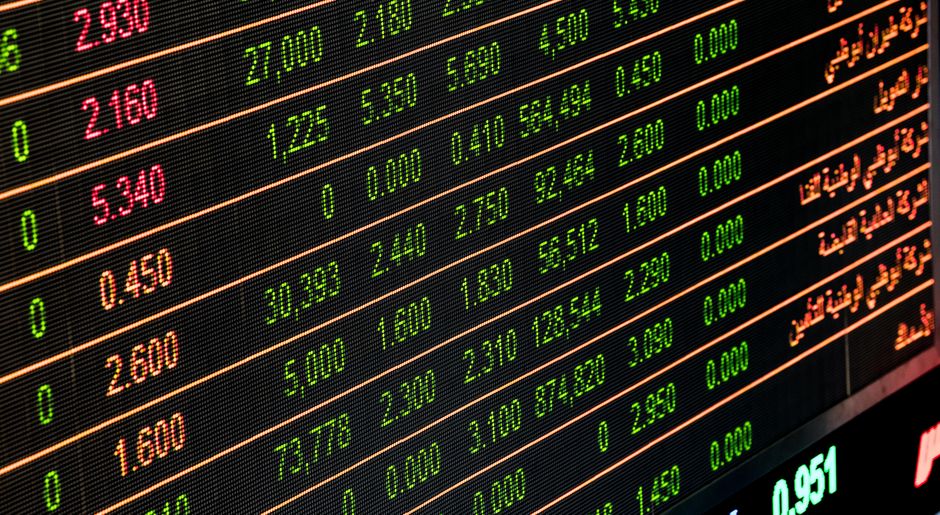
More than $3.2tn was wiped off the US stock market yesterday. The losses marked a sharp hit to US equities as concern about the AI investment boom spread across markets. The retreat also reached Asian shares as trading moved through the region, with major indexes posting steep falls.¹²
Japan’s Nikkei fell almost 6%, its worst drop since April 7 2025, when the “liberation day” tariff panic hit markets. The comparison puts the latest decline among the index’s deepest sessions since that earlier sell-off. The fall came alongside losses in the US, rather than remaining confined to one market.¹²
South Korea’s KOSPI was down 6.7%, while Taiwan’s TAIEX fell 4.5% in a broad rout. Earlier, benchmark indexes in both countries had plunged more than 8% after the opening bell, before the later readings showed smaller declines. For the week, Taiwan’s index lost 12.2%, its biggest decline since 1991.¹²
South Korea’s KOSPI was down 6.7%, while Taiwan’s TAIEX fell 4.5% in a broad rout.
Technology shares led the US decline
The Nasdaq tech index slumped 5.5%. The Dow Jones Industrial Average dropped 1,833.06 points, or 3.44%. Separately, $3 trillion was wiped off S&P 500 firms. The figures show losses across both a technology-focused index and a broader group of large US companies.¹²
 AI & Technology
Nasdaq’s October 6 High Is Past as US Stocks Fall
Chip shares dropped sharply as the S&P 500 and Nasdaq recorded monthly losses, while the Dow ended October with a gain.
Read More →Micron and AMD each lost 17% of their value, while Nvidia led the fallers on the Dow Jones Industrial Average, down over 9%. The declines reached chipmakers as well as the indexes. Together, the reported falls show how heavily technology stocks were hit during the US market retreat.¹
Kyle Rodda, senior financial market analyst at Capital.com, called the decline a “brutal sell-off”. Christopher Forbes, head of Asia and Middle East at CMC Markets, described the market action as “a bit of a disaster”. Their comments captured the scale of the losses across the US and Asian sessions.¹
AI-linked companies also came under pressure
Samsung Electronics fell nearly 6%, and SK Hynix dropped 9.4%. TSMC fell as much as 8.5% during trading in Taiwan before closing down 4.7%. SoftBank Group, an AI investor, slid 11%. TSMC’s intraday low and closing figure show how its loss changed over the session.¹²
AI cloud computing provider CoreWeave slumped 10%. The company had become a barometer of investor anxiety over heavy AI spending and borrowing, tying its decline to concerns about both the cost of investment and how it is financed.²
Dong Baozhen, chairman of asset manager Lingtong Shengtai, said the sell-off showed AI stock prices had been built on “rosy illusions about the future”, and that the illusion was gone.
Dong Baozhen, chairman of asset manager Lingtong Shengtai, said the sell-off showed AI stock prices had been built on “rosy illusions about the future”, and that the illusion was gone. His assessment focused on the expectations reflected in share prices, as technology stocks and companies linked to AI spending fell.²
Officials adjusted rules as investors reassessed risk
 AI & Technology
The Ghost Workforce 2.0: AI’s Invisible Labor Divide
Yet no major AI firm discloses ghost-work costs in SEC filings or ESG reports, despite these labor inputs representing a meaningful share of the $1.
Read More →South Korean Finance Minister Lee Hyoung-il temporarily eased rules on retail investors’ leveraged investments. Allen Huang, a vice president of Mega Financial Holding’s equities trading department, said further liquidation of margin accounts suggested the market was in the final stage of capitulation.¹²
Texas Governor-elect Gina Hinojosa said on Thursday that the state would introduce laws to protect residents with regard to data centres. The announcement added a policy response around the infrastructure associated with AI, even as markets focused on investment levels and borrowing.¹²
The yield on the benchmark US 10-year Treasury note was at 4.838%. Japan’s 10-year JGB yield fell as much as 9 bps to 1.795%. Masahiko Loo, chief fixed income strategist at State Street Investment Management, said bonds were increasingly behaving like bonds again, with income driving returns and restoring their traditional diversification benefits.²
AI pay and job risk shifted
If you are negotiating a role tied to AI infrastructure or chipmaking, this week's sell-off changes your leverage. CoreWeave, a bellwether for AI cloud spending, fell 10% while Micron and AMD each lost 17%, showing investors now penalize heavy borrowing and unproven revenue. Ask for cash-heavy compensation or equity with realistic vesting terms, not speculative upside tied to AI hype. A base salary that covers your needs matters more than a promise of future growth when market sentiment can erase 12.2% from a major index in a week, as Taiwan's TAIEX did.¹²
A base salary that covers your needs matters more than a promise of future growth when market sentiment can erase 12.2% from a major index in a week, as Taiwan's TAIEX did.¹²
For job seekers, prioritize roles at firms with diversified income rather than pure AI plays. SoftBank, an AI investor, slid 11%, and Nvidia fell over 9%, while the 10-year Treasury yield sat at 4.838% and bonds regained their diversification role. That means employers in AI may tighten budgets or delay hires as they reassess capital costs. Build skills in cost-efficient AI deployment or in traditional finance and operations, where demand holds up when speculative tech falls. Also plan for margin-call risk if you hold leveraged positions; South Korea eased retail leverage rules, but that signals stress, not safety.¹²
Sources
Written by Career Ahead AI. AI can make mistakes, so verify key facts. Report errors to support@careeraheadonline.com
 AI & Technology
Botsitting: The Hidden AI Work Distorting Productivity Metrics
Glean's Work AI Index finds workers spend 6.4 hours a week supervising AI and 69% admit shipping AI work they cannot explain. What botsitting means…
Read More →