No products in the cart.

Green Capital: How Sustainable Consumerism Is Redefining Career Pathways

Sustainable consumerism is restructuring the allocation of career capital, privileging green skill sets and reshaping institutional power as firms embed environmental metrics into core strategy.

The surge in eco‑friendly purchasing is reshaping corporate hierarchies, spawning new professional ecosystems, and altering the calculus of economic mobility. As firms embed sustainability into core strategy, the distribution of career capital is shifting from legacy industries to a network of green innovators, regulators, and market enablers.
Macro Shift Toward Sustainable Consumption
The pandemic’s disruption of daily routines granted consumers unprecedented reflective time, accelerating a pre‑existing tilt toward environmental responsibility. Recent surveys indicate that 75 % of shoppers now weigh sustainability more heavily than they did pre‑2020[1]. Parallel market analyses project the global sustainable‑goods sector to exceed $12.8 billion by 2025, outpacing conventional categories by an average annual growth rate of 9 %[2]. Digital trace data corroborate the behavioral pivot: searches for “sustainable fashion” rose 25 % and “eco‑friendly home goods” 30 % year‑over‑year[4].
These metrics signal more than a transient fad; they reflect a structural reallocation of consumer surplus toward products that align with climate‑risk mitigation and social equity goals. The macro‑level implication is a reconfiguration of demand curves that now embed externalities as price signals, compelling firms to internalize sustainability or cede market share.
Mechanics of the Sustainable Consumer Surge

At the core of this shift lies heightened issue awareness. 80 % of respondents report a willingness to purchase from brands that prioritize sustainability[1]. This attitudinal change is reinforced by two reinforcing mechanisms: product accessibility and network amplification.
First, the supply side has expanded; the catalog of certified sustainable products grew 20 % in the past twelve months, driven by advances in circular design, bio‑based materials, and transparent supply‑chain verification platforms such as the Global Reporting Initiative (GRI) and the Science‑Based Targets initiative (SBTi)[2]. The proliferation of third‑party certifications (e.g., B‑Corp, Cradle‑to‑Cradle) reduces information asymmetry, lowering the transaction cost for eco‑conscious buyers.
Second, social media and influencer ecosystems have become catalytic nodes. Approximately 60 % of consumers cite brand presence on platforms like Instagram and TikTok as a decisive factor in sustainable purchase intent[3]. Influencer‑led campaigns have transformed abstract climate narratives into tangible product stories, compressing the diffusion curve from the classic S‑curve’s “early majority” to a “fast‑track early adopter” segment.
Second, social media and influencer ecosystems have become catalytic nodes.
Together, awareness, availability, and amplification create a feedback loop that entrenches eco‑friendly consumption as a normative market condition rather than an ancillary niche.
Systemic Repercussions Across Industries
You may also like
 Government & Policy
Sebi Reviews Position Limits to Enhance Non-Agri Liquidity
As part of this initiative, Sebi is also emphasizing the importance of phased physical settlement for agricultural commodities.
Read More →The consumer‑driven demand shock reverberates through multiple institutional strata, reshaping production logic, capital allocation, and regulatory oversight.
Product Development and Corporate Strategy
Corporations are reorienting R&D pipelines toward low‑carbon inputs. Unilever’s Sustainable Living Plan, for instance, now accounts for 70 % of its total brand portfolio, with a target to halve the environmental footprint of its products by 2030[5]. This strategic pivot is mirrored across sectors: automotive firms are reallocating up to 30 % of capital expenditure to electric‑vehicle platforms, while apparel giants are investing in recycled fiber technologies at a rate three times higher than in 2018[6].
Such strategic realignment reallocates internal power structures: sustainability officers ascend to C‑suite status, reporting directly to CEOs, while traditional product managers face new competency mandates tied to lifecycle assessment (LCA) and circularity metrics.
Entrepreneurial Ecosystem and Institutional Funding
The surge in consumer demand has catalyzed a 30 % year‑over‑year rise in sustainable‑focused startups[4]. Venture capital (VC) flows into green tech have eclipsed $45 billion in 2024, a 2.5‑fold increase from 2020, with institutional investors—pension funds, sovereign wealth funds—embedding ESG criteria into allocation models[7]. This capital migration reinforces a feedback loop: as green firms demonstrate scalable profitability, institutional investors amplify funding, further crowding out capital from carbon‑intensive incumbents.
Regulatory Landscape and Greenwashing Countermeasures
Heightened scrutiny has prompted regulatory bodies to tighten disclosure standards. The European Union’s Corporate Sustainability Reporting Directive (CSRD) now obligates firms with €150 million in turnover to disclose climate‑related risks, exposing greenwashing practices that previously thrived under vague labeling regimes[8]. Nevertheless, the market continues to grapple with asymmetric information; a 2023 analysis found that 22 % of “sustainable” claims lack verifiable evidence, underscoring a systemic tension between market incentives and enforcement capacity[1].
Collectively, these dynamics illustrate a systemic shift where sustainability becomes a central axis of corporate governance, capital markets, and public policy, reshaping institutional power balances.
According to the World Economic Forum’s “Future of Jobs” report, green‑skill occupations are projected to grow 12 % annually through 2030, outpacing the overall job market growth of 5 %[9].
Career Capital Realignment in the Green Economy
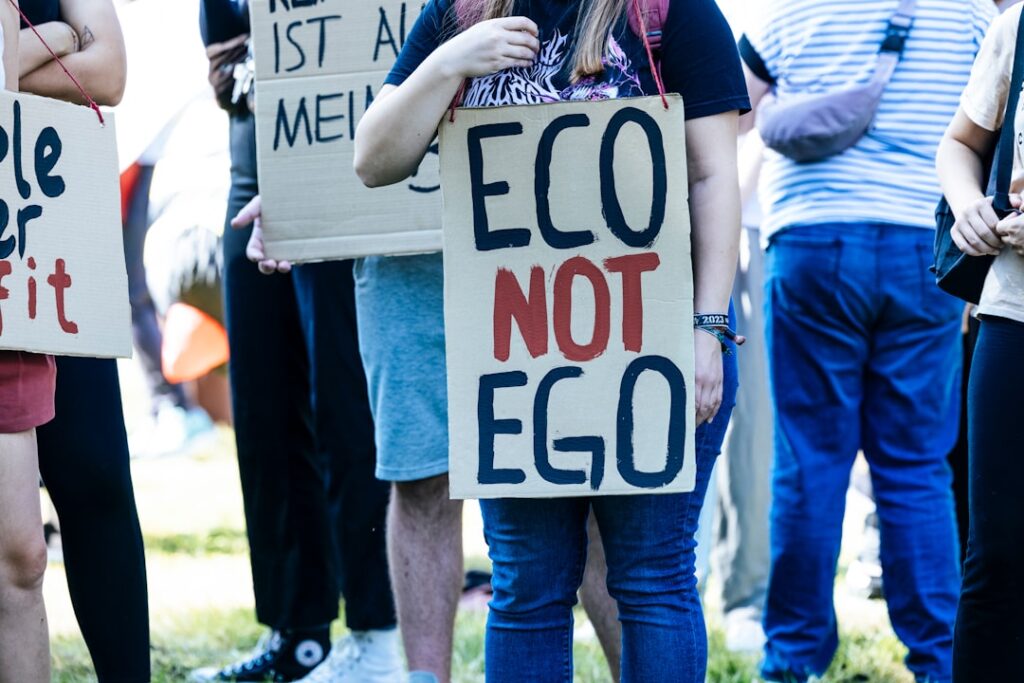
The reorientation of corporate and financial systems is translating into a tangible reallocation of career capital—skills, networks, and credentialing that determine professional advancement.
Emerging Occupational Clusters
You may also like
 Government & Policy
HDFC Bank’s CEO Choice Reflects Regulatory Shift
Anup Bagchi, a veteran from ICICI Bank, has been appointed as the new managing director and chief executive officer of HDFC Bank, effective October 1,…
Read More →Sustainable consulting, ESG analytics, and green product design have emerged as high‑growth clusters. According to the World Economic Forum’s “Future of Jobs” report, green‑skill occupations are projected to grow 12 % annually through 2030, outpacing the overall job market growth of 5 %[9]. Positions such as “Circular Economy Analyst” and “Carbon Accounting Lead” now command median salaries 15‑20 % above comparable non‑green roles, reflecting a premium on expertise that aligns with corporate sustainability targets.
Pathways for Economic Mobility
The democratization of green skill acquisition—via MOOCs, industry certifications (e.g., LEED, GRI), and corporate upskilling programs—lowers entry barriers for workers from traditionally underrepresented groups. Case in point: The “Green Skills Initiative” launched by the U.S. Department of Labor in 2022 has facilitated the transition of over 120,000 displaced manufacturing workers into renewable‑energy and energy‑efficiency roles, with an average wage uplift of 18 %[10].
This trend suggests a structural avenue for upward mobility, contingent on the alignment of public training resources with private sector demand.
Leadership and Institutional Power
Leadership pipelines are increasingly infused with sustainability credentials. A 2024 survey of Fortune 500 boards found that 42 % of newly appointed directors possess ESG expertise, a rise from 18 % in 2018[5]. This infusion reshapes decision‑making hierarchies, embedding climate risk assessment into capital‑allocation deliberations and amplifying the influence of sustainability advocates within traditionally finance‑dominated governance structures.
Conversely, sectors lagging in green transformation—such as fossil‑fuel extraction and legacy heavy manufacturing—experience a depreciation of career capital, as talent migrates toward greener firms offering clearer long‑term prospects. This talent reallocation intensifies competitive pressure on laggards to accelerate decarbonization or face a systemic erosion of human capital.
Conversely, sectors lagging in green transformation—such as fossil‑fuel extraction and legacy heavy manufacturing—experience a depreciation of career capital, as talent migrates toward greener firms offering clearer long‑term prospects.
Projection: Institutional Trajectory to 2030
If current adoption curves persist, the institutional architecture of the labor market will undergo a pronounced bifurcation. By 2030, sustainable‑aligned firms are projected to capture 55 % of total private‑sector investment, driven by both fiduciary mandates and consumer‑derived risk premiums[7].
The ripple effects will manifest in three interlocking domains:
You may also like
 Government & Policy
BT accused of ‘bullying’ customers
BT's decision to pause broadband services for some customers has sparked accusations of bullying, raising concerns about the impact on vulnerable populations during the transition…
Read More →- Skill Standardization – Professional bodies will codify green competencies, creating credentialed pathways akin to the CPA model for finance.
- Regulatory Convergence – Cross‑jurisdictional ESG reporting standards will converge, reducing compliance fragmentation and reinforcing a global baseline for sustainable performance.
- Talent Flow Dynamics – Labor migration patterns will increasingly align with regional sustainability clusters (e.g., renewable energy hubs in the U.S. Southwest, circular‑economy incubators in the Nordics), reshaping geographic mobility trends and regional economic development strategies.
The trajectory underscores a systemic reallocation of career capital toward institutions that can demonstrate measurable environmental impact, signaling a durable shift in the calculus of professional success.
Key Structural Insights
[Insight 1]: Consumer sustainability awareness has transitioned from a peripheral preference to a core demand driver, compelling firms to embed environmental metrics into product development and governance.
[Insight 2]: Institutional capital—venture funding, corporate R&D, and regulatory enforcement—is increasingly conditioned on verifiable ESG performance, creating asymmetric incentives that favor green innovators over carbon‑intensive incumbents.
- [Insight 3]: The reconfiguration of career capital favors skill sets tied to sustainability, offering new pathways for economic mobility while reshaping leadership pipelines and power structures within corporations.