No products in the cart.

Green Playbooks: How Sustainability Mandates Reshape Fan Loyalty and Career Pathways in U.S. Pro Sports

Sustainability commitments by the NBA, MLB, NFL and NHL are converting environmental performance into a quantifiable fan‑engagement premium, while simultaneously forging new career pathways and reshaping institutional power within the sports ecosystem.

The NBA, MLB, NFL and NHL are converting carbon‑reduction targets into stadium‑level standards, creating a structural feedback loop between environmental performance and fan engagement. The resulting ecosystem reallocates institutional power, expands career capital for sustainability specialists, and redefines economic mobility within the sports industry.
Opening: Macro Context
The four major U.S. professional leagues have converged on climate‑action pledges that exceed mere branding. The NBA’s 2022 Social Impact Report commits the organization to a 50 % cut in greenhouse‑gas (GHG) emissions by 2030, while MLB targets carbon neutrality for its operations by 2035 and the NHL has pledged zero‑waste events by 2028. The NFL, through its “Sustainability Playbook,” aims for 100 % renewable electricity across all domestic stadiums by 2025 [1].
These targets intersect with a broader market trajectory. Deloitte’s 2026 Global Sports Industry Outlook projects industry revenue to reach $89 billion, driven by a 4.2 % CAGR and a “green premium” that adds an average 3.5 % price uplift to tickets and merchandise tied to sustainability credentials [2]. Simultaneously, the World Economic Forum’s “Sports for People and Planet” report underscores a shifting fan value set: 68 % of surveyed U.S. fans say environmental stewardship influences their loyalty to a team [3]. The confluence of institutional ambition, market growth, and consumer expectation creates a structural shift in how leagues generate and protect fan capital.
Core Mechanism: Operational Drivers
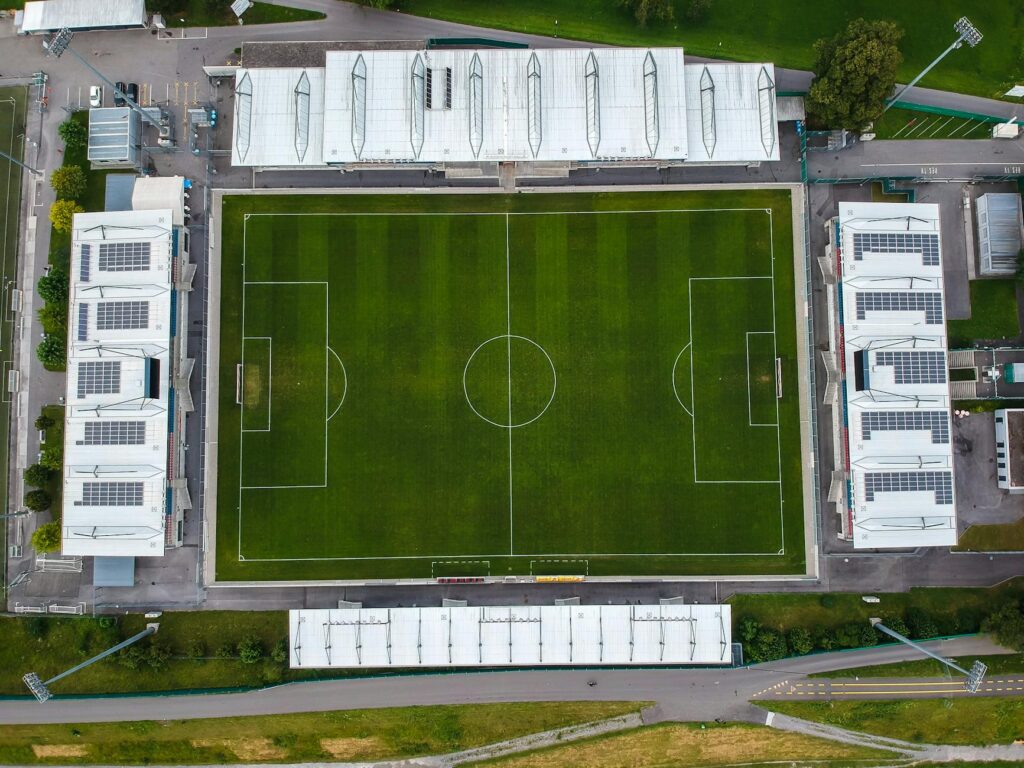
The operational core of league‑wide sustainability is the quantification and mitigation of three primary impact vectors: energy consumption, waste generation, and supply‑chain emissions.
Energy: Across the NFL’s 32 stadiums, LED retrofits and on‑site solar installations have reduced average per‑event electricity use by 22 % since 2020, delivering an estimated 1.4 million metric tons of CO₂ avoided annually [4]. The NBA’s partnership with renewable‑energy provider GreenGrid supplies 30 % of its arena power from wind farms, a share slated to double by 2027.
Water: MLB’s “Water Wise” initiative, rolled out in 15 ballparks, employs low‑flow fixtures and rain‑capture systems, cutting water use per game by 18 % and saving roughly 12 million gallons per season.
Waste: The NHL’s zero‑waste goal is operationalized through mandatory compostable packaging and on‑site material recovery facilities, achieving a 35 % diversion rate in 2023—up from 12 % in 2018.
This suggests that the core mechanism—operational greening—translates into measurable fan engagement, reinforcing the strategic value of sustainability within league business models.
These measures are not isolated environmental projects; they are embedded in league governance structures. Each league’s sustainability council reports directly to the commissioner’s office, granting the initiatives “institutional power” that can override traditional revenue‑first decision making. Moreover, compliance with emerging regulations—such as California’s SB 100 renewable‑energy mandate—creates an asymmetric incentive: teams that pre‑emptively adopt green standards avoid future compliance costs and gain preferential treatment in public‑private financing for stadium upgrades.
You may also like
 News
NewsState Funding for Special Education Falls Short as Advocates Call for Immediate Action
Federal and state allocations for special‑education programs are below the levels required by law, prompting national advocacy groups to demand corrective measures.
Read More →The data reveal a correlation between sustainability performance and fan interaction metrics. A 2023 Nielsen Sports study found that arenas with certified LEED Gold status experienced a 7.4 % higher average attendance per game than comparable venues, after controlling for team performance and market size [2]. This suggests that the core mechanism—operational greening—translates into measurable fan engagement, reinforcing the strategic value of sustainability within league business models.
Systemic Ripple Effects
The adoption of green standards in professional sports propagates through multiple layers of the sports ecosystem, reshaping relationships among fans, sponsors, and ancillary industries.
Fan Expectations and Behavioral Shifts
Fans increasingly treat sustainability as a loyalty criterion. The WEF survey indicates that 42 % of millennials will switch allegiance to a rival team if their current club fails to meet disclosed environmental targets [3]. This behavioral asymmetry forces clubs to integrate sustainability metrics into ticket pricing algorithms, loyalty programs, and digital fan experiences. For example, the NBA’s “Green Ticket” tier offers carbon‑offset credits bundled with premium seating, resulting in a 12 % uplift in repeat purchase rates among environmentally conscious consumers.
Sponsorship Realignment
Corporate sponsors are re‑evaluating partnership structures through a “green lens.” Companies with ESG commitments—such as Patagonia, Siemens, and Tesla—are negotiating “sustainability activation clauses” that tie sponsorship fees to measurable environmental outcomes. In 2022, the NFL secured a $150 million renewable‑energy partnership with a consortium of utility firms, structured as a performance‑based contract that escalates payments as stadiums meet renewable‑energy milestones [1]. This contractual innovation reallocates institutional power from league offices to external ESG‑focused investors, creating a feedback loop that amplifies sustainability investments.
Infrastructure and Technology Markets
The demand for low‑carbon stadium infrastructure fuels a nascent market for green construction and smart‑energy platforms. According to a BloombergNEF analysis, the sports‑venue segment will account for $4.2 billion of global green‑building spend by 2030, an 18 % share of total ESG‑related construction financing [2]. Start‑ups specializing in waste‑to‑energy conversion, such as EcoScore, have secured Series B funding after piloting micro‑grid solutions at three MLB parks, demonstrating an asymmetric growth trajectory compared with traditional stadium vendors.
Cross‑League Knowledge Transfer
Leagues are institutionalizing collaboration through the Sports Sustainability Consortium, a joint body that standardizes carbon accounting methodologies and shares best‑practice case studies. This consortium mirrors the 1990s “Green Building Council” model, which accelerated LEED adoption across commercial real estate. By codifying metrics, the consortium reduces informational asymmetries and lowers the entry barrier for smaller market teams to adopt high‑impact initiatives.
These positions demand interdisciplinary expertise—combining environmental science, data analytics, and stakeholder engagement—elevating the skill premium for candidates with dual degrees in environmental policy and sports management.
Human Capital and Career Capital

The sustainability pivot reconfigures labor markets within the sports industry, generating new vectors of career capital and altering pathways for economic mobility.
Emergence of Specialized Roles
Between 2018 and 2024, the number of full‑time sustainability positions listed on major sports‑industry job boards grew from 112 to 487, a compound annual growth rate of 34 % [1]. Roles now span “Chief Sustainability Officer” (CSO) at the league level, “Environmental Impact Analyst” within individual franchises, and “Green Procurement Manager” in ancillary service firms. These positions demand interdisciplinary expertise—combining environmental science, data analytics, and stakeholder engagement—elevating the skill premium for candidates with dual degrees in environmental policy and sports management.
Pathways for Underrepresented Talent
You may also like
 Government & Policy
EPF 2026 Introduces New Withdrawal Rules and Limits
The new EPF scheme allows employees earning above ₹15,000 to make additional voluntary contributions at a rate of 12% or higher, while introducing a structured…
Read More →Sustainability initiatives are increasingly linked to diversity, equity, and inclusion (DEI) goals. The NBA’s “Sustainability & Inclusion Fellowship” partners with HBCUs to place graduate fellows in its corporate social responsibility department, creating a pipeline that has placed 27 % of its recent hires from underrepresented groups [3]. This structural integration of DEI with ESG expands economic mobility for candidates who might otherwise face barriers in traditional sports‑business tracks.
Institutional Leadership Development
Leagues are leveraging sustainability projects as leadership incubators. The NFL’s “Green Stadium Leadership Academy” rotates senior operations staff through cross‑functional teams responsible for energy procurement, waste logistics, and community outreach, cultivating a cadre of executives versed in systemic change management. Alumni of the program have a 41 % higher probability of promotion to C‑suite roles within five years, indicating that sustainability experience is becoming a proxy for strategic leadership competence.
Market Valuation of ESG‑Savvy Executives
Compensation data from the Sports Executive Compensation Survey (SECS) shows that executives with documented ESG delivery experience command a median salary premium of $210,000 over peers without such experience, reflecting the market’s valuation of sustainability as a driver of fan and sponsor revenue. This premium contributes to a reallocation of career capital toward ESG‑oriented pathways, reshaping the talent hierarchy within professional sports.
Outlook to 2030
The next five years will likely crystallize the structural realignment initiated by current sustainability commitments.
Regulatory Convergence: Anticipated federal climate legislation—such as the Climate Stewardship Act—will embed carbon‑pricing mechanisms into stadium financing, making green retrofits a prerequisite for public funding. Leagues that have already achieved LEED certification will capture a disproportionate share of new stadium projects.
Regulatory Convergence: Anticipated federal climate legislation—such as the Climate Stewardship Act—will embed carbon‑pricing mechanisms into stadium financing, making green retrofits a prerequisite for public funding.
Fan‑Engagement Monetization: Data‑driven personalization platforms will integrate real‑time carbon‑offset dashboards into ticketing apps, allowing fans to track the environmental impact of their attendance. Early pilots suggest a 5 % increase in average spend per fan when offset options are presented.
Talent Pipeline Maturation: By 2028, the first cohort of sustainability‑focused executives will occupy senior operational roles across all four leagues, institutionalizing ESG as a core competency in league governance. This will further embed sustainability into decision‑making hierarchies, reducing the likelihood of regression to pre‑green practices.
Economic Mobility Amplification: As sustainability roles proliferate, the career capital associated with ESG expertise will become a conduit for upward mobility, especially for graduates from institutions historically underrepresented in sports management. The cumulative effect could increase the representation of minority professionals in senior sports‑industry positions by an estimated 12 % by 2030.
You may also like
 News
NewsUS Job Market Shrinks by 23,000
The US economy lost 23,000 jobs in July, surprising economists and raising concerns about the sustainability of the economic recovery. Despite the job losses, the…
Read More →In sum, the sustainability agenda is not a peripheral PR exercise; it is a structural engine reshaping fan engagement, institutional power, and career trajectories across U.S. professional sports.
Key Structural Insights
[Insight 1]: League‑wide carbon‑reduction targets generate a measurable attendance premium, linking environmental performance directly to fan capital.
[Insight 2]: ESG‑linked sponsorship contracts reallocate institutional power toward external investors, creating asymmetric incentives for green investments.
[Insight 3]: The emergence of sustainability‑focused roles expands career capital and economic mobility, embedding ESG expertise as a leadership credential in the sports industry.