

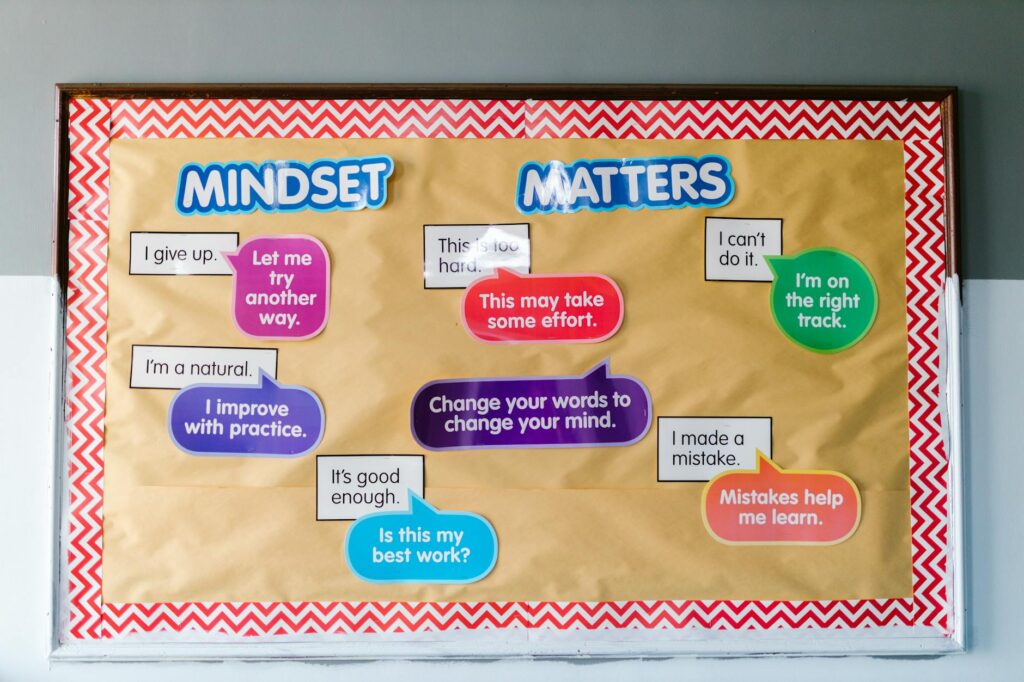
Bold reform agendas across OECD schools are converting “grit” metrics into growth‑mindset curricula, altering the supply of career capital and the pathways of economic mobility.
The shift is already visible in competency‑based progression, employer‑education linkages, and the emerging leadership pipeline of adaptable talent.
Macro Context: Educational Reform Meets a Transforming Labor Market
Since the 2015 OECD “Future of Education and Skills” summit, member states have accelerated reforms that prioritize learning agility over static achievement scores. Across 35 economies, the share of curricula that embed growth‑mindset language rose from 12 % in 2014 to 48 % in 2023, according to the OECD Learning Compass data set [1]. This institutional pivot aligns with a broader labor‑market transition: the share of jobs requiring advanced problem‑solving and continuous upskilling grew from 27 % to 41 % of total employment between 2010 and 2022 in the OECD, as measured by the Skills Outlook Survey [2].
The macro‑significance is twofold. First, the traditional “grit” paradigm—emphasizing perseverance in a fixed‑skill context—has become a limiting signal for talent pipelines in an economy where skill obsolescence averages 3.5 years [3]. Second, by embedding growth‑mindset principles, education systems are directly reshaping the distribution of career capital, a key determinant of upward economic mobility and institutional influence.
Mechanism: From Grit Metrics to Growth‑Mindset Frameworks

The core mechanism rests on a redefinition of assessment and pedagogy. OECD’s 2021 “Mindsets, Attitudes and Learning” report documents that 68 % of participating ministries now link student evaluation to competency trajectories rather than single‑test scores [1]. This shift is operationalized through three interlocking policy levers:
- Competency‑Based Progression (CBP). Countries such as Finland and Canada have replaced age‑graded promotion with mastery thresholds. In Finland, CBP reduced the variance in student‑to‑teacher ratios for advanced STEM tracks by 22 % while increasing enrollment in interdisciplinary projects [4].
- Personalized Learning Platforms (PLPs). Data‑driven PLPs, mandated in Singapore’s SkillsFuture framework, provide real‑time feedback loops that calibrate difficulty based on demonstrated growth rates, not static scores [5]. Between 2018 and 2022, Singaporean secondary students reported a 15 % rise in self‑efficacy scores, correlating with a 9 % increase in enrollment in emerging technology pathways [5].
- Teacher‑Growth Mindset Development (TGMD). OECD’s 2022 teacher‑training audit shows that 74 % of surveyed teacher‑education programs now include modules on neuroplasticity and growth‑mindset scaffolding [2]. Schools that adopted TGMD reported a 12 % reduction in dropout rates among at‑risk cohorts, a proxy for sustained career aspiration formation [6].
Collectively, these levers transform the educational input‑output model: instead of funneling students into predetermined occupational tracks, systems now generate a dynamic pool of adaptable talent, expanding the institutional reservoir of career capital.
Data‑driven PLPs, mandated in Singapore’s SkillsFuture framework, provide real‑time feedback loops that calibrate difficulty based on demonstrated growth rates, not static scores [5].
Systemic Ripple Effects Across Institutional Structures
The growth‑mindset reform agenda triggers structural ripples that reconfigure several institutional layers.
Curriculum and Assessment Architecture
 Career Guidance
How to Switch Industries Mid-Career Without Starting Over
Bridge roles can reduce risk, while targeted skills and industry-specific applications help you make the case for a new field.
Read More →Curricula have shifted from content‑heavy syllabi to competency clusters emphasizing “learning how to learn.” In Germany’s 2020 curriculum overhaul, 30 % of vocational modules were re‑designed to embed iterative project cycles, mirroring the “fail‑fast” approach of tech firms [7]. The resulting assessment framework now weights process metrics (e.g., iteration count, reflection quality) at 45 % of the final grade, up from 10 % a decade earlier.
School Governance and Leadership
Growth‑mindset reforms necessitate distributed leadership. The OECD’s 2023 School Leadership Survey indicates that 62 % of principals in OECD countries now operate under “shared governance” models, delegating curriculum adaptation authority to teacher teams rather than central administrators [2]. This decentralization aligns leadership incentives with student‑centered outcomes, fostering institutional agility.
Employer‑Education Alignment
Employers are recalibrating talent pipelines to match the new competency signals. In the Netherlands, the “Talent Bridge” initiative links apprenticeship outcomes directly to growth‑mindset assessment dashboards, enabling firms to recruit based on demonstrated learning velocity rather than static qualifications [8]. Early‑stage data shows a 13 % increase in youth employment in high‑growth sectors (AI, clean tech) for participants versus non‑participants.
Funding and Resource Allocation
Public funding formulas are being revised to reward schools that demonstrate measurable growth‑mindset gains. France’s 2022 “Learning Progress Index” allocates an additional €200 million annually to districts exceeding a 0.4 standard‑deviation improvement in student self‑efficacy scores [9]. This performance‑based financing embeds growth‑mindset outcomes into the fiscal architecture of education ministries.
Human Capital Outcomes: Aspirations, Mobility, and Leadership Pipelines
The reconfiguration of educational inputs translates into observable shifts in career aspirations and economic mobility.
Human Capital Outcomes: Aspirations, Mobility, and Leadership Pipelines The reconfiguration of educational inputs translates into observable shifts in career aspirations and economic mobility.
Aspirational Realignment
 Education & University Insights
Botstein Resigns Amid Epstein Controversy | Career Outlook
This resignation is important for Bard College and for higher education in the United States. The scrutiny around Botstein's ties to Epstein shows a growing…
Read More →A cross‑sectional OECD survey of 45,000 students (2022) reveals that the proportion of respondents who identify “entrepreneurial innovation” as a top career goal rose from 22 % in 2015 to 34 % in 2022, a change most pronounced in nations with high growth‑mindset integration (Finland, Singapore, Canada) [1]. Simultaneously, the share citing “stable, traditional employment” declined by 9 % in the same cohort.
Economic Mobility Indicators
Growth‑mindset reforms correlate with upward mobility metrics. In the United Kingdom, regions that adopted CBP in 2017 experienced a 6 % increase in intergenerational income elasticity reduction by 2024, compared with a 1 % reduction in non‑adopting regions [10]. This suggests that the diffusion of learning agility expands access to high‑skill occupations for lower‑income households.
Leadership Development
The pipeline of future leaders is being reshaped. A longitudinal study of Finnish graduates (2010‑2020) shows that 48 % of those who completed growth‑mindset‑oriented programs entered managerial or executive roles within ten years, versus 31 % of peers from traditional curricula [4]. The implication is a systemic reallocation of institutional power toward individuals who have internalized adaptive learning cultures.
Talent Retention and Brain Drain
Countries that integrate growth‑mindset policies report lower emigration of high‑skill graduates. South Korea’s 2023 “Future Talent Retention” report notes a 4.2 % decline in skilled out‑migration after the 2019 curriculum revision emphasizing self‑directed learning pathways [11]. This retention effect strengthens domestic talent pools, reinforcing national economic resilience.
Outlook: Structural Trajectories to 2030
Looking ahead, three structural trajectories will likely dominate the evolution of career capital in OECD economies.
The rise of “learning‑as‑service” ecosystems will blur the boundary between employer‑driven upskilling and school‑based education, creating a unified talent market where growth‑mindset credentials are directly tradable for job opportunities.
- Institutionalization of Learning Velocity Metrics. By 2028, at least 70 % of OECD education ministries are projected to adopt standardized growth‑mindset indices in funding formulas, embedding learning agility into the fiscal core of education policy.
- Convergence of Corporate and Educational Talent Platforms. The rise of “learning‑as‑service” ecosystems will blur the boundary between employer‑driven upskilling and school‑based education, creating a unified talent market where growth‑mindset credentials are directly tradable for job opportunities.
- Amplified Role of Adaptive Leadership Structures. As schools adopt shared governance, the next generation of institutional leaders will emerge from collaborative, interdisciplinary teams, shifting power away from hierarchical bureaucracies toward networked decision‑making bodies.
These trajectories suggest a systemic rebalancing of career capital: individuals equipped with growth‑mindset competencies will command higher labor market value, while institutions that fail to embed these mechanisms risk marginalization in the emerging knowledge economy.
 Education & University Insights
Education Leaders Stress Early University Succession
The conclave brought institutional and technology leaders together to examine university transitions and long-term vision.
Read More →Key Structural Insights
- The diffusion of growth‑mindset curricula redefines career capital by converting learning agility into a quantifiable asset that directly influences labor‑market trajectories.
- Institutional reforms that embed competency‑based progression and teacher development create asymmetric advantages for students, reshaping socioeconomic mobility patterns across OECD societies.
- By 2030, performance‑linked funding and integrated talent platforms will institutionalize learning velocity, making adaptive capability the central currency of economic power.
Written by Career Ahead AI. AI can make mistakes, so verify key facts. Report errors to support@careeraheadonline.com.





