No products in the cart.

Haptic Feedback Reshapes Virtual Learning Landscape

Early adopters report that tactile interaction lifts retention rates by up to a third, prompting institutions to re‑engineer curricula around sensory feedback.

Virtual classrooms are integrating touch‑based interfaces as a core pillar of immersive education, a shift driven by a $10.2 trillion global market and pandemic‑spurred demand for richer online experiences. Early adopters report that tactile interaction lifts retention rates by up to a third, prompting institutions to re‑engineer curricula around sensory feedback.
The rapid rise of haptic technology coincides with a structural reallocation of educational capital toward experiential platforms, making the timing critical for policymakers and investors. As institutions scramble to meet student demand for hybrid models, the tactile dimension emerges as a decisive differentiator that could redefine credentialing, labor pipelines, and institutional power dynamics.
Framing the market shift
The ed‑tech sector now commands roughly 12 % of projected $10.2 trillion education spending by 2025, a share amplified by pandemic‑induced adoption where 70 % of educators cite increased online instruction. This surge has accelerated institutional willingness to fund immersive tools that blend physical and digital pedagogy. In this environment, haptic feedback is no longer a niche add‑on but a strategic asset that aligns with the 60 % of students favoring hybrid learning.
How haptic systems create tactile learning
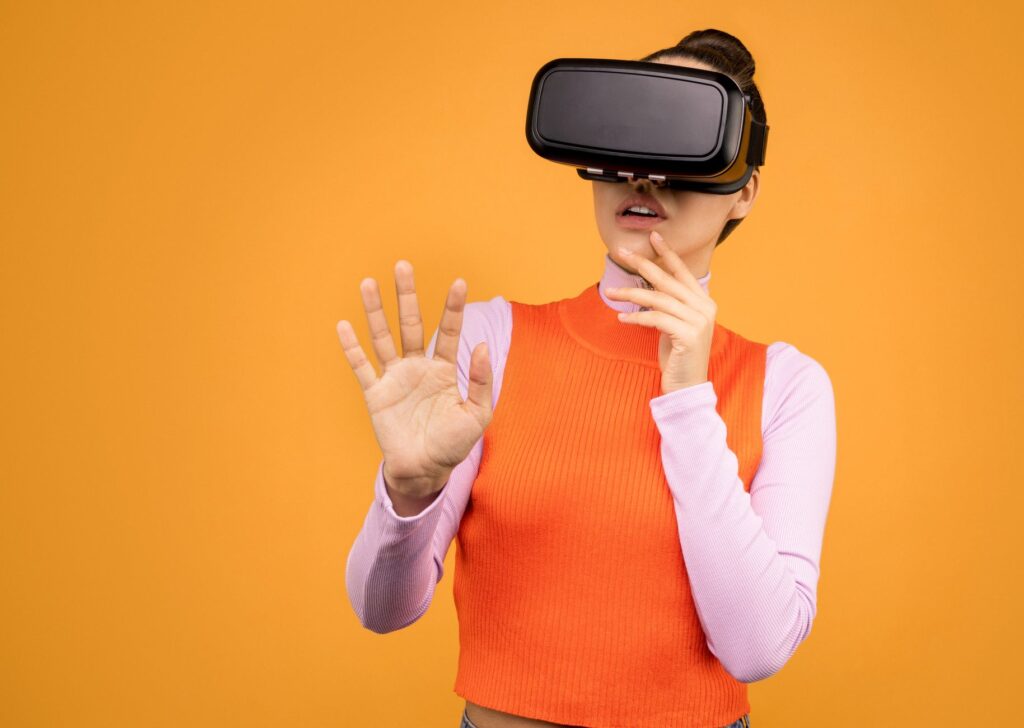
Haptic feedback translates digital signals into precise vibrations, forces, or motions through sensors and actuators, enabling learners to “feel” virtual objects. This tactile loop tightens the cognitive‑motor connection, which research shows can improve knowledge retention by as much as 30 %. By simulating textures, resistance, and motion, haptic devices allow students to practice surgical suturing, mechanical assembly, or molecular manipulation without physical resources. The technology’s modular architecture—sensor arrays, control algorithms, and wearable actuators—makes it adaptable across disciplines, from vocational training to advanced science labs.
The immediacy of touch also shortens the feedback loop, turning abstract concepts into concrete experiences that reinforce learning pathways.
Regulatory bodies may need to revise standards to certify tactile competencies, embedding haptic proficiency into professional licensing frameworks.
Systemic implications for institutions
Embedding haptic modules restructures curriculum design, assessment, and accreditation. Universities must invest in hardware labs, data pipelines, and faculty development, shifting budgetary priorities away from traditional lecture halls toward technology‑centric spaces. This reallocation strengthens institutions that can rapidly scale tactile content. Moreover, the rise of haptic‑enabled micro‑credentials creates new revenue streams and alters the power balance between legacy degree programs and agile, skill‑focused providers. Regulatory bodies may need to revise standards to certify tactile competencies, embedding haptic proficiency into professional licensing frameworks.
Impact on career capital and workforce pipelines

For learners, haptic‑augmented courses translate directly into measurable skill acquisition, enhancing career capital in fields where manual dexterity is paramount. Employers report a measurable share of new hires who trained with haptic simulators outperform peers in on‑the‑job assessments, accelerating economic mobility for those who can access the technology. However, the cost of high‑fidelity haptic kits creates a stratified access landscape, prompting public‑private partnerships to subsidize equipment for underserved populations. As firms increasingly value demonstrable tactile proficiency, talent pipelines will shift toward institutions that embed haptic curricula, reshaping leadership pipelines and institutional prestige.
Trajectory over the next three to five years
Projected hardware cost declines of 15 %‑20 % per annum suggest that haptic platforms will become financially viable for a broader swath of educational providers by 2029. Coupled with AI‑driven adaptive feedback, next‑generation systems will personalize tactile intensity based on learner performance, further tightening the link between skill mastery and credentialing. Anticipate a surge in cross‑industry collaborations—tech firms, vocational schools, and health systems—to co‑create standards that embed haptic metrics into competency frameworks. This convergence will reinforce a feedback loop where institutional investment, workforce demand, and technology innovation mutually accelerate, cementing haptic feedback as a cornerstone of the future learning ecosystem.
The evolving tactile dimension of virtual education signals a decisive re‑weighting of institutional power toward those that master immersive, skill‑centric delivery, underscoring why today’s strategic decisions will shape the next decade of workforce readiness.
[Insight 1]: Haptic feedback’s ability to raise knowledge retention by up to 30 % positions it as a catalyst for reallocating educational capital toward immersive, skill‑based curricula.
Key Structural Insights
[Insight 1]: Haptic feedback’s ability to raise knowledge retention by up to 30 % positions it as a catalyst for reallocating educational capital toward immersive, skill‑based curricula.
[Insight 2]: Institutional adoption creates a bifurcation, privileging well‑funded entities that can integrate tactile labs while marginalizing under‑resourced schools unless mitigated by policy or partnership interventions.
[Insight 3]: Declining hardware costs and AI‑driven personalization forecast a rapid expansion of haptic‑enabled micro‑credentials, reshaping talent pipelines and redefining leadership development across sectors.
Enhancing Tactile Engagement: By incorporating haptic feedback technology, virtual learning environments can simulate real-world textures, temperatures, and sensations, increasing student engagement and fostering deeper understanding of complex concepts, ultimately bridging the gap between theory and practice.
[Insight 3]: Declining hardware costs and AI‑driven personalization forecast a rapid expansion of haptic‑enabled micro‑credentials, reshaping talent pipelines and redefining leadership development across sectors.
Personalized Learning Pathways: Haptic feedback technology enables educators to create customized learning experiences tailored to individual students’ needs, adapting to their learning pace, preferences, and abilities, and providing real-time feedback to optimize the learning process and improve outcomes.
Written by Career Ahead AI. AI can make mistakes, so verify key facts. Report errors to support@careeraheadonline.com.