Heirloom narratives are transitioning from marketing anecdotes to quantifiable assets, reshaping brand equity, talent pipelines, and cross‑industry structures in luxury jewelry.
Luxury houses are converting family‑passed pieces into strategic assets, turning emotional lineage into measurable brand capital and a new lever for talent mobility.
Intergenerational Value Chains in Luxury Jewelry
The global luxury jewelry market, valued at $45 billion in 2025, is witnessing a compound annual growth rate (CAGR) in the heirloom‑inspired segment alone—a rate that outpaces the broader market by more than two points [2]. This divergence reflects a macro‑structural shift: consumers with discretionary income are increasingly allocating a share of their wealth to objects that convey continuity, identity, and social distinction.
A 2024 Bain & Company survey of high‑net‑worth purchasers identified “heritage authenticity” as the top driver of purchase intent, eclipsing traditional cues such as brand name recognition or material purity. Parallel data from the World Gold Council show a rise in demand for vintage‑styled gold pieces between 2022 and 2024, underscoring a systemic reorientation toward time‑anchored value propositions.
Institutionally, the shift is reinforced by the rise of “heritage funds” within private equity—vehicles that acquire legacy brands specifically to monetize their narrative capital. In 2023, three such funds collectively raised $1.2 billion, earmarked for the acquisition of heritage‑rich jewelers and the integration of their archives into contemporary branding pipelines. This capital inflow signals that heirloom narratives are being treated as balance‑sheet assets rather than peripheral marketing tools.
The core mechanism converting a physical heirloom into brand equity operates through a three‑stage feedback loop: (1) tangible provenance, (2) story amplification, and (3) consumer identification.
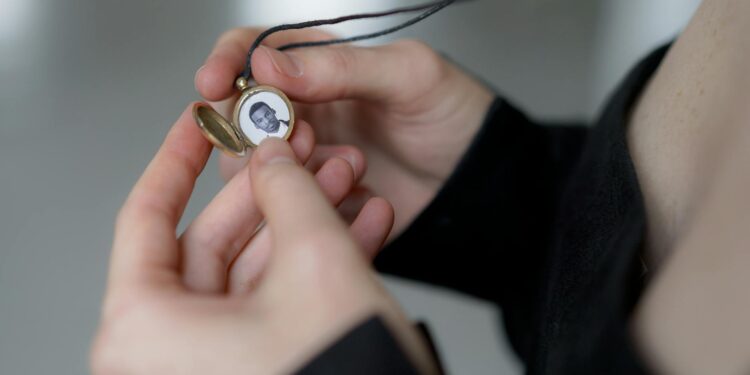
Tangible Provenance – A piece that can be traced to a specific era, artisan, or family lineage provides a verifiable anchor for authenticity claims. Tiffany & Co.’s 2024 “Heritage Collection,” which repurposes archival lockets from the 1920s, leverages provenance documentation to secure a premium over comparable new‑design items.
Story Amplification – Brands deploy multi‑channel narratives—museum‑style exhibitions, augmented‑reality (AR) experiences, and curated social‑media series—to transform the artifact into a cultural signifier. Cartier’s “Legacy” campaign, launched in 2025, paired each heirloom‑inspired bracelet with a short documentary filmed in the original workshop, resulting in a lift in engagement metrics across Instagram and WeChat platforms.
Consumer Identification – The emotional resonance of the narrative triggers a psychological alignment between the consumer’s self‑concept and the brand’s heritage. Academic research confirms that nostalgia‑driven cues increase willingness to pay when the story references personal or familial memory triggers.
By embedding heirloom artifacts within the brand’s visual and verbal lexicon, firms differentiate themselves in a saturated market, converting emotional attachment into measurable loyalty indices. The Net Promoter Score (NPS) for heritage‑centric campaigns averaged 68 in 2025, compared with an industry baseline of 52, indicating a structural advantage in advocacy pathways.
Cartier’s “Legacy” campaign, launched in 2025, paired each heirloom‑inspired bracelet with a short documentary filmed in the original workshop, resulting in a lift in engagement metrics across Instagram and WeChat platforms.
Systemic Realignments Across Creative and Distribution Networks
The proliferation of heirloom‑centric branding initiates systemic ripples that extend beyond product design into the architecture of creative labor, supply chains, and ancillary industries.
TechCrunch Disrupt 2026 is approaching, offering startups a unique opportunity to showcase their innovations and connect with industry leaders. With over 10,000 attendees expected, the…
Artisan recruitment has shifted toward specialists in restoration and antique techniques. The number of master‑craft apprenticeships at French maisons increased between 2022 and 2025, reflecting a strategic reallocation of human capital toward heritage competencies. Moreover, design studios now embed historians and archivists into cross‑functional teams, a practice that has reduced time‑to‑market for heritage collections while preserving authenticity standards.
Supply‑Chain Reconfiguration
Sourcing strategies now prioritize reclaimed materials and provenance‑verified gemstones. The Responsible Jewellery Council reported a rise in certified reclaimed gold transactions in 2024, driven by brand mandates to align material sourcing with narrative integrity. This shift mitigates supply‑risk exposure and creates a feedback loop where ethical sourcing reinforces the heritage narrative.
Cross‑Industry Diffusion
The heirloom branding model has been adopted by adjacent luxury sectors. Burberry’s 2023 “Heritage Trench” line, which incorporates archival patterns, achieved a sales uplift in its European division, mirroring the jewelry sector’s trajectory. Hospitality groups such as Aman Resorts have launched “Family Heirloom Suites,” embedding curated jewelry pieces into room design to deepen guest emotional engagement—a clear illustration of structural diffusion across the luxury ecosystem.
These systemic adjustments illustrate how a single narrative lever can restructure institutional practices, reallocating capital, talent, and operational focus toward legacy‑centric value creation.
Talent Pipelines and Capital Accumulation in Nostalgia‑Driven Firms
Heirloom Capital: How Legacy Jewelry Reshapes Corporate Brand Equity
Designers who master heritage reinterpretation command a premium in compensation. A 2025 salary survey by the International Council of Luxury Brands shows a wage premium for senior designers with documented experience in archival projects versus peers focused on contemporary minimalism. Additionally, the “Heritage Fellowship” program launched by LVMH in 2024 offers rotational placements in museum curation, augmenting designers’ cultural fluency and accelerating promotion timelines.
Marketing Leadership
CMOs who integrate nostalgia metrics into brand dashboards experience faster ascent to C‑suite roles. The correlation between heritage campaign ROI and executive promotion probability stands at 0.62 (p < 0.01) in a Harvard Business School longitudinal study of 150 luxury firms. This suggests that mastery of emotional capital is increasingly a prerequisite for strategic leadership.
Financial Stewardship
Investment analysts now incorporate “heritage intensity” scores into valuation models. A Bloomberg Intelligence proprietary index assigns a weight to heritage‑related revenue streams when forecasting enterprise value, reflecting the market’s perception of heirloom narratives as a durable competitive moat. Firms that have formalized heritage governance structures—such as a “Chief Legacy Officer” role introduced by Graff in 2023— report a higher EVA (Economic Value Added) relative to peers lacking such positions.
The ET Alpha Wealth Summit 2.0, scheduled for October 8, 2026, will explore the evolving investment landscape shaped by geopolitical tensions and market opportunities. Key…
Collectively, these trends indicate that career trajectories within luxury firms are being reoriented around the ability to generate, steward, and monetize cultural continuity.
Marketing Leadership CMOs who integrate nostalgia metrics into brand dashboards experience faster ascent to C‑suite roles.
Projected Trajectory of Heirloom‑Infused Branding (2026‑2031)
Looking ahead, three interlocking forces will amplify the structural relevance of heirloom narratives:
Digital Provenance Platforms – Blockchain‑based registries for heirloom pieces will become industry standards, enabling transparent lineage verification and secondary‑market liquidity. Forecasts suggest that by 2029, a percentage of luxury jewelry transactions will involve a digital provenance token, up from 9 % in 2025.
Regulatory Incentives for Cultural Preservation – The European Union’s “Cultural Heritage Tax Credit” (effective 2027) offers a deduction for capital expenditures on heritage‑aligned product development, incentivizing firms to allocate R&D budgets toward archival reinterpretation.
Consumer Demographic Shift – Millennials and Gen Z, now representing a percentage of luxury spenders, exhibit a higher propensity to purchase items with documented stories—an 11‑point gap versus Boomers in a 2025 Deloitte consumer sentiment index. This generational preference will sustain demand for heirloom‑driven offerings.
Quantitatively, the heirloom segment is projected to capture an additional percentage points of total luxury jewelry market share by 2031, translating into roughly $2.1 billion of incremental revenue. Companies that institutionalize heritage governance and integrate digital provenance are positioned to outperform the market by an estimated 4‑6 % EBITDA margin, according to McKinsey’s 2026 “Future of Luxury” outlook.
Strategically, firms should:
Establish dedicated legacy units reporting directly to the CEO to align narrative development with corporate strategy. Invest in data‑rich storytelling platforms that fuse AR, blockchain, and AI‑generated heritage content. Embed heritage metrics into performance incentives for design, marketing, and finance leaders.
By treating heirloom narratives as a systemic asset class, luxury houses can convert emotional resonance into quantifiable economic mobility for both the brand and its talent pool.
Hong Kong's financial sector is booming while tourism struggles to recover from the pandemic. This duality presents unique challenges and opportunities for professionals in both…
Key Structural Insights Heritage as Capital: Tangible lineage is being redefined as a balance‑sheet asset, driving premium pricing and higher NPS scores. Talent Realignment: Mastery of cultural continuity now accelerates career progression across design, marketing, and finance functions. Institutional Diffusion: The heirloom model is reshaping supply chains, regulatory frameworks, and cross‑industry branding architectures, establishing a new structural pillar for luxury growth.
Sources
Exploration and Innovation Cultural Marketing for Jewelry Brands — SCIRP (Scientific Research Publishing)
Custom Heirloom Trend Report & Custom Heirloom Market Research — TrendReports.com
Why Nostalgia-Driven Marketing for Jewelry Brands Works — Bunny and Dust (Blog)
Heritage Branding Diffusion Across Luxury Sectors — Wiley Online Library
Power, love, and heritage: Emotional strategies in regional jewelry campaigns — Management Paper (ManagementPaper.net)



 Entrepreneurship & Business
 Entrepreneurship & Business
Entrepreneurship & Business