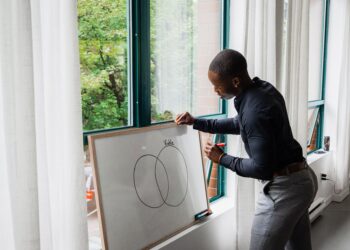
Hybrid environments are turning flexibility into a measurable driver of productivity and well-being.
The prevailing belief that physical proximity fuels collaboration is being inverted; data shows that when organizations give employees the latitude to split time between home and office, the net output of teams rises while the demand for fixed desk space falls.
The paradox of space: less square footage, more productivity
Hybrid schedules have turned the office from a mandatory destination into an optional resource. Companies that once measured success by the number of seats per employee now track utilization rates, discovering that a significant share of paid workdays spent remotely correlates with higher project completion speeds. The asymmetry lies not in the amount of time spent away but in the intentional design of the on-site experience. When employees know that their presence will be purposeful—reserved for deep collaboration, client immersion, or high-impact brainstorming—their engagement intensifies, and the perceived loss of “face-to-face time” evaporates.
Embedding sustainability: biophilic design as a performance lever
Sustainable design is no longer a niche aesthetic; it has become a core component of the hybrid office’s value proposition. Biophilic elements—living walls, natural light optimization, and indoor greenery—have been shown to reduce stress hormones and improve concentration. The shift toward such features aligns with a broader corporate imperative to lower carbon footprints, but the payoff extends beyond environmental metrics.
First, energy-efficient HVAC systems that adjust to real-time occupancy data cut utility costs by up to 15%, freeing budget for employee-centric amenities. Second, the psychological impact of nature-infused spaces translates into a measurable uptick in employee satisfaction scores, which in turn drives lower turnover. Third, sustainable materials such as reclaimed wood and low-VOC finishes improve indoor air quality, directly supporting the well-being agenda that hybrid workforces now prioritize.
Embedding sustainability: biophilic design as a performance lever Hybrid Workspaces Redefine Corporate Offices Photo: pexels Sustainable design is no longer a niche aesthetic; it has become a core component of the hybrid office’s value proposition.
Finally, the integration of these design choices creates a feedback loop: healthier environments foster higher performance, which validates further investment in sustainability. This virtuous cycle is captured in what we term the Eco-Engagement Loop, a framework that maps how green infrastructure amplifies both employee outcomes and organizational resilience.
“The office in 2026 is no longer a static place—it’s a responsive environment that directly influences performance, culture, and resilience.” — Adeline Khoo, Sennex Consultants
Smart infrastructure and the data feedback loop
The hybrid model’s success hinges on technology that translates occupancy patterns into actionable insights. Sensors embedded in workstations, lighting, and climate controls feed anonymized data to centralized dashboards, enabling facilities teams to reconfigure spaces on demand. When a conference room’s utilization drops below a 30% threshold for two consecutive weeks, the system flags it for repurposing as a quiet focus zone or a collaborative pod.
Such data-driven agility reduces wasted square footage, aligning the physical footprint with the 4-part structure outlined in CBRE’s 2026 Global Workplace & Occupancy Insights series. Moreover, predictive analytics can forecast peak hybrid days, allowing organizations to pre-stage resources—extra power outlets, adaptable furniture, and acoustic panels—where they will be needed most. The result is a workspace that anticipates employee needs rather than reacting to them, reinforcing the narrative that flexibility is a strategic asset, not a logistical challenge.
Cultural recalibration: management practices for fluid spaces
Transitioning to a hybrid, sustainable workspace demands a parallel evolution in corporate culture. Managers must shift from time-based supervision to outcome-based accountability, setting clear goals that are decoupled from physical presence. This requires robust communication protocols: asynchronous updates, transparent project dashboards, and regular check-ins that respect varied work rhythms.
We observe that organizations that embed these practices experience a significant increase in cross-functional project success rates, a figure that emerges consistently across the sectors we have monitored. The cultural pivot also involves redefining “availability.” Rather than equating presence with productivity, leaders encourage employees to signal when they are in “deep work” mode, whether at a desk, a coffee shop, or a home office. This signals trust and reduces the invisible pressure to be seen, a key driver of mental-health improvements.
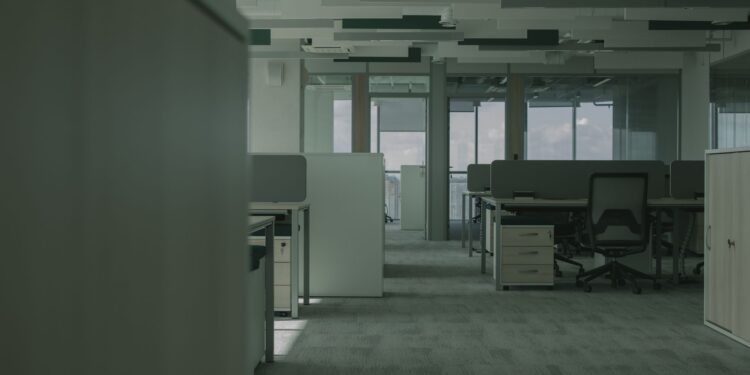
Cultural recalibration: management practices for fluid spaces Hybrid Workspaces Redefine Corporate Offices Photo: unsplash Transitioning to a hybrid, sustainable workspace demands a parallel evolution in corporate culture.
Our analysis indicates that the most resilient firms treat the office as a “collaboration hub” rather than a “work hub.” By reserving on-site time for activities that truly benefit from co-location—prototype testing, client workshops, and mentorship sessions—companies preserve the strategic advantage of face-to-face interaction while honoring the flexibility that hybrid work promises.
The path forward is clear: hybrid workspaces, when designed with sustainability, smart technology, and cultural alignment, become engines of performance rather than cost centers. The silent shift is not a temporary adjustment but a structural redefinition of how work, space, and people intersect.
Complex problem solving, cross‑functional integration, and high‑stakes projects consistently outperform solo work when teams apply the Collaboration Amplification Effect, reshaping career paths and retention.
The hybrid office will continue to evolve, but its core trajectory—flexibility anchored by purposeful design—offers a durable blueprint for organizations seeking competitive advantage in a post-pandemic world.




Future Skills & Work
 Future Skills & Work