No products in the cart.

India Considers Russian Oil Imports Amid Strait of Hormuz Crisis
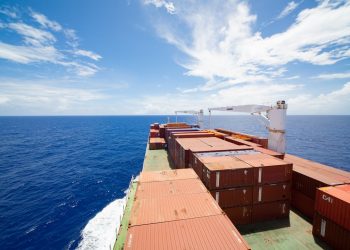
As oil flow through the Strait of Hormuz halts, India may increase Russian oil imports to secure energy supply and navigate geopolitical challenges.

“`html
The Strait of Hormuz: A Key Chokepoint for global Energy
The Strait of Hormuz, located between Iran and Oman, is vital for global oil flow. It carries about one-fifth of the world’s liquid petroleum and liquefied natural gas (LNG) each day. For India, this strait is crucial, with 2.5 to 2.7 million barrels of crude oil—around half of its imports—passing through daily, mainly from Iraq, Saudi Arabia, the UAE, and Kuwait. Additionally, over 80% of India’s LPG and a significant portion of its LNG imports also rely on this route, meeting about half of the country’s natural gas demand.
When Iran’s Islamic Revolutionary Guard Corps announced the strait was closed, insurers and ship owners quickly withdrew, halting commercial traffic. Such a scenario is unthinkable in peacetime, given the strait’s importance to global energy markets.
India’s Oil Dependency and the Looming Crisis
India is the world’s third-largest crude oil consumer, yet it imports over 88% of its fuel. This dependency creates vulnerability; any disruption in the Hormuz corridor impacts India’s energy balance, trade, and economic growth.
The country’s gas supply is also precarious. LNG, essential for power generation and industry, mainly comes from West Asia, with half of those shipments passing through Hormuz. In anticipation of tighter supplies, the government has reduced natural gas allocations to some sectors, highlighting the seriousness of the situation.
This dependency creates vulnerability; any disruption in the Hormuz corridor impacts India’s energy balance, trade, and economic growth.
India’s strategic stockpiles can sustain the nation for six to eight weeks. While this buys time, it does not provide a buffer for a prolonged closure. A sustained interruption could lead to reduced refinery output, increased fuel prices, and greater inflationary pressures on the economy.

Turning to Russia: A Strategic Shift for Energy Security
You may also like
 News
NewsUniversities Excluded from COP27
Elena Kovacs The 2022 United Nations Climate Change Conference, or Conference of the Parties of the UNFCC, commonly referred to as COP27, was the 27th…
Read More →Following the Hormuz closure, Indian policymakers are reconsidering Russian crude oil, which had been reduced earlier this year during trade talks with the U.S. Now, the urgency of supply risks and the availability of Russian oil are prompting a shift.
Russian oil, available due to sanctions, presents a practical alternative. These shipments are already heading to Asia, and rerouting some to India is feasible if political risks are managed.
The U.S. is involved as India discusses a political-risk insurance scheme to protect vessels transporting energy through Hormuz. This insurance would cover losses from attacks or blockades, potentially reviving shipping in the strait and boosting confidence for Indian importers to explore alternative routes.

If the insurance plan is implemented, it could lower maritime insurance costs for vessels willing to navigate contested waters, potentially reopening the strait for essential cargoes. It would also give India leverage to negotiate better terms with Russian exporters, balancing its ties with both the U.S. and Russia.
However, this pivot has challenges. Relying more on Russian oil could expose India to secondary sanctions, complicate its relationship with the U.S., and raise concerns about energy diversification. Additionally, India’s refining sector must adapt to the heavier, sourer Russian crude, requiring investment and operational changes.
If the insurance plan is implemented, it could lower maritime insurance costs for vessels willing to navigate contested waters, potentially reopening the strait for essential cargoes.
Strategic Perspective: Navigating Uncertainty with a Diverse Approach
India’s energy strategy is shifting from dependence on West Asian supplies to a more diversified approach. The Hormuz crisis has prompted the government to consider both immediate solutions, like Russian crude imports and U.S. insurance, and long-term reforms, including investments in renewables and domestic exploration.
In the coming months, Indian policymakers must align diplomatic efforts, market strategies, and infrastructure improvements. If the U.S. provides a reliable insurance guarantee and Russian oil can be integrated without penalties, India may avoid a supply crisis. This situation highlights the need to reduce reliance on any single maritime route, shaping India’s energy security strategy for years to come.
You may also like
 Career Advice
AI Expert Warns of Imminent Risks: Are We Prepared?
AI safety expert David Dalrymple warns that the rapid development of AI may outpace safety measures, risking global stability. What does this mean for your…
Read More →
The future is clear: A resilient India will adapt quickly across continents, technologies, and partnerships, turning this crisis into an opportunity for a more secure energy future.
“`