No products in the cart.

India Secures 18 Million Tonnes of Fertilizer Ahead of Kharif
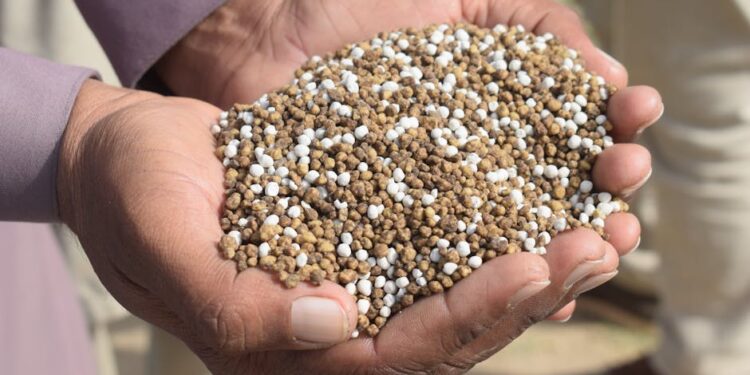
Officials revealed this week that 18 million tonnes of fertilizer sit in warehouses and at port—22 % more than last spring.


India’s 18-Million-Tonne Bet
Monsoon clouds haven’t formed yet, but New Delhi’s already breathing easier. Officials revealed this week that 18 million tonnes of fertilizer sit in warehouses and at port—22 % more than last spring. The cushion didn’t appear by accident. It’s the payoff from a globe-spanning shopping binge that turned India into the world’s top importer of urea and DAP. Stocks now sit 3.3 million tonnes above the level of a year ago, a margin wide enough to cover any monsoon-delayed shipment.
The New Map of Nitrogen
Behind the numbers is a supply chain that’s been bent out of shape. Missile strikes and tanker detours around the Persian Gulf have shaved 12 % off the region’s ammonia exports since December, according to Fertecon. Europe, scrambling to replace Russian molecules, is pulling more LNG from the United States and Qatar, pushing Asian spot prices to USD 19.5 per million Btu—territory last seen after Fukushima.
India’s response has been textbook crisis management: lift more spot LNG (15 mscmd of the 52 its 27 urea plants need) and sign a mid-term urea deal with Oman’s OQ for an extra 0.8 million tonnes over 18 months. Washington noticed: the U.S. exported a record 6.9 million tonnes of urea last year, filling gaps the Middle East can’t.
Plants Back from the Dead
While global urea output slipped 3 % in the first quarter, India’s domestic production rose 4 %. The trick was to restart units idled for maintenance and feed them priority gas. The country now supplies 7 % of world urea, up from 5 % five years ago. China, meanwhile, has slipped below 25 % as Beijing keeps export quotas tight.
India’s response has been textbook crisis management: lift more spot LNG (15 mscmd of the 52 its 27 urea plants need) and sign a mid-term urea deal with Oman’s OQ for an extra 0.8 million tonnes over 18 months.
Breaking the 70 % Habit
Qatar and Oman are only part of the pivot. Morocco’s OCP will deliver an extra million tonnes of phosphoric acid this year; IFFCO is locking in Senegalese rock-phosphate for the next decade. The goal is to mimic what Tokyo and Seoul did after the 1970s oil shocks—cut dependence on any single region from 70 % to below 35 % within ten years.
What Success Looks Like
If the plan holds, India’s World Bank import-risk index for fertilizer falls from 0.78 to an estimated 0.55 by 2030—about where Brazil sits today. Early evidence: this year’s urea tenders already cleared USD 15–20 below benchmark Middle-East quotes.
The USD 22 Billion Question
You may also like
 Entrepreneurship & Business
D-Mart Q2 revenue rises 18% to Rs 19,206 cr; store count at 518
D-Mart's Q2 revenue rose 18% to Rs 19,206 crore, reflecting a strong growth trend in India's retail sector. The company's expansion to 518 stores indicates…
Read More →Every extra dollar on an mBtu of LNG adds roughly USD 45 to the cost of a tonne of urea. With spot gas still USD 8 above pre-war levels, CRU reckons the global fertilizer-subsidy bill—USD 57 billion last year—could swell by another USD 9–11 billion. India’s own subsidy outlay for 2025-26 has been revised to INR 1.86 trillion (USD 22.3 billion), eclipsing China’s and becoming the largest single-country support package on earth.

Frozen Tags, Rising Bill
Walk into any farm-service centre and the price tags haven’t moved: INR 266 for a 45-kg bag of urea, INR 1 350 for DAP—about one-third what Bangladeshi farmers pay, half the Sri Lankan price. If global gas stays above USD 15 per mBtu, the government must either lift retail prices—unlikely in an election year—or absorb the hit, pushing fertilizer support above 1 % of GDP for the first time since 2012.
The Asian Floor
India’s Kharif requirement—39 million tonnes—is only 8 % of world consumption, but its buying calendar sets the floor for Asian prices. By front-loading 46 % of its annual import programme before June (last year: 32 %), New Delhi has already flipped the Baltic-to-India urea freight curve into contango, a structure last seen in 2008. Pakistan and Indonesia are piling in, adding a combined 2.5 million tonnes of import demand that will keep prices elevated through September.
What Success Looks Like If the plan holds, India’s World Bank import-risk index for fertilizer falls from 0.78 to an estimated 0.55 by 2030—about where Brazil sits today.

The Red Sea Wildcard
The International Fertilizer Association warns that if the Red Sea route stays risky, another 6 % of global nitrogen supply could be sidelined in the third quarter. That would shove urea past USD 400 per tonne fob Middle East—the level that sparked farmer protests in Argentina and Turkey last year. For India, the maths is unforgiving: every week of delayed shipments trims rice yields 0.3 %, enough to wipe out 2 million tonnes of grain in a single season.
You may also like
 Entrepreneurship & Business
Food firms flock to yeast protein as whey prices rise
As whey protein prices soar, food companies in India are increasingly turning to yeast protein to diversify their offerings and meet changing consumer preferences.
Read More →