No products in the cart.

Indian Retail’s Blockchain Leap: Turning Traceability into Profit and Planet-Saving Power

A new blockchain platform promises Indian retailers real-time product tracking, slashing waste and opening premium markets, but adoption hurdles could split the sector.

A new blockchain platform promises Indian retailers real-time product tracking, slashing waste and opening premium markets, but adoption hurdles could split the sector.
Inefficient Supply Chains in Indian Retail
A recent audit of Reliance Retail’s grocery network found that 18% of stocked items couldn’t be linked to a verified farm source. This lack of transparency fuels counterfeit goods, inflates spoilage, and drives up logistics costs. Small-scale vendors often rely on paper ledgers that disappear after a shipment, leaving retailers blind to waste points.
The opacity adds hidden expenses. Kearney estimates that Indian apparel exporters lose up to ₹4 billion annually to undetected defects and over-production. Without traceability, retailers cannot prove sustainability claims, and consumers grow skeptical. This results in higher prices, lower margins, and a competitive edge that erodes fast.
The Indian Retail Landscape and Blockchain Technology

India’s retail market is projected to hit ₹34 trillion by 2026, driven by a young, mobile-savvy consumer base. Yet the sector’s supply chains remain a patchwork of fragmented farms, regional distributors, and crowded warehouses. Blockchain has emerged as a tool to stitch these fragments together.
Yet the sector’s supply chains remain a patchwork of fragmented farms, regional distributors, and crowded warehouses.
Deloitte’s 2024 study shows that blockchain can lock every transaction in an immutable ledger, giving each product a digital passport from farm to shelf. The Indian Ministry of Commerce announced a ₹1 billion subsidy for blockchain pilots in agri-food logistics last year, signaling policy backing for digital traceability.
Early Adopters and Environmental and Economic Implications
Early adopters include Tata Consumer Products, which piloted a pilot in its tea division, recording leaf-picking dates on a public ledger. The pilot cut inventory shrinkage by 12% and earned a “green-verified” badge that boosted sales in tier-2 cities.
You may also like
 Artificial Intelligence
The Rise of AI in Consumer Psychology Careers
AI is revolutionizing consumer psychology careers, creating new opportunities in market research and data analysis. Learn how to adapt.
Read More →Inefficient chains waste resources. Farmonaut reports that Indian agro-supply chains generate approximately 15 million tonnes of food waste each year, much of it due to delayed transport and poor storage. The waste releases methane, a potent greenhouse gas, worsening air quality in rural districts.
Economically, the cost of waste translates into higher retail prices and thinner profit lines. A Kearney analysis links supply-chain opacity to a 2-3% reduction in export competitiveness for Indian textiles. Moreover, global buyers now demand proof of ethical sourcing. Brands that cannot provide blockchain-backed certificates risk losing shelf space in Europe and North America.
Launch of a Blockchain-Based Supply Chain Traceability Platform
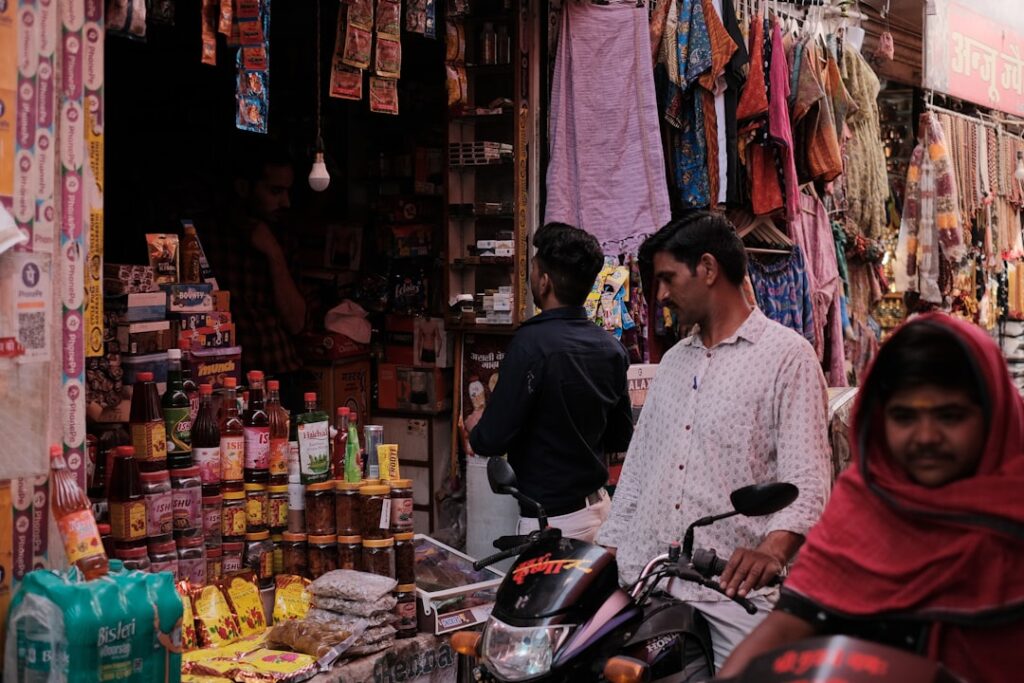
In February 2026, a consortium led by fintech startup BlockTrace, in partnership with the Retailers Association of India (RAI), unveiled a nationwide blockchain platform for grocery and apparel supply chains. The platform records every handoff—farm, processing plant, transport, warehouse—on a permissioned ledger accessible to retailers, regulators, and consumers via QR codes.
Real-time tracking lets retailers spot bottlenecks instantly. For example, a pilot with Big Bazaar reduced cold-chain delays by 18% within three months, cutting perishable loss from 5% to 3.2%. The system also flags counterfeit entries, as each product’s hash cannot be altered without detection.
Economically, the cost of waste translates into higher retail prices and thinner profit lines.
Consumers scan a QR code on the shelf and see origin, harvest date, and carbon footprint. Retailers can market “blockchain-verified” lines at a 10-15% premium, tapping into eco-conscious buyers. The platform’s open-API design lets small farms plug in low-cost IoT sensors, democratizing data collection.
Outlook: Future Implications and Opportunities
You may also like
 Business
GMAT Focus Edition 2024 – Everything you need to know
Unveiling the GMAT Focus Edition 2024 – the revamped GMAT format designed for the future of business education. Explore key changes, scoring updates, and preparation…
Read More →If adoption scales, the blockchain platform could reshape Indian retail economics. Kearney predicts that supply-chain transparency could lift sector productivity by 4-5% over the next five years, translating into an extra ₹1.5 trillion in annual revenue. Reduced waste would lower methane emissions by an estimated 0.8 million tonnes per year, contributing to India’s 2030 climate targets.
New market doors may open. International retailers such as H&M and Uniqlo, already requiring blockchain proof for cotton sourcing, could source Indian fabrics more confidently, expanding export volumes. Domestically, “trace-verified” labels could become a regulatory requirement, similar to food safety certifications, forcing laggards to upgrade or lose shelf space.