No products in the cart.

India’s Education System Confronts Structural Challenges as Startup Ecosystem Expands
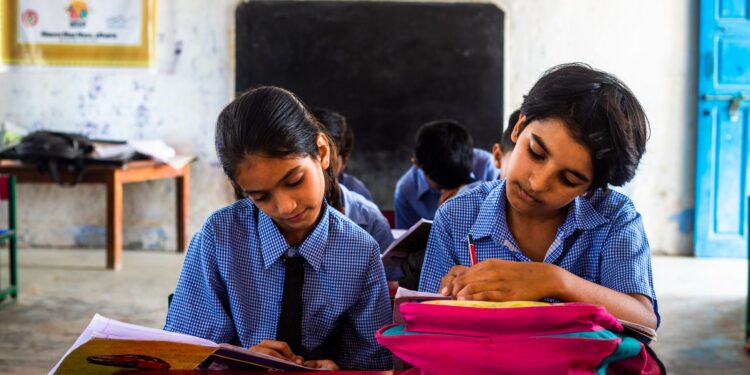
The government is being urged to treat education as national infrastructure and to align investment with measurable outcomes.

India’s education sector is reporting gaps in funding, digital access, and teacher readiness while the country’s startup ecosystem continues to grow. The government is being urged to treat education as national infrastructure and to align investment with measurable outcomes.
India’s education system is facing a set of operational and strategic challenges as the nation prepares for the 2026 Union Budget [1]. The challenges are identified in a recent NITI Aayog report that examines school-level delivery, higher-education capacity, and research funding [1]. The issues are occurring across the country’s public and private schools, colleges, and research institutions, with particular focus on the digital divide and teacher preparedness [1].
Key officials from NITI Aayog, including Programme Director Dr. Sonia Pant and Senior Specialist Dr. Shashank Shah, have outlined the need for outcome-driven investment and structural reforms [1]. The government’s allocation processes, combined with the rapid expansion of India’s startup ecosystem, are driving calls for education to be positioned as essential national infrastructure [1].
Policy Context and Funding Landscape
The 2025 Union Budget pledged increased spending on education, yet follow-up assessments show mixed implementation results [1]. Research grants for higher education remained stalled, and the rollout of digital learning tools was uneven across states [1]. NITI Aayog’s analysis indicates that while overall education expenditure has risen, the proportion directed toward outcome-based programs and infrastructure upgrades remains below the target set by the 2025 budget [1].
The upcoming 2026 Budget is expected to address these gaps, with policymakers emphasizing the need for transparent, performance-linked funding mechanisms [1]. The government’s fiscal plan includes provisions for expanding broadband connectivity in schools, but the allocation details are still under negotiation [1].
Research grants for higher education remained stalled, and the rollout of digital learning tools was uneven across states [1].
Key Challenges Identified by NITI Aayog
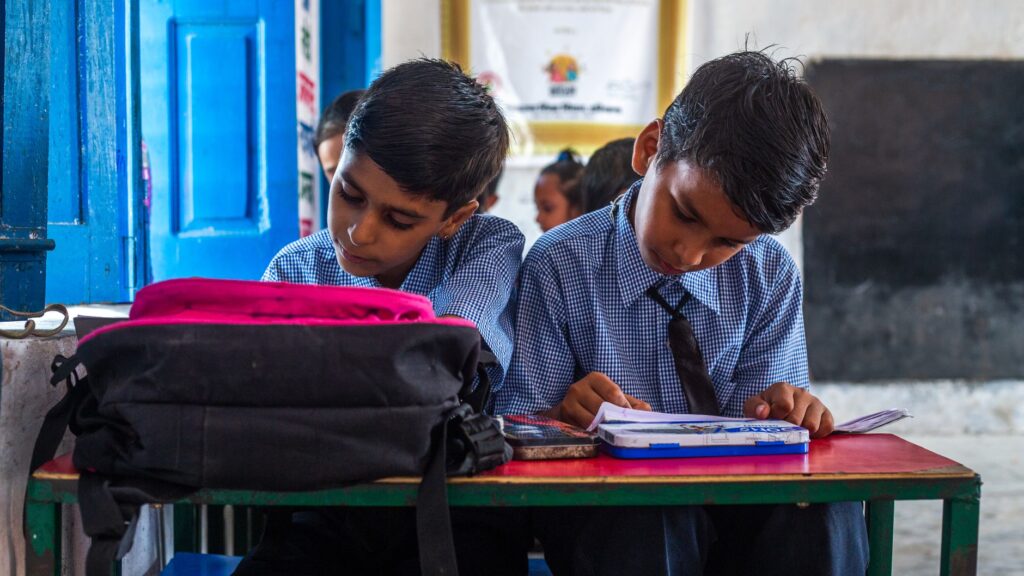
The NITI Aayog report lists four primary challenge areas: (1) a persistent digital divide that limits access to online resources for students in rural and low-income regions [1]; (2) insufficient teacher training programs to equip educators with skills for blended and technology-enabled instruction [1]; (3) gaps in student well-being services, including mental-health support and nutrition programs [1]; and (4) inadequate mechanisms for measuring learning outcomes, which hampers evidence-based policy adjustments [1].
You may also like
 News
NewsIndian Professor Brij Kothari’s Same-Language Subtitling Program Expands Nationwide
Dr Brij Kothari’s Same-Language Subtitling program now reaches an estimated 150 million daily viewers across India, aiming to boost basic reading skills.
Read More →Data from the report show that only 58% of public schools had reliable internet connectivity as of early 2026, compared with 92% of private institutions [1]. Teacher-to-student ratios in many states exceed the national target of 1:30, contributing to lower instructional quality [1].
Responses from Educational Institutions
Universities and research institutes have begun aligning curricula with the skill demands of the startup sector, introducing entrepreneurship modules and industry-partnered labs [1]. The Indian Institutes of Technology (IITs) and Indian Institutes of Management (IIMs) reported a 22% increase in startup-related projects funded through internal grants in 2025-26 [1].
School boards in several states have launched pilot programs to provide teachers with professional development in digital pedagogy, funded jointly by state education departments and private tech firms [1]. Early results from these pilots indicate a modest improvement in student engagement metrics, though comprehensive evaluation is pending [1].
Implications for Stakeholders

Students currently enrolled in public schools may experience continued variability in digital resource access until the next fiscal cycle [1]. Parents in rural areas are advised to monitor school-provided connectivity updates and explore community-based internet solutions [1].
Educators are required to complete newly mandated digital-learning certification courses introduced by state education ministries in early 2026 [1]. Failure to obtain certification may affect contract renewals in some jurisdictions [1].
School boards in several states have launched pilot programs to provide teachers with professional development in digital pedagogy, funded jointly by state education departments and private tech firms [1].
Higher-education administrators are preparing for increased scrutiny of research funding utilization, with audit frameworks to be applied to projects receiving central grants [1]. Institutions that demonstrate clear alignment with national startup priorities may qualify for additional funding under the 2026 Budget [1].
You may also like
 News
NewsMironid Secures €39.9 Million Series B to Advance ADPKD Therapy
Mironid announced a €39.9 million Series B round on August 7, 2026, securing an £8.4 million equity investment from the Scottish National Investment Bank to fund ADPKD drug development.
Read More →Impact on Readers
The identified challenges and forthcoming policy actions affect students, teachers, and administrators across India today. Immediate effects include the need for teachers to engage in certification programs, students to adapt to variable digital learning environments, and institutions to align curricula with emerging industry demands. Stakeholders should monitor official budget releases and state education department notices for updates on funding allocations, digital infrastructure projects, and compliance requirements.
Key Facts
What: India’s education system is confronting funding gaps, digital inequities, and teacher-readiness issues as the startup ecosystem expands.
When: Issues highlighted in reports released May 2026; policy focus intensifies ahead of the Union Budget 2026.
Impact: Students, educators, and institutions must adjust to new funding criteria, digital infrastructure plans, and professional-development mandates now.
Impact: Students, educators, and institutions must adjust to new funding criteria, digital infrastructure plans, and professional-development mandates now.
You may also like
 News
NewsIndia’s Non‑Metro Cities Overtake Bengaluru and Mumbai in Job Growth
LinkedIn’s 2026 employment report identifies ten tier‑2 and tier‑3 Indian cities as the fastest‑growing job markets, surpassing Bengaluru and Mumbai.
Read More →Sources
- PDF Research and Analysis Team, NITI Aayog – https://www.niti.gov.in/sites/default/files/2026-05/School-Education-System-in-India.pdf
- Budget 2026 preview: What India’s education economy needs next – https://education.economictimes.indiatimes.com/news/higher-education/budget-2026-preview-what-indias-education-economy-needs-next/126793685
- Are Schools Still an Afterthought in India’s Budget 2026?, ETEducation – https://education.economictimes.indiatimes.com/news/school-education/are-schools-still-an-afterthought-in-indias-budget-2026/126953596
- Indian Education System 2026: Progress, Challenges & Future Outlook – https://www.invest4edu.com/blog/indian-education-system-changes-progress