No products in the cart.

India’s Gen‑Z Protest Movement Peaks at Jantar Mantar, Prompting Youth‑Engagement Shift
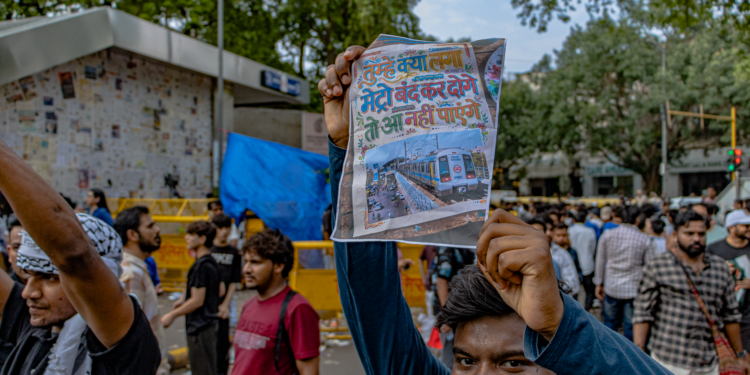
India’s Gen-Z protest movement, led by the Cockroach Janta Party, mobilized tens of thousands across the country from June to July 2026, focusing on education reforms.

From early June to late July 2026, tens of thousands of young demonstrators marched, staged sit‑ins and organized online campaigns across India, with the most visible concentration in Delhi’s historic protest site, Jantar Mantar.
From 6 June to 25 July 2026, tens of thousands of young demonstrators marched, staged sit‑ins and organized online campaigns across India, with the most visible concentration in Delhi’s historic protest site, Jantar Mantar [1]. The movement was described by observers as the world’s largest Gen‑Z protest of the year, drawing participants from universities, colleges and civil‑society groups nationwide [1].
The Cockroach Janta Party (CJP), a satirical political outfit, coordinated the protests together with multiple student organisations [1][3]. Public figures such as inventor‑educator Sonam Wangchuk and entrepreneur Nandan Nilekani were cited in coverage of the events, though the sources do not detail specific actions taken by them [3][4]. Protest tactics included hunger strikes, the distribution of satirical flyers featuring “cockroach” imagery, and the rapid spread of protest memes on social media platforms [1][3].
Scale and Timeline of the Demonstrations
The protest timeline began on 6 June 2026, when student groups announced a coordinated series of actions targeting the national examination system [2]. Over the following weeks, rallies were held in Delhi, Mumbai, Kolkata and Bengaluru, with daily turn‑outs ranging from a few hundred to several thousand participants [1][2]. The most concentrated event occurred on 20 July 2026, when an estimated 30,000 demonstrators assembled at Jantar Mantar, chanting slogans and presenting a collective hunger‑strike petition [1].
Organisers released a schedule of activities that included “Satire Saturdays,” where participants performed comedic skits critiquing exam‑centric education policies, and “Meme Marathons,” during which viral graphics were posted to amplify the movement’s message [3]. The protest’s conclusion on 25 July 2026 was marked by a coordinated withdrawal of hunger‑strike participants and a formal submission of demands to the Ministry of Education [2].
Student organisations such as the National Student Union of India (NSUI) and independent campus collectives joined the CJP’s call, contributing logistical support and mobilising campus networks [1][2].
Participants and Organizational Structure
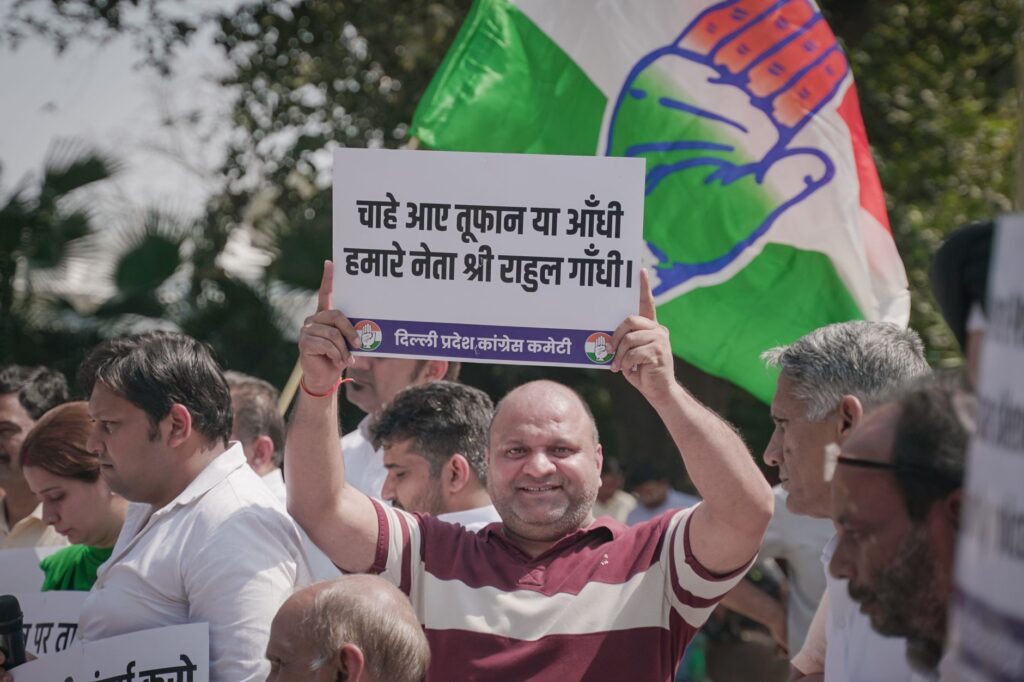
The Cockroach Janta Party, founded in 2024, positioned itself as a vehicle for youth dissent, leveraging humor to challenge established political narratives [3]. Student organisations such as the National Student Union of India (NSUI) and independent campus collectives joined the CJP’s call, contributing logistical support and mobilising campus networks [1][2]. While Sonam Wangchuk was referenced in media reports as a vocal advocate for educational reform, and Nandan Nilekani was mentioned in the context of discussions on technology‑enabled learning, neither individual was listed as a formal protest leader [3][4].
The movement’s coordination relied heavily on encrypted messaging apps and public social‑media channels, enabling rapid dissemination of protest instructions, location updates and satirical content [1][3]. Organisers also employed traditional methods, such as distributing printed flyers at university campuses and arranging bus convoys to transport participants to Delhi [2].
Methods and Messaging
Protesters framed their grievances around the perceived over‑reliance on high‑stakes competitive examinations as the primary route to social mobility [2]. Demonstrators argued that the examination system disproportionately disadvantages students from lower‑income backgrounds and fuels a culture of chronic stress [2][4]. To convey these concerns, the CJP introduced the “Cockroach” motif, symbolising resilience in adverse conditions, and used it across banners, chants and digital memes [3].
Hunger strikes were initiated at multiple university campuses, with participants refusing food for periods ranging from 24 hours to three days, aiming to draw attention to mental‑health impacts of exam pressure [1][4]. Police responses varied by location; in Delhi, law‑enforcement officials issued warnings but allowed the Jantar Mantar gathering to proceed without major intervention [1]. The protest’s satirical tone was reinforced through street performances, parody songs and mock press conferences, all of which were streamed live to reach a national audience [3].
Immediate Impact on Education Stakeholders
The protests have prompted the Ministry of Education to issue a public statement acknowledging “the concerns raised by youth regarding examination reforms” and indicating that a review committee will be convened within the next month [4]. Several university administrations reported temporary suspension of regular classes to accommodate safety measures during the Jantar Mantar assembly [1]. Student unions across the country have announced plans to continue advocacy through policy‑brief submissions and dialogue with state education boards [2].
For current students, the movement has heightened awareness of mental‑health resources and opened channels for direct communication with policymakers. Educators reported an increase in classroom discussions about alternative assessment models, reflecting the protest’s emphasis on diversifying evaluation methods [4]. The visible scale of the demonstrations has also led media outlets to allocate extended coverage to youth‑led policy debates, thereby amplifying the voices of Gen‑Z participants in the national discourse [3].
Key Facts
Student unions across the country have announced plans to continue advocacy through policy‑brief submissions and dialogue with state education boards [2].
What: Tens of thousands of Indian Gen‑Z protesters, led by the Cockroach Janta Party and student groups, staged a nationwide movement demanding education reforms.
When: 6 June – 25 July 2026, with a peak gathering at Jantar Mantar on 20 July 2026.
Impact: The protests have elicited official acknowledgment from the Ministry of Education and spurred ongoing advocacy efforts by students and educators.
Sources
- Student Protests in Delhi and India 2026: Gen-Z’s Frustration and Fight for Reforms – PRIF Blog
- India Gen Z Protest 2026 : Sociology, CJP & Youth Movement – Hub Sociology
- India’s 2026 Gen Z Protests Explained – Encyclopedia Britannica
- Can Gen Z fix the cracks in India? – Frontline (The Hindu)
Related Articles
- Karnataka Announces India’s First Government‑Run Artificial Intelligence University
Written by Career Ahead AI. AI can make mistakes, so verify key facts. Report errors to support@careeraheadonline.com.