No products in the cart.

India’s Government School Enrollment Falls by 15 Million, Share Drops Below Half
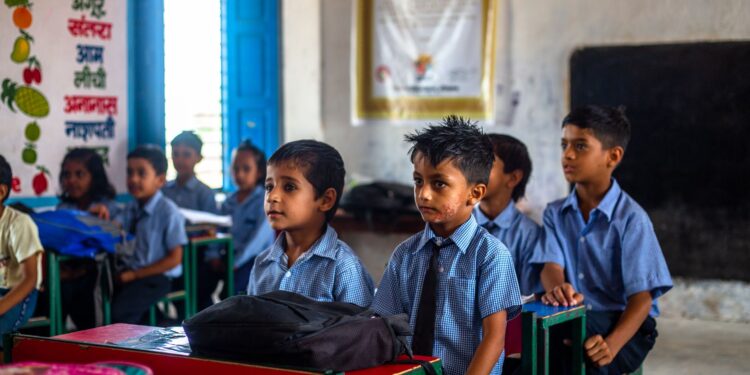
Government schools in India lost 15 million students and saw their enrollment share fall below half, prompting concerns over access and quality.

Enrollment in government-run schools fell by 15 million students, reducing the sector’s share to 49.24% in 2024-25. Nearly 84,000 public schools have been closed since the 2018-19 academic year.
The Ministry of Education released UDISE+ data for the 2024-25 academic year showing a net loss of 15 million students from government schools nationwide [1]. The same data indicate that government schools now enroll 49.24% of all school-age children, down from a peak of 71% in 2005 [1]. The decline has been documented across the country since the 2018-19 fiscal year, a period during which approximately 84,000 government schools were shut down [3].
The findings were compiled by NITI Aayog in its May 2026 report on the school education system, in collaboration with the Ministry of Education and state education departments [1][2]. The report attributes the enrollment drop to limited access to basic infrastructure, perceived quality gaps, and a growing preference for private-school options among parents [2][3]. State governments have reported varying degrees of school closures, with some regions experiencing higher rates of shutdowns due to budget constraints and low student numbers [3].
Scale of the Decline and School Closures
UDISE+ figures for 2024-25 record a total student population of 24.69 crore across 14.71 lakh schools, of which government schools account for 49.24% of enrolments [1]. Compared with the 2018-19 baseline, the government sector lost 15 million students, while private schools added roughly the same number, maintaining overall enrollment levels [4].
Since the 2018-19 academic year, an estimated 84,000 government schools have been permanently closed, representing about 5.7% of the total public-school network [3]. The closures are concentrated in rural districts where student numbers fell below viability thresholds set by state education authorities [3].
The closures are concentrated in rural districts where student numbers fell below viability thresholds set by state education authorities [3].
Geographic Variation Across States
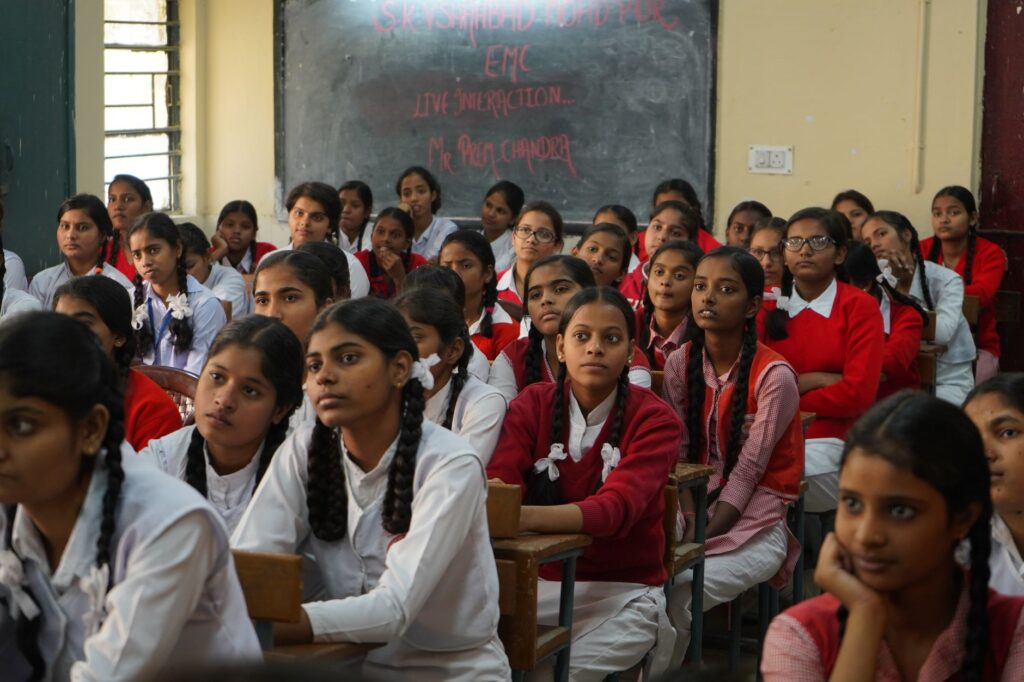
State-wise analysis in the NITI Aayog report shows that enrollment share declines are not uniform. States such as Uttar Pradesh and Bihar reported government-school shares falling below 45%, while Kerala and Tamil Nadu retained shares above 55% due to stronger public-school funding and infrastructure [2].
Conversely, the highest number of school closures were recorded in Madhya Pradesh, Rajasthan, and Jharkhand, where more than 12,000 schools each were shut between 2018-19 and 2024-25 [3]. These states also reported the largest absolute drops in government-school enrolment, exceeding 2 million students per state [3].
Drivers Behind the Shift to Private Schools
The NITI Aayog report cites limited access to basic facilities—such as clean drinking water, functional toilets, and reliable electricity—as a primary factor influencing parental choice [2]. Survey data collected by the Ministry of Education indicate that 68% of parents who moved their children to private schools cited “inadequate infrastructure” as a decisive reason [4].
Additional factors include perceived higher teaching quality in private institutions, the availability of English-medium instruction, and the growth of low-cost private schools operating on a pay-per-day model [2]. Policy analysts note that the expansion of the private-school market has been facilitated by relaxed regulations and increased credit availability for small-scale operators [3].
Immediate Impact on Students and Educators
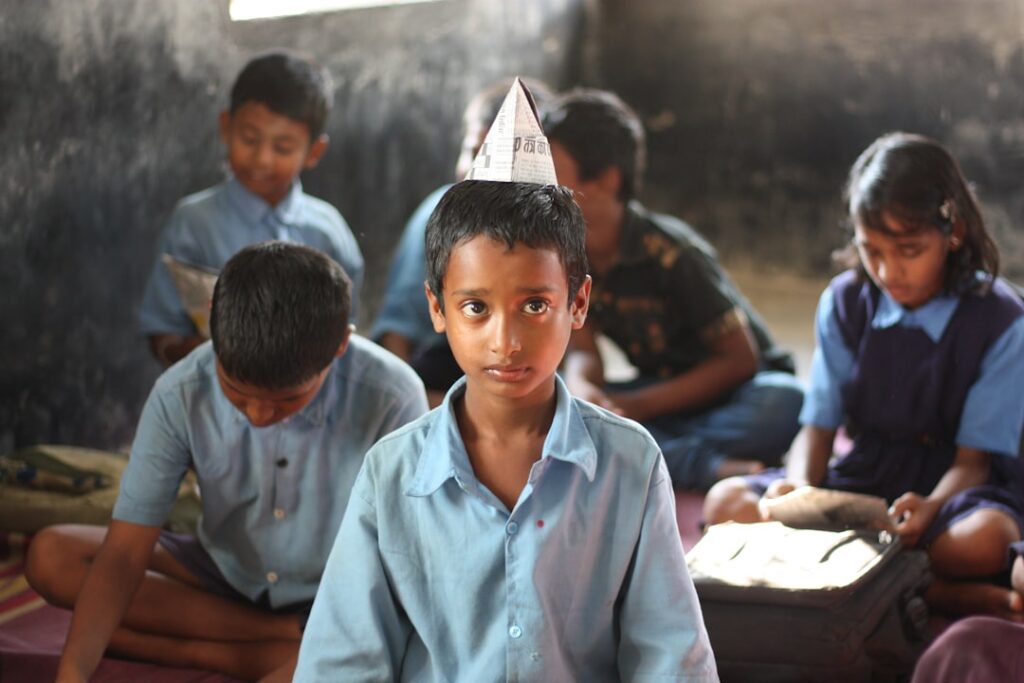
The reduction in government-school enrolment directly affects approximately 15 million students who must now seek alternatives, often incurring additional costs for transportation or tuition [4]. For educators, the closures have resulted in the displacement of an estimated 300,000 teachers, many of whom face delayed salary payments or reassignment challenges [3].
Additional factors include perceived higher teaching quality in private institutions, the availability of English-medium instruction, and the growth of low-cost private schools operating on a pay-per-day model [2].
Disadvantaged groups—particularly children from low-income households, scheduled castes, and scheduled tribes—are disproportionately impacted, as private-school fees remain out of reach for many [1]. The Ministry of Education has announced a short-term remedial scheme that includes targeted cash transfers to families in high-risk districts, but implementation timelines extend into the 2026-27 fiscal year [2].
Impact on Readers
Students currently enrolled in government schools should assess the continuity of their education in light of potential school closures and consider alternative schooling options where feasible. Parents are advised to verify the accreditation status of private schools before enrollment to avoid unregulated providers. Educators employed by public schools should monitor state-issued notices regarding redeployment or retraining programs. Policymakers and education administrators must address infrastructure deficits and funding gaps to stabilize the public-school system and mitigate further enrollment erosion.
Key Facts
What: Enrollment in India’s government schools fell by 15 million students, and the sector’s share dropped to 49.24% in 2024-25.
When: Decline tracked from 2018-19 through the 2024-25 academic year; report released in 2026.
What: Enrollment in India’s government schools fell by 15 million students, and the sector’s share dropped to 49.24% in 2024-25.
Impact: Affects 15 million students, 300,000 teachers, and widens access gaps for disadvantaged groups.
Sources
- School-Education-System-in-India-by-NITI-Aayog-May-2026 Report – NITI Aayog
- NITI Aayog School Education Report 2026: Comprehensive Temporal Analysis – MeriShiksha
- India’s public schools are shrinking. What the state-wise data reveals – LiveMint
- India’s School Education Crisis: What UDISE+ Data Reveals – Frontline (The Hindu)
Related Articles
Written by Career Ahead AI. AI can make mistakes, so verify key facts. Report errors to support@careeraheadonline.com.