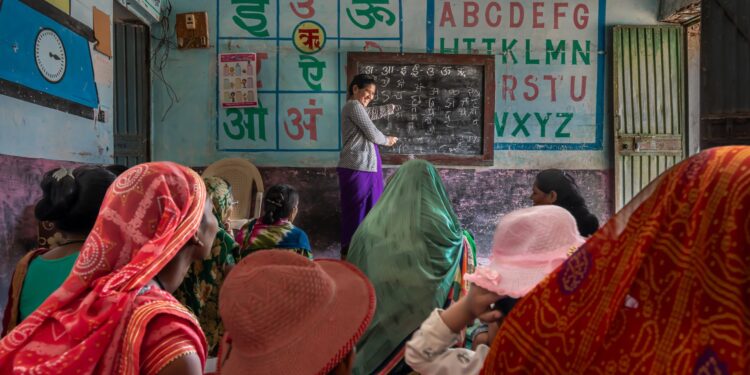
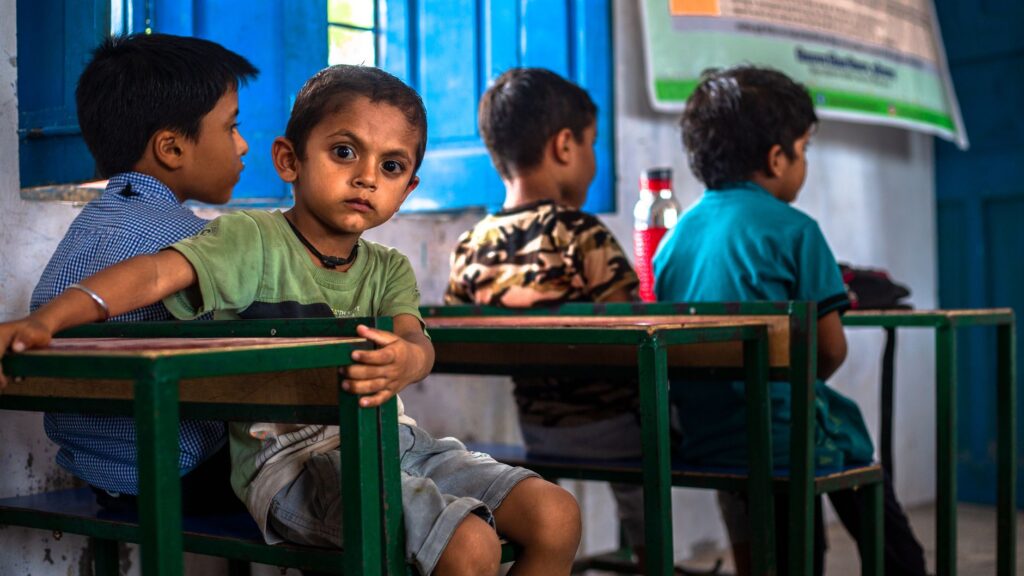
National data show declining learning outcomes in government schools despite enrollment gains.The Ministry of Education has acknowledged gaps in infrastructure and teacher quality as contributors to the shortfall.
Government schools across India are reporting significant shortfalls in basic literacy and numeracy, according to the latest Unified District Information System for Education (UDISE+) data released in early 2026 [1]. The data, compiled for the 2024‑25 academic year, indicate that only 57 percent of students in government primary schools achieved grade‑level proficiency in reading, compared with 84 percent in private schools [1]. The findings were presented in a Frontline Magazine analysis published in July 2026 [1].
The crisis involves the Union Ministry of Education, state education departments, the National Council of Educational Research and Training (NCERT), teachers, students, and parents [2][3]. The Ministry’s annual report released in March 2026 highlighted that while enrollment in government schools rose to 115 million students—a 12 percent increase since 2020—learning outcomes have not kept pace [2]. The report attributes the gap to inadequate school infrastructure, insufficient funding per pupil, and a shortage of qualified teachers, especially in rural districts [2][3].
Scale of the Learning Gap
UDISE+ figures show that in 2024‑25, 43 percent of government primary students were below grade‑level in reading, and 48 percent were below grade‑level in mathematics [1]. The shortfall is more pronounced in states such as Bihar, Uttar Pradesh, and Madhya Pradesh, where below‑grade proficiency exceeds 55 percent [1]. In contrast, southern states like Kerala and Tamil Nadu report proficiency rates above 70 percent, reflecting regional disparities [1].
The same data set reveals that school infrastructure deficits affect learning conditions. Only 62 percent of government schools nationwide have functional classrooms with adequate lighting and ventilation, while 41 percent lack separate toilets for girls [1]. Teacher vacancy rates stood at 18 percent for primary grades and 24 percent for secondary grades, indicating a persistent shortage of qualified staff [2].
Scale of the Learning Gap
UDISE+ figures show that in 2024‑25, 43 percent of government primary students were below grade‑level in reading, and 48 percent were below grade‑level in mathematics [1].
The investment-grade rating is crucial as it enhances the bank's standing with global investors and financial institutions. S&P highlighted IDFC FIRST Bank's strong capitalization, improving…
Since 2019, the Modi administration has introduced the “National Education Policy 2020” (NEP 2020) and the “Samagra Shiksha” program to improve school quality [2]. Funding for Samagra Shiksha increased from ₹1,00,000 crore in 2020‑21 to ₹1,25,000 crore in 2024‑25, representing a 25 percent rise [2]. However, audit reports released by the Comptroller and Auditor General (CAG) in February 2026 noted delays in fund disbursement to states, with an average lag of eight months between allocation and utilization [2].
The Ministry’s 2026 policy brief outlined a three-tier teacher recruitment drive, aiming to fill 1.5 million vacancies by 2028 [2]. As of March 2026, only 540,000 positions had been filled, reflecting slower than projected recruitment [2]. NCERT has introduced new curriculum modules focused on foundational literacy and numeracy, but implementation reports indicate that only 68 percent of schools have adopted the revised materials [3].
Immediate Impact on Students and Institutions
The learning deficits are affecting student progression. The All-India Survey on Higher Education (AISHE) for 2025 reported that 22 percent of students from government schools who completed class 10 did not qualify for admission to higher secondary programs, compared with 9 percent of private-school graduates [1]. Dropout rates in government secondary schools rose to 14 percent in 2025, up from 11 percent in 2022 [1].
Teachers in under-resourced schools report higher workloads and lower morale, according to a Ministry of Education internal survey conducted in January 2026 [2]. The survey documented that 62 percent of teachers in government schools cited lack of teaching aids as a barrier to effective instruction [2]. Parents in affected districts have increasingly sought private tuition, with enrollment in private tutoring centers rising by 18 percent between 2023 and 2025 [3].
The broader economic implications are noted in a Frontline analysis linking the education shortfall to India’s demographic dividend. The report estimates that the current learning gap could reduce the projected contribution of the working-age population to GDP by 0.5 percentage points per year through 2035 [2].
An unnamed insurance software provider announced on August 13, 2026 that it had acquired an AI‑driven claims processing platform to enhance automation and fraud detection for…
Immediate Impact on Students and Institutions The learning deficits are affecting student progression.
What: Government schools in India show widespread deficiencies in literacy, numeracy, infrastructure, and teacher staffing.
When: Data released for the 2024-25 academic year; policy updates and audits issued in 2025-26.
Impact: Students face lower proficiency and higher dropout rates; teachers confront resource shortages; the shortfall may affect India’s economic growth.
Sources
India’s School Education Crisis: What UDISE+ Data Reveals – Frontline Magazine
How the Modi government is failing India’s demographic dividend through education and jobs – Frontline Magazine
Education crisis about excellence, not access as India faces learning challenge – Telegraph India
RESEARCH SOURCES:
### RESEARCH SOURCES:
India’s School Education Crisis: What UDISE+ Data Reveals – Frontline Magazine – https://news.google.com/rss/articles/CBMixgFBVV95cUxQdnFKUGdpc052elVLOExGcGVKcUpuSEthcFg1SDN2RkdLb2p0LUtnb2hLY1NYZ3lNQzQ2ZEx0UlNtaFRkX1VHNTJLR3REMnBhSGZfNm1ZSlNUT29FNDR1V2w1UHBwRjdtaUtCMmMwRHUwazdKQUpmOENmZ29xeDZDcmZOR0JUM1V0VTM4QnM5d0YzakhUal94R0Jza1FDZ1VueHJOWW1uOW5WV2M2V3lkMnpNNVVjeXk1YW1oM2RLVmtUc05veFHSAcwBQVVfeXFMUDVKLTF1TEtTNlQxVW0yYlpncXBwRjdqYUxDRy1BeTY5ZU9GbFFITzI0MFRoMDIzSGJyTHdjbDZ6dnR4WWVsX21fcm5CcVZTVVZBYVYxaUlQaVNtY0RZWF8xNVhWbWpvR0pFOEZrSGtVRVloZlFjSnk1YkVQSjZfQjZnemdiSlFWSWU3Z1VwREJfUE5GdU15RGFpVVZBT2pESy1zWmxybnN6YUNTSnBKUExqcXZLbEdPUHRGeDBlOTh6ODNPWnowM2cxMFhz?oc=5
Title: Before you continue URL Source:…
How the Modi government is failing India’s demographic dividend through education and jobs – Frontline Magazine – https://news.google.com/rss/articles/CBMiuAFBVV95cUxQSmxWcU4xU0dWOF9nZndaaTNMNHZnblEyaFVyNjNmV0FHQmpTdDFxRWFkS0RkYVRxX3dsT0I2dGNTQmliMW1tUlpPYVBIbkJsVUJtTGRJX3dQOUhMRmZWVUZTV2UyS1lEcEQ3TXg0OXpYVzhZOGFIN2FlMXJWT3ltdjdCSlR0SGdoTGZxVUR4N2tJN085VmZjS3RDTWY0SWxfMnFsMXlaS1JoVWRMaWY0U2U1VnQtM0Nj0gG_AUFVX3lxTE9GcGo3THl4dHNVV0MwZFV3NVA4ejJqM1BhdG1QbGd2VGh4SHRORmI3SGVzd0pWcWtHbFNTbmUwQUt3MFh6Z0c0WlpHTG9uN2k5UFJxVEo4X1lMa0hKaWR3azdzdkZVdDdvYmFyWFNVSXJlODhlRXk4RFpudUE3TnhOMElfUC1lWU5FNjh2bjBtUVczLUphcE0wTjFRaWJvSjlINmFZRFpycTBka1RKaHRhMEJfbENRdFBlb1o2V3Z3?oc=5
How the Modi government is failing India’s demographic dividend through education and jobs Frontline Magazine
Education crisis about excellence, not access as India faces learning challenge – Telegraph India – https://news.google.com/rss/articles/CBMi0AFBVV95cUxPNmdONXZUZFpQY3BZeWtINWtGM0FmY1pYVHhxaW1xeHB0R0N2am95VXVPY0xyaVgyUHBDU2xiQWFsSE5EanVjTUFSYWl3ZDZNSzNNeWV5elE5OUU1OE9HYm4xWnprdW9Scm5YUGcyM0Vub2lhZk9vY2w5TW9ZOE9pVjA1U0Vxb3JNZ0prSUFwSzZpcUNZWTZrT08yYlJ2T0hmaUZtYURjNUUxX3JaR1NISmphZkE5QlduTlVuZnhDTzZPU0gtVW5KZW9FWHU1R2900gHWAUFVX3lxTE5RaGFZM1BiekhXdkhiMWc2aVZJRXhWamtDZFBXNFo0MTJydWhLUEJNdXZDRTFzVzRmMTlGNFdWcjFmbU1URUFXRUtlSU5aQTY5WWVBa1BnVXpyUk5aOXdaX0tmNUlua25rRHFSY0FkNXd6VDE4V1pOdjVpQmlDWGVIRHZJZmREbWZmRHNMVmNyd3U4cGliUXVnV05NbXBGaHNyRVd0MUVGOWRXTHNfY1l3b1F1Q0dkSzYzYm9PV0UtZURjckk0bk5



News
News