No products in the cart.

India’s Talent Shortfall Threatens the Hiring Boom

India’s hiring boom is being throttled by a deepening digital‑skill gap, threatening both economic growth and social stability. Government initiatives and private upskilling programs are underway, but mismatches and rapid tech change keep the challenge alive.

A widening digital‑skill gap is turning today’s hiring surge into tomorrow’s productivity crisis.
The Problem
A recent Times of India survey found that 62% of Indian tech recruiters struggle to fill open roles due to a lack of digital skills among candidates. Companies like Tata Consultancy Services and Infosys report that junior vacancies in cloud, AI, and cybersecurity remain unfilled, despite a record-high intake of fresh graduates. This shortage is not limited to IT; in the e-commerce sector, Flipkart’s hiring manager revealed that half of the 12,000 new hires this quarter needed on-the-job training for data analytics tools.
The shortage is eroding India’s ability to ride the current hiring wave. Employers are forced to extend search cycles, raise salaries, or outsource work to overseas firms. This results in a growing mismatch between demand for high-value roles and the supply of qualified talent.
The Context
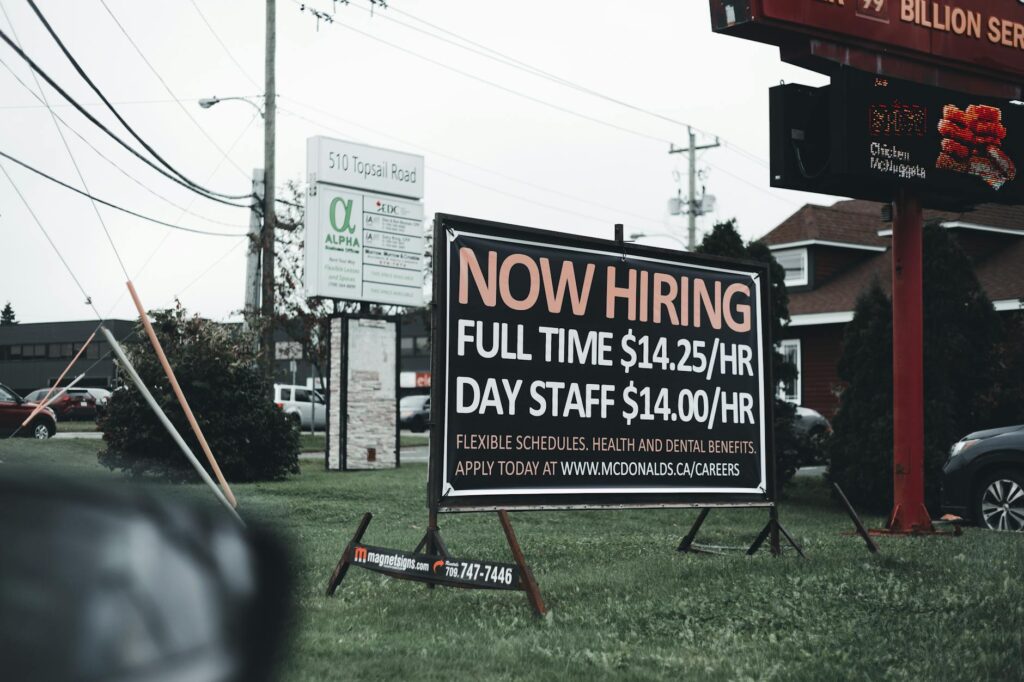
India’s job market has defied the global slowdown. Between January and March 2024, the nation added 1.8 million jobs, led by technology, healthcare, and online retail. The pandemic accelerated digital adoption: 71% of Indian households now use broadband, and mobile internet penetration hit 55% in 2023. These shifts created a flood of new positions in cloud services, telehealth, and logistics platforms.
Workers who built careers in legacy systems find their expertise obsolete, while fresh entrants lack practical experience with emerging tools.
However, the same speed that opened doors also widened the skill chasm. Workers who built careers in legacy systems find their expertise obsolete, while fresh entrants lack practical experience with emerging tools. McKinsey’s “State of the Consumer 2024” report warns that rapid tech change is outpacing workforce readiness, especially in Tier-2 and Tier-3 cities where formal training infrastructure lags.
You may also like
 Business Insights
Navigating Small Business Trends in 2026: What You Need to Know
Discover the top small business trends for 2026, including AI adoption, cybersecurity, and workforce flexibility. Prepare your business for success with actionable insights.
Read More →The Stakes
Economically, the skill gap translates into lost productivity. The McKinsey study estimates that India could forfeit up to $400 billion in annual GDP growth if digital talent shortages persist. Lower output weakens the country’s competitive edge in the global services market, where rivals like the Philippines and Vietnam are already scaling up their tech workforces.
Socially, the gap fuels unemployment among youth. The National Sample Survey Office recorded a 9.2% unemployment rate for ages 15-29 in 2023, with the highest figures in states where digital training programs are scarce. Inequality widens as well-paid, up-skilled workers command premium salaries, while under-skilled labor faces stagnant wages.
The Response

The Indian government has rolled out several schemes to plug the talent void. The “Skill India” mission now funds 1.2 million apprenticeships in AI, robotics, and fintech, targeting both urban and rural trainees. The Ministry of Electronics and Information Technology launched the “Digital Literacy Mission,” offering free certification in basic coding and data handling to 5 million citizens by 2026.
Private firms are matching the push. TCS’s “FutureReady” program invests $250 million in upskilling its workforce, delivering 3 million online courses in cloud, analytics, and cybersecurity since 2022. Start-up edtech platform upGrad partnered with the Indian Institute of Technology to design a curriculum that aligns with industry demand, reporting a 40% job placement rate for graduates in 2024.
TCS’s “FutureReady” program invests $250 million in upskilling its workforce, delivering 3 million online courses in cloud, analytics, and cybersecurity since 2022.
The Outlook
The next decade will test whether India can convert its demographic dividend into a skilled dividend. Emerging technologies—AI, blockchain, the Internet of Things—are set to create 12 million new jobs by 2030, but they will also demand advanced competencies that current education pipelines do not yet deliver.
You may also like
 Student Experiences
AI Copilots: The Future of Aviation Safety and Careers
AI copilots are transforming flight safety, impacting pilot roles and future aviation careers. Explore the implications.
Read More →A sustainable solution will require a cultural shift toward lifelong learning. Companies must embed continuous training into career paths, and universities need to adopt modular, industry-co-designed programs. If the public and private sectors can synchronize efforts, India could close the skill gap and cement its role as the world’s largest digital labor pool. Failure to act, however, risks turning today’s hiring surge into a future bottleneck that stalls growth and fuels social tension.