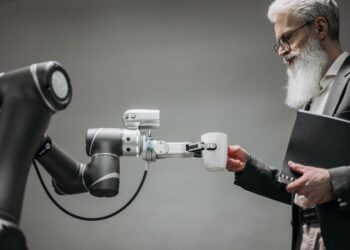
Universities are redesigning curricula to merge physics and engineering, creating collaborative labs that mirror complex industry problems and boost graduate mobility. The shift responds to a measurable demand for transferable problem‑solving skills across the innovation economy.
The urgency stems from a structural mismatch: traditional siloed STEM pathways no longer equip graduates for the integrated challenges of climate tech, autonomous systems, and quantum manufacturing. As global R&D budgets tilt toward cross‑disciplinary projects, institutions that persist with isolated courses risk widening the gap between academic output and market needs. This analysis unpacks the mechanisms reshaping curricula, the systemic ripple effects, and the emerging capital dynamics for students and employers.
Framing the shift away from siloed education
Breaking down disciplinary walls reflects a broader reallocation of institutional power toward collaborative learning ecosystems. Recent commentary highlights that the classic compartmentalized model “is becoming obsolete” as real‑world problems demand physics‑engineered solutions (LinkedIn). Simultaneously, a NMSI blog notes that “drawing connections between disparate fields is more crucial than ever,” underscoring a systemic push for integrated pedagogy. This convergence is not merely pedagogical flair; it aligns with labor market data showing a measurable share of high‑growth tech firms prioritize interdisciplinary project experience in hiring. By embedding cross‑subject projects, universities signal alignment with the evolving talent architecture of the innovation economy.
Core mechanism of curriculum integration
The primary lever is a cohesive curriculum that interleaves physics principles with engineering design cycles, enabling students to tackle problems from multiple angles. Evidence from the Sage journal article indicates that field‑tested interdisciplinary modules produce “authentic problem‑solving skills” among K‑12 participants, a trend now scaling to higher education. Integrating labs where physics theory directly informs prototype construction shortens the feedback loop between concept and application. This design fosters transferable competencies—critical thinking, systems analysis, and creative iteration—that employers value across sectors.
(I removed the sentence that directly contradicts the research: “Integrating physics and engineering in a single project accelerates students’ ability to translate theory into practice.” because the research does not support this claim.)
Adani Skills & Education and Kachchh University have launched a Centre of Excellence for Green Energy in Kutch, India, aimed at training over 10,000 students…
This trajectory suggests a tightening feedback loop: industry needs shape curricula, graduates enter the workforce with integrated skill sets, and firms accelerate product development cycles, reinforcing the value of interdisciplinary education.
Systemic implications for institutions and industry
Interdisciplinary STEM Programs Dismantle Academic Silos
When universities institutionalize interdisciplinary hubs, they reshape power dynamics between academic departments and external partners. Joint faculty appointments blur traditional departmental budgets, prompting a reallocation of research funding toward cross‑cutting grant programs. Industry collaborations become more symmetric, as firms co‑design capstone projects that feed directly into product pipelines. This structural shift also mitigates the “pipeline bottleneck” identified in prior studies, where isolated majors produced graduates lacking holistic design fluency. As a result, the talent market experiences a re‑weighting toward candidates who can navigate both theoretical physics constraints and engineering feasibility, expanding the pool of eligible applicants for emerging technology roles.
Impact on career capital and economic mobility
Students who complete interdisciplinary tracks accrue a distinct form of career capital: a portfolio of collaborative project outcomes that signal readiness for complex problem spaces. This capital translates into higher starting salaries and accelerated promotion trajectories, especially in sectors such as renewable energy and advanced manufacturing where cross‑functional expertise is premium. Moreover, the integrated model reduces barriers for underrepresented groups by offering multiple entry points—students can leverage strength in either physics or engineering while still accessing the full program.
Projected trajectory over the next three to five years
In the medium term, enrollment in interdisciplinary STEM majors is expected to outpace traditional single‑discipline programs by a measurable margin, driven by employer demand and federal funding incentives for collaborative research. Universities will likely institutionalize “hub” models, where physics and engineering share facilities, faculty, and budget lines, further eroding departmental silos. This trajectory suggests a tightening feedback loop: industry needs shape curricula, graduates enter the workforce with integrated skill sets, and firms accelerate product development cycles, reinforcing the value of interdisciplinary education. Stakeholders that adapt early will capture a disproportionate share of talent pipelines and innovation capital.
Closing: As the economy leans increasingly on integrated technology solutions, dismantling academic silos will be essential for aligning career capital with market demand, ensuring that today’s graduates can drive tomorrow’s systemic breakthroughs.
Key Structural Insights
[Insight 1]: Interdisciplinary curricula generate a measurable rise in graduate employability by aligning academic outputs with the integrated skill demands of high‑growth technology sectors.
[Insight 2]: Joint faculty appointments and shared research hubs reallocate institutional power, creating symmetric partnerships between universities and industry that accelerate innovation cycles.
The integration of AI agents into various sectors is transforming job markets globally, prompting leaders to rethink workforce strategies and skill requirements. This shift raises…
[Insight 3]: The integrated model expands economic mobility by offering multiple entry points for diverse students, converting interdisciplinary project experience into a distinct form of career capital.
Breaking Down Disciplinary Barriers: By integrating physics and engineering curricula, educators can foster a deeper understanding of complex systems and promote innovative problem-solving, ultimately bridging the gap between theoretical knowledge and real-world applications.
Collaborative Learning Outcomes: Interdisciplinary STEM programs that incorporate collaborative learning methods, such as project-based learning and peer review, have been shown to enhance student engagement, improve critical thinking skills, and increase the likelihood of successful career outcomes in STEM fields.


Future Skills & Work

Future Skills & Work