During a post-budget webinar on March 10, 2026, Prime Minister Narendra Modi emphasized the need to connect India’s education system with the economy. This call aligns with the National Education Policy (NEP), which aims to adjust curricula based on market demands, particularly in fields like artificial intelligence and automation.
The financial markets reflect this vision. By February 2026, the Nifty 50 index represented 43.6% of total market capitalization, indicating India’s economic growth. This increase shows a rising demand for skilled talent that can drive innovation, which requires academic institutions to collaborate more closely with industries.
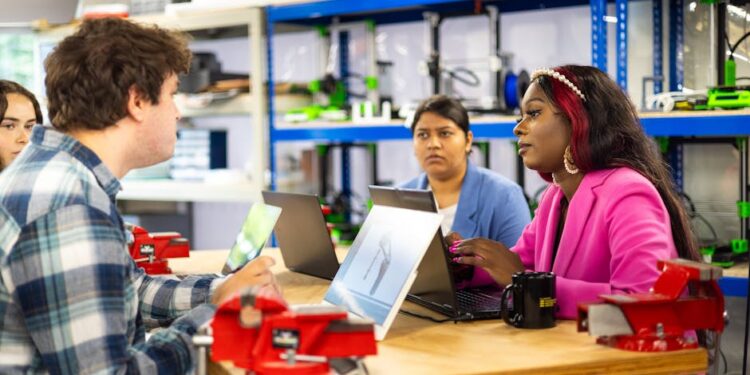
Partnerships between universities and industries are emerging, with tech firms sponsoring labs and corporations funding research. However, these efforts are still limited and vary across regions. To create a strong link between education and industry, institutions should establish industry liaison offices, co-develop curricula with businesses, and implement joint research programs that focus on both commercial success and academic quality.
Takeaway: Universities that build structured partnerships with industries will become key sources of talent for India’s growing economy.
The Role of AI and Automation in Curriculum Development
The NEP’s focus on AI and automation reflects changes in the job market. Modi stated that curricula must align with market needs, prompting educators to rethink teaching methods and skill development.
Modi stated that curricula must align with market needs, prompting educators to rethink teaching methods and skill development.
AI can enhance learning in two ways: it can personalize instruction through adaptive platforms and provide real-time feedback to educators about curriculum relevance. For example, if a data science module produces graduates who struggle with cloud technologies, this gap can be addressed by adding hands-on cloud labs.
However, automation poses challenges. While it can improve efficiency, it may also replace routine jobs. The NEP encourages a curriculum that balances technical skills with human abilities like critical thinking and creativity. To address potential job losses, the government should support re-skilling and up-skilling initiatives through public-private partnerships that offer flexible credentialing options.
Takeaway: Integrating AI and automation into education while creating adaptable credentialing systems will help graduates thrive alongside intelligent machines.
AI advancements are reshaping stock market dynamics and investment strategies, presenting both opportunities and challenges for financial professionals.
<pThe intersection of education reform and market trends is changing career paths for students. Traditional degrees now compete with vocational programs that offer faster entry into high-growth fields like animation and gaming, which Modi identified as key growth areas.
Employers are increasingly seeking interdisciplinary skills. A software engineer who understands design thinking or a media artist skilled in data analytics will stand out in a fast-paced job market. The NEP’s push for “research-driven learning” emphasizes the need for project-based courses and industry-sponsored internships that mimic real-world challenges.
Implications for Students and Future Job Markets <pThe intersection of education reform and market trends is changing career paths for students.
Beyond technical skills, adaptability is crucial. Lifelong learning is becoming essential, supported by alumni networks and corporate training programs. Institutions that integrate career services into academic programs will produce graduates who are not only employable but also capable of shaping new business models.
Takeaway: Students who engage in interdisciplinary, project-based learning and commit to continuous up-skilling will be best prepared for a rapidly changing job market.
Strategic Perspective: Aligning Policy, capital and Talent
To achieve India’s economic goals, policy, market trends, and educational practices must align. The NEP provides a framework, but successful implementation requires investment in infrastructure, such as modern labs and faculty development programs. The public sector should encourage private sector involvement through tax incentives and streamlined regulations for joint research.
From a capital markets perspective, a skilled workforce directly impacts market valuation. As the Nifty 50’s share of market capitalization grows, investors are focusing on talent pipelines that support earnings growth. Companies collaborating with educational institutions gain a competitive edge and demonstrate commitment to innovation.
In the next decade, the ability of educational systems to adapt quickly will be crucial. Just as fintech companies have sped up product cycles, universities must embrace similar strategies—rapidly updating curricula, maintaining feedback loops with industries, and using scalable digital delivery methods. Those that do will lead India’s next wave of economic growth.
Takeaway: A coordinated approach that aligns policy, market needs, and agile educational practices will turn campuses into engines of economic growth, ensuring India’s talent pool supports its rising market capitalisation.
As financial literacy becomes crucial for young learners, several government-backed programs are now available to teach children about saving and investing. This article explores five…
Takeaway: A coordinated approach that aligns policy, market needs, and agile educational practices will turn campuses into engines of economic growth, ensuring India’s talent pool supports its rising market capitalisation.
The Road Ahead: A Vision of Integrated Growth
India is at a pivotal moment where aligning education with the economy is essential for competitiveness. The Prime Minister’s call, the NEP’s reforms, and the growing capital market create a unique opportunity. If universities, industries, and policymakers maintain this alignment, future Indian graduates will not just fill jobs; they will create them, driving the country towards a future of synchronized economic growth and human capital development.



 AI & Technology
Education & University Insights