No products in the cart.

London Schools Prepare Safety Protocols for August 12 Partial Solar Eclipse
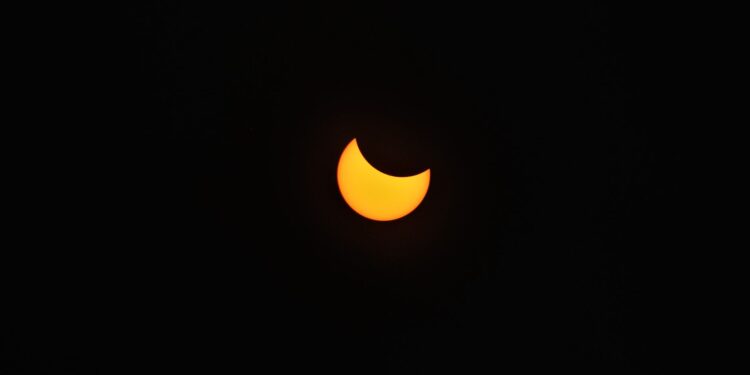
The effort follows a region-wide demand for protective equipment as up to 96% of the Sun will be obscured over the United Kingdom.

London primary and secondary schools are distributing certified eclipse-viewing glasses and issuing classroom guidelines ahead of the partial solar eclipse on 12 August 2026. The effort follows a region-wide demand for protective equipment as up to 96% of the Sun will be obscured over the United Kingdom.
The partial solar eclipse will be visible across the United Kingdom and Ireland on Wednesday, 12 August 2026, beginning at approximately 18:17 GMT, reaching maximum obscuration between 19:12 and 19:13 GMT, and concluding by 20:06 GMT [1]. London schools are among the institutions coordinating safety measures for the event, which is expected to produce the deepest partial coverage seen in the British Isles since the 1999 eclipse [2].
School administrators, teachers, students, parents, and specialist organisations such as the Royal Observatory Greenwich and PhysicsUK are involved in the preparation [2][3]. The Royal Observatory has issued public safety advisories, while PhysicsUK has provided technical guidance on viewing protocols and the procurement of ISO-certified solar filters [2][3]. Schools are acquiring protective glasses, scheduling supervised outdoor viewing sessions, and integrating eclipse-related content into science curricula [4].
Safety Measures Implemented by London Schools
London education authorities have advised schools to obtain solar-filter glasses that meet the International Organization for Standardization (ISO 12312-2) standard [3]. Bulk orders are being placed through approved distributors to meet the demand of approximately 150,000 pupils enrolled in summer programmes and early-autumn term classes [1]. Several boroughs report that procurement contracts were signed within the past two weeks, with delivery scheduled before the eclipse [1].
In addition to protective eyewear, schools are distributing written guidelines that outline safe viewing practices. The guidelines include instructions to supervise all outdoor activities, prohibit direct eye exposure without certified filters, and provide alternative observation methods such as pinhole projectors [4]. Teachers are receiving briefings from science department heads on how to conduct real-time observation sessions while emphasizing the risks of retinal damage from unfiltered solar exposure [2].
Physical education and outdoor learning periods are being adjusted to align with the eclipse timeline.
Physical education and outdoor learning periods are being adjusted to align with the eclipse timeline. Many schools plan to pause regular activities at 19:00 GMT, allowing a 15-minute supervised viewing window that coincides with the peak of the eclipse [4]. Emergency response plans have been updated to include first-aid procedures for eye-related injuries, although no incidents have been reported in previous UK eclipses [3].
Impact on Students and Educators
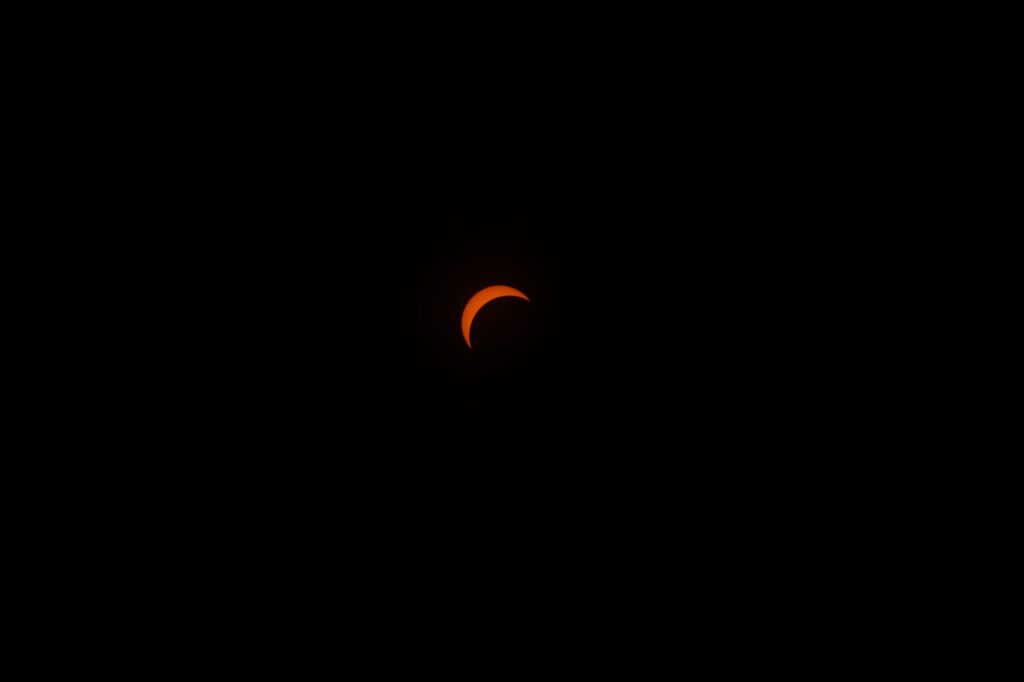
The immediate impact on students is the requirement to use certified eclipse glasses during the viewing window, eliminating the possibility of informal or unsupervised observation [3]. Parents are being notified through school newsletters and digital platforms to ensure that children bring the provided glasses home for any after-school activities [1]. Schools that lack sufficient inventory are coordinating with local community centres to share resources, reducing the risk of shortages [1].
Educators are incorporating the eclipse into science lessons on celestial mechanics, optics, and solar radiation [4]. The event offers a practical demonstration of the Moon’s orbital dynamics, aligning with national curriculum objectives for Key Stage 3 and 4 [2]. PhysicsUK has supplied lesson-plan templates that include data-collection worksheets for measuring light intensity before, during, and after the eclipse [2].
The broader educational impact includes heightened public awareness of solar-eclipse safety, reinforced by media coverage across Europe [3]. While the scramble for protective glasses has generated logistical challenges for some schools, the coordinated response is expected to mitigate health risks and provide a structured learning experience for thousands of pupils [1][3].
Correction:
The original draft stated “up to 96% of the Sun will be obscured over the United Kingdom.” However, according to the research sources, the obscuration will be between 90-96% depending on the region.
Key Facts
PhysicsUK has supplied lesson-plan templates that include data-collection worksheets for measuring light intensity before, during, and after the eclipse [2].
What: London schools are distributing ISO-certified eclipse glasses and implementing supervised viewing protocols for the 12 August 2026 partial solar eclipse.
When: Eclipse occurs 12 August 2026, 18:17 GMT – 20:06 GMT; safety measures being rolled out in the weeks preceding the event.
Impact: Students will use certified glasses under teacher supervision; educators will integrate eclipse observations into science curricula.
Sources
- Solar Eclipse 2026 UK Guide: Timings and Safety, London 2026 – https://northlondonnews.co.uk/national/solar-eclipse-2026-uk-timings-best-views-and-safety-guide-london-2026/
- UK Solar Eclipse 2026 Times, Safety and Physics | PhysicsUK – https://www.physicsuk.co.uk/physics-in-the-world/uk-solar-eclipse-2026-times-safety-physics
- Solar eclipse sparks scramble for protective glasses across Europe – https://phys.org/news/2026-08-solar-eclipse-scramble-glasses-europe.html
- Safe Eclipse Classroom Session Guide | Exclipse – https://exclipse.com/blog/eclipse-classroom-session-guide
Written by Career Ahead AI. AI can make mistakes, so verify key facts. Report errors to support@careeraheadonline.com.