Employers overwhelmingly favor micro‑credentials, with 94% willing to offer higher starting salaries to graduates who hold them, signaling a decisive shift in how career capital is measured.
The rapid digitization of work has amplified demand for adaptable soft skills while exposing the rigidity of traditional degree pathways. This convergence forces institutions, firms, and workers to renegotiate the architecture of credentialing, making the micro‑credential movement a pivotal lever for economic mobility and leadership pipelines today.
Structural shift in education and labor markets
Micro‑credentials are redefining the foundation of career capital by replacing time‑bound degrees with competency‑based badges that map directly to employer needs. The Coursera 2026 report documents that 94% of employers would increase starting salaries for candidates holding such credentials, underscoring a re‑weighting of soft‑skill value in hiring. This trend coincides with BLS data indicating that occupations emphasizing communication, problem‑solving, and adaptability have outpaced overall job growth over the past decade.
How modular certification translates to soft‑skill validation
The core mechanism of micro‑credentials lies in granular assessment modules that isolate specific soft‑skill competencies—such as negotiation, empathy, or cross‑cultural collaboration—and certify mastery through digital badges. These badges are stored on blockchain‑enabled registries, ensuring verifiable provenance and reducing information asymmetry between talent and recruiters. By aligning assessment design with industry‑defined skill frameworks, micro‑credentials provide a transparent signal of capability that surpasses the opaque grading scales of traditional transcripts.
94% of employers say they would offer higher starting salaries to graduates with micro‑credentials.
By aligning assessment design with industry‑defined skill frameworks, micro‑credentials provide a transparent signal of capability that surpasses the opaque grading scales of traditional transcripts.
Systemic implications for institutions and career pathways
The rise of micro‑credentials reshapes institutional power by eroding the monopoly of universities over credentialing authority. Universities are increasingly partnering with tech platforms to issue stackable badges, while corporate training divisions launch proprietary micro‑credential tracks that bypass academia altogether. This diffusion of credentialing authority democratizes access to career advancement, yet it also introduces standardization challenges: without a unified taxonomy, employers risk fragmented skill signals. Moreover, the heightened emphasis on soft‑skill badges amplifies economic mobility for non‑traditional learners, allowing them to accumulate career capital incrementally rather than through costly, multi‑year degree programs.
Impact on talent, leadership pipelines, and employer strategy
Micro‑Credentials Reshape Soft‑Skill Development in Digital Era
The surge in global mental‑health burden—over 260 million people living with depression according to WHO—has intensified demand for innovative interventions.
Workers who strategically acquire micro‑credentials can accelerate promotions by evidencing soft‑skill growth in real time. A Fortune 500 software firm recently piloted a micro‑credential program for emerging leaders, reporting a measurable increase in internal mobility and a reduction in external hiring costs. According to Career Ahead’s analysis of employer willingness, the 94% figure underscores a re‑weighting of soft‑skill capital that reshapes talent pipelines. Employers are integrating credential data into AI‑driven talent analytics, allowing predictive matching of candidates to leadership roles based on verified soft‑skill profiles.
Trajectory over the next three to five years
In the coming years, regulatory bodies are expected to endorse standardized micro‑credential frameworks, fostering cross‑industry portability. AI‑enhanced skill mapping tools will automate the alignment of badge content with evolving job descriptions, ensuring relevance amid rapid digital transformation. As credential ecosystems mature, a tiered hierarchy of micro‑credentials will emerge, distinguishing foundational soft‑skill proficiency from advanced leadership mastery. Companies that embed these signals into succession planning will likely capture a competitive edge in talent retention and innovation.
In closing, the convergence of digital credentialing and soft‑skill demand is redefining career capital, positioning micro‑credentials as a structural engine of economic mobility and leadership development.
In closing, the convergence of digital credentialing and soft‑skill demand is redefining career capital, positioning micro‑credentials as a structural engine of economic mobility and leadership development.
Key Structural Insights
[Insight 1]: Employer willingness to pay premium salaries for micro‑credentialed graduates signals a systemic re‑valuation of soft‑skill capital across industries.
[Insight 2]: Modular, blockchain‑verified badges reduce information asymmetry, enabling precise talent matching and accelerating internal mobility.
[Insight 3]: Standardized micro‑credential frameworks, coupled with AI‑driven skill mapping, will embed soft‑skill validation into corporate succession pipelines within five years.
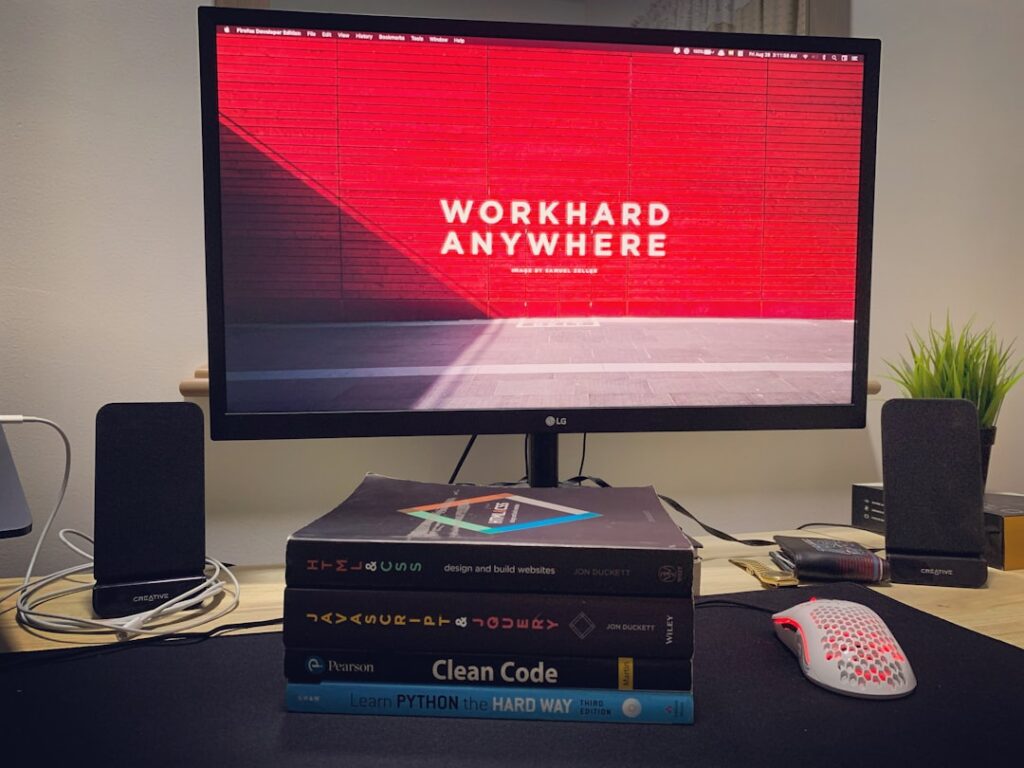
Navigating Digital Workspaces: As micro-credentials become increasingly prevalent, they are redefining the way professionals acquire and demonstrate soft skills, such as adaptability and digital literacy, in rapidly evolving digital work environments.
[Insight 3]: Standardized micro‑credential frameworks, coupled with AI‑driven skill mapping, will embed soft‑skill validation into corporate succession pipelines within five years.
Soft Skills in the AI Era: The integration of AI and machine learning in micro-credential programs is enabling more personalized and effective soft skill development, allowing professionals to better navigate the complexities of human-AI collaboration and decision-making.





 Future Skills & Work
Future Skills & Work