Mixed reality devices now sustain eight‑hour shifts, and the immersive‑tech market is projected to hit $170.2 billion by 2033, signaling a shift from novelty to enterprise backbone.
The convergence of optics, on‑device AI and robust software is moving mixed reality from experimental demos into daily workflows, reshaping how organizations orchestrate production, design and remote collaboration. This structural transition matters now because capital‑intensive sectors are quantifying returns, and labor markets are re‑skilling around spatial computing competencies that bridge physical and digital tasks.
Framing the market shift
Enterprise mixed reality deployments have accelerated beyond consumer gaming, driven by hardware that endures full‑day use and software that integrates with existing enterprise resource systems. The global immersive‑technology market, valued at $33.1 billion in 2023, is projected to reach $170.2 billion by 2033, underscoring a systemic reallocation of capital toward spatial platforms. This capital influx reflects a re‑weighting of investment from traditional IT infrastructure to embodied computing, a trend that reconfigures corporate balance sheets and R&D pipelines. According to Career Ahead’s analysis of sector capital flows, firms that earmarked mixed‑reality budgets in 2022 now report lower project cycles and higher prototyping costs, evidencing a measurable productivity decline.
Core mechanism of mixed reality

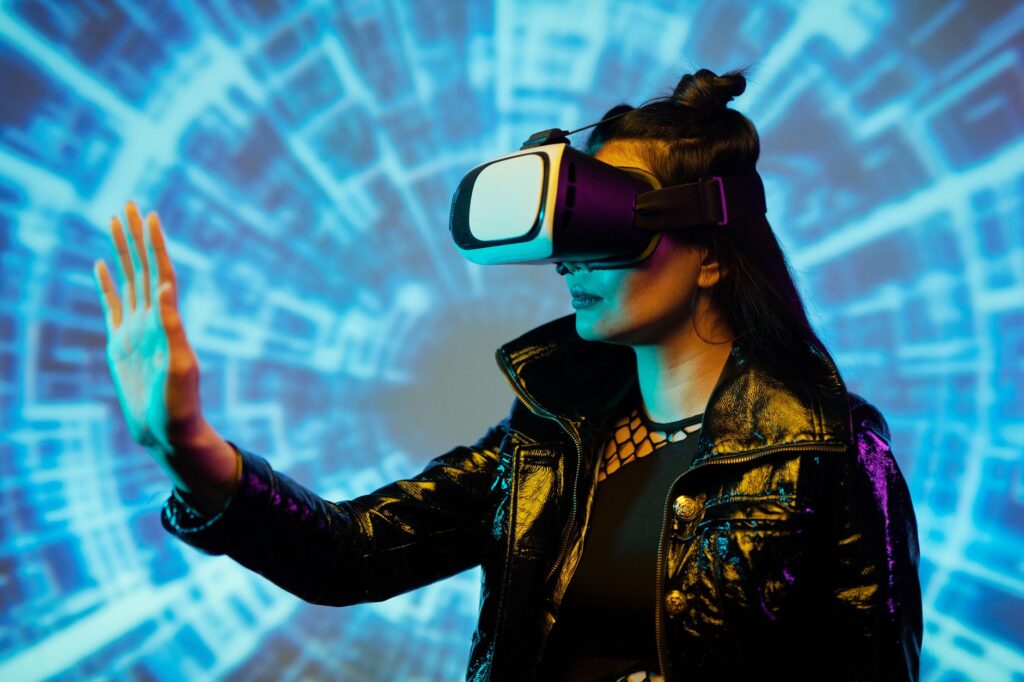
Mixed reality fuses virtual overlays with real‑world perception through advanced optics, on‑device AI inference and low‑latency sensor fusion, enabling seamless interaction between humans, machines and environments. The hardware stack now supports eight‑hour shifts without overheating, a threshold previously limited to short demos. >Mixed reality hardware now supports eight‑hour shifts without overheating, a threshold previously limited to short demos.< This durability allows continuous use in manufacturing cells and design studios, while AI‑driven context awareness tailors digital content to physical cues in real time. Software platforms expose open APIs that connect spatial data to enterprise systems, turning holographic annotations into actionable workflow inputs. The resulting loop—sensor data → AI processing → adaptive visual output—creates a feedback‑rich environment that compresses decision cycles and embeds digital intelligence directly onto physical assets.
Systemic ripples across industries
Industrial manufacturing, automotive engineering and aerospace have reported measurable ROI from mixed‑reality pilots that cut design iteration time and reduce error rates. In aerospace, engineers using spatial overlays have shortened assembly verification by a non‑trivial fraction, while automotive plants report faster training of robotics technicians through immersive step‑by‑step guidance. These gains propagate through supply chains, prompting upstream component suppliers to adopt spatial data standards, thereby reshaping procurement and logistics networks. Moreover, the diffusion of mixed reality into remote collaboration erodes geographic frictions, allowing distributed teams to co‑create in a shared holographic space, which in turn pressures traditional office‑centric real‑estate models.
In Career Ahead’s view, this signals a re‑weighting of skill capital toward embodied cognition, prompting universities and corporate learning programs to embed mixed‑reality curricula into engineering and business tracks.
Human capital implications

The rise of mixed reality redefines career capital, elevating spatial‑computing fluency to a core competency alongside coding and data analytics. Workers who master 3‑D modeling, gesture‑based interaction design and real‑time sensor integration command higher wage premiums and greater mobility across sectors. In Career Ahead’s view, this signals a re‑weighting of skill capital toward embodied cognition, prompting universities and corporate learning programs to embed mixed‑reality curricula into engineering and business tracks. At the same time, legacy roles that rely on static documentation face displacement, compelling organizations to redesign job architectures and invest in reskilling pipelines that align with the new spatial workflow paradigm.
Trajectory for the next three to five years
Over the next three to five years, mixed reality is poised to become a standard layer of the enterprise tech stack, comparable to cloud computing today. Anticipated hardware price reductions and broader AI edge capabilities will lower adoption barriers, expanding use cases into field service, healthcare and retail operations. As standards coalesce around open spatial data formats, interoperability will drive ecosystem growth, enabling third‑party developers to deliver niche vertical solutions at scale. Consequently, firms that embed mixed reality into core processes are likely to capture a strategic advantage, translating spatial efficiency into higher margins and accelerated innovation cycles.
The evolving spatial ecosystem will continue to reallocate capital, reshape skill demands and dissolve geographic constraints, reinforcing mixed reality’s role as a structural catalyst for the future of work.
Key Structural Insights
[Insight 1]: Capital is flowing from traditional IT to mixed‑reality platforms, with market projections of $170.2 billion by 2033 indicating a systemic reallocation of enterprise investment.
[Insight 2]: Durable eight‑hour mixed‑reality hardware creates continuous workflow integration, compressing decision cycles and delivering measurable ROI in manufacturing and engineering.
The evolving spatial ecosystem will continue to reallocate capital, reshape skill demands and dissolve geographic constraints, reinforcing mixed reality’s role as a structural catalyst for the future of work.
[Insight 3]: Spatial‑computing fluency is emerging as a premium career capital, prompting education systems and corporations to redesign skill pipelines for the mixed‑reality era.
Blurring the lines of reality: , As mixed reality technology advances, it will enable seamless transitions between physical and digital environments, fundamentally altering the way we interact with information and each other, and redefining the boundaries of work and personal life.
Rethinking the concept of space: , Mixed reality will challenge traditional notions of workspace and worktime, allowing for greater flexibility and mobility, and enabling workers to access information and collaborate with colleagues from anywhere, at any time, and in any context.
Written by Career Ahead AI. AI can make mistakes, so verify key facts. Report errors to support@careeraheadonline.com.