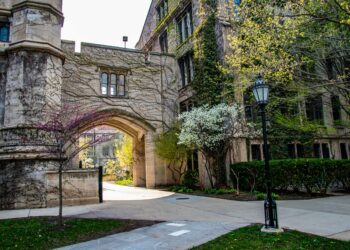
National PG College in Lucknow will now accept international students for the 2026-27 academic session, marking a significant milestone in its admission process.
Lucknow, India — National PG College is making a significant move by opening its doors to international students for the 2026-27 academic session. This initiative marks a first for the college, allowing students from various countries, including those in the SAARC region, to apply for admission. The college aims to enhance its global reach and diversify its student body, which is particularly relevant in today’s interconnected world.
The decision was finalized during a recent meeting of the admission committee, which outlined a roadmap for the new admission process. The college has begun accepting applications, which are available on its official website, www.npgc.in. Alongside this, the college will also introduce an Apprenticeship Embedded Degree Programme (AEDP), specifically for the Bachelor of Commerce (BCom) in e-commerce. This program will feature a separate entrance examination, further expanding opportunities for students.
National PG College’s move to accept international students is timely. With the increasing globalization of education, many institutions are recognizing the value of a diverse student body. This initiative not only enhances the college’s reputation but also provides local students with exposure to different cultures and perspectives. The college’s admission guidelines for international applicants will soon be made available online, ensuring a smooth process for prospective students.
Why National PG College’s Decision Matters Now
This decision comes at a crucial time as educational institutions worldwide adapt to the evolving landscape of higher education. The COVID-19 pandemic has accelerated the shift towards online learning and international collaboration, making it essential for colleges to attract students from abroad.
Moreover, the introduction of the AEDP highlights the college’s commitment to practical education. By combining classroom learning with hands-on experience, students will be better prepared for the job market. This approach aligns with industry demands, where employers increasingly seek candidates with practical skills and real-world experience.
The COVID-19 pandemic has accelerated the shift towards online learning and international collaboration, making it essential for colleges to attract students from abroad.
Amazon's decision to cut 16,000 jobs highlights significant challenges in the tech industry. This article explores the implications for employees and job seekers.
National PG College’s initiative reflects a broader trend in higher education, where institutions are re-evaluating their admission strategies to remain competitive. As more colleges recognize the importance of internationalization, students can expect a wider range of programs and opportunities tailored to their needs.
Additionally, the college’s focus on e-commerce is particularly relevant given the growth of digital business. Students pursuing a BCom in e-commerce will gain valuable skills that are in high demand, making them more attractive to potential employers. This strategic move positions the college as a leader in adapting to market trends and student needs.
As the admission process unfolds, it will be interesting to see how National PG College markets itself to attract international students. The college will need to highlight its unique offerings and create an appealing environment for students from diverse backgrounds.
How This Affects Career Opportunities for Students
For students considering applying to National PG College, this development opens up several career opportunities. The inclusion of international students can enhance networking possibilities, as students will engage with peers from different countries.
Furthermore, the emphasis on practical education through the AEDP means that students will graduate with experience that employers value. This program aims to bridge the gap between academic knowledge and real-world application, which is crucial in today’s competitive job market.
How This Affects Career Opportunities for Students
For students considering applying to National PG College, this development opens up several career opportunities.
Students who take advantage of this new admission policy can expect to develop a global perspective, which is increasingly important in various fields. Employers often favor candidates who can navigate diverse environments and understand different cultural contexts.
Moreover, the introduction of a separate entrance examination for the BCom in e-commerce indicates that this field is a priority for the college. Students who pursue this pathway will likely find themselves well-prepared for careers in digital marketing, e-commerce management, and other related fields.
Network internationally: Engage with peers from various countries to broaden your understanding of global markets.
Gain practical experience: Participate in the AEDP to enhance your employability with hands-on training.
Focus on e-commerce skills: Consider the BCom in e-commerce to align with industry demands.
However, some experts caution that while expanding international admissions can enhance diversity, it may also lead to increased competition for local students. As institutions like National PG College attract a broader applicant pool, local students might find it harder to secure spots in popular programs. Furthermore, there is a concern that the quality of education could be compromised if institutions prioritize quantity over quality in their admissions process.
The Future of International Admissions at National PG College
Looking ahead, National PG College’s decision to admit international students could pave the way for similar initiatives across other institutions in India. As competition for students intensifies, colleges may be encouraged to adopt more inclusive policies to attract top talent.
Moreover, the success of this program will likely depend on how effectively the college markets its offerings and supports international students.
Moreover, the success of this program will likely depend on how effectively the college markets its offerings and supports international students. Providing adequate resources, such as orientation programs and academic support, will be crucial in ensuring a positive experience for new students.
Ultimately, National PG College’s initiative reflects a growing recognition of the importance of international collaboration in education. As more students seek opportunities abroad, institutions must adapt to meet their needs. Will this trend lead to a more interconnected global education system, or will it create challenges for local students?




Artificial Intelligence

 Digital Learning
 Career Guidance