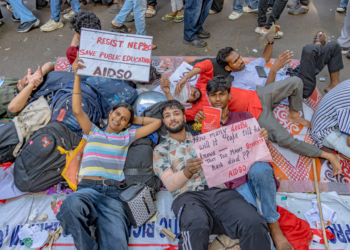
Tensions escalated at Maharishi Dayanand College when two students were denied entry to the NEET exam for arriving late, prompting protests from parents and students.
Mumbai, India — Tensions escalated at Maharishi Dayanand College when two students were denied entry to the NEET exam for arriving late. The college strictly adhered to the 1:30 PM entry deadline, prompting an uproar among students and parents outside the examination center. This incident highlights the significant implications of strict entry protocols on students’ access to crucial assessments.
The situation unfolded on June 21, 2026, when parents of the affected students expressed their frustration. One student was from Kurla, and the other hailed from Dombivli, both areas adjacent to Mumbai. Eyewitnesses reported that an announcement was made at 1:29 PM, warning that the gates would close at 1:30 PM. Despite the warning, some students, including three girls who arrived at 1:32 PM, attempted to enter by climbing over a railing, only to find the inner gate also locked.
This event is not isolated. A similar situation occurred in Bengaluru, Karnataka, where four students were denied entry for arriving after the same deadline. Parents attributed the delays to traffic congestion caused by a Congress rally, raising questions about the management of such events and their impact on students’ futures. The parents’ pleas for leniency were met with strict adherence to the National Testing Agency’s guidelines, which unequivocally prohibit entry after the designated time. As reported by Economic Times, the college administration’s rigid enforcement of these rules has sparked widespread debate about the fairness of such policies.
Consequences of Rigid Entry Policies
The strict enforcement of NEET entry protocols raises critical questions about the administrative policies governing examinations. While maintaining exam integrity is essential, the rigidity of these rules can have detrimental effects on students. Many students face external challenges, such as traffic or unforeseen circumstances, that can impede their timely arrival. In light of these incidents, it becomes clear that a balance must be struck between enforcing rules and accommodating genuine student needs.
Parents attributed the delays to traffic congestion caused by a Congress rally, raising questions about the management of such events and their impact on students’ futures.
Moreover, the emotional toll on students and their families cannot be overlooked. The uproar outside the college was not merely a reaction to being denied entry; it was a manifestation of anxiety regarding their future. The NEET exam is a gateway for many aspiring medical students, and being barred from taking it can have long-lasting implications on their academic and career trajectories. For students who invest significant time and resources into preparing for this pivotal exam, the stakes are incredibly high. As noted by The News Mill, the incident has ignited discussions about the need for more empathetic approaches from educational authorities.
Need for Flexible Policies
Research indicates that strict entry policies can exacerbate stress and anxiety among students, particularly in high-stakes scenarios like the NEET exam. Students often face immense pressure to perform well, and the added stress of logistical challenges can detract from their focus. This situation calls for higher education administrators to reassess their policies and consider more flexible approaches that account for real-world challenges faced by students. Furthermore, the lack of communication and support from examination authorities during such incidents can lead to feelings of helplessness among students. Parents reported that officials remained unresponsive to their pleas, further intensifying the situation. Improved communication strategies could help mitigate such crises in the future, ensuring that students and their families feel supported rather than dismissed.
Wider Implications for Higher Education
This incident in Mumbai serves as a microcosm of broader issues within the higher education system in India. The enforcement of strict entry protocols reflects a growing trend among educational institutions to prioritize compliance over student welfare. While it is crucial to maintain order and fairness in examinations, the rigidity of these rules can alienate students, particularly those from disadvantaged backgrounds who may struggle with transportation or other logistical issues.
Educational institutions must adapt their policies to better accommodate the diverse needs of their student populations. This may involve implementing more flexible entry protocols, providing clearer communication regarding exam procedures, and ensuring that adequate support is available to assist students facing challenges. By fostering a more inclusive environment, institutions can help alleviate some of the pressures associated with high-stakes examinations. The recent uproar also raises questions about the role of parents and guardians in the examination process. Many parents expressed frustration over the lack of support from college authorities during the incident. This highlights the need for educational institutions to engage with families as partners in the academic journey of students. Effective communication and collaboration can help create a supportive network that benefits both students and their families.
Preparing for Future Exams
As NEET candidates prepare for future examinations, it is essential for higher education administrators to remain attuned to the challenges faced by students. By embracing a more student-centered approach to policies and practices, institutions can foster an environment that prioritizes learning and growth over mere compliance. The events in Mumbai serve as a reminder of the importance of adapting to the needs of students in an ever-changing educational landscape. The question remains: will educational institutions take heed of this incident and implement necessary changes to ensure that all students have a fair chance at success?
Maharashtra's Higher and Technical Education Minister, Chandrakant Patil, has announced new standard operating procedures (SOPs) to prevent exam paper leaks at public universities, following protests…
Preparing for Future Exams
As NEET candidates prepare for future examinations, it is essential for higher education administrators to remain attuned to the challenges faced by students.
Frequently Asked Questions
What should NEET exam candidates do if they arrive late to the exam?
NEET exam candidates who arrive late may be denied entry according to the strict guidelines set by the National Testing Agency. It is crucial for students to plan their travel in advance and allow extra time for unforeseen delays.
How can higher education administrators improve communication about exam protocols?
Higher education administrators can enhance communication by providing clear and timely information regarding exam protocols through multiple channels, including emails, social media, and on-site announcements. Engaging with students and parents can foster a supportive environment.
What strategies can NEET exam candidates use to ensure timely arrival at exam centers?
NEET exam candidates can ensure timely arrival by planning their route ahead of time, considering potential delays, and arriving well before the scheduled entry time. Utilizing public transport or arranging for a reliable means of transportation can also help mitigate risks of tardiness.




 Education & University Insights
Education & University Insights