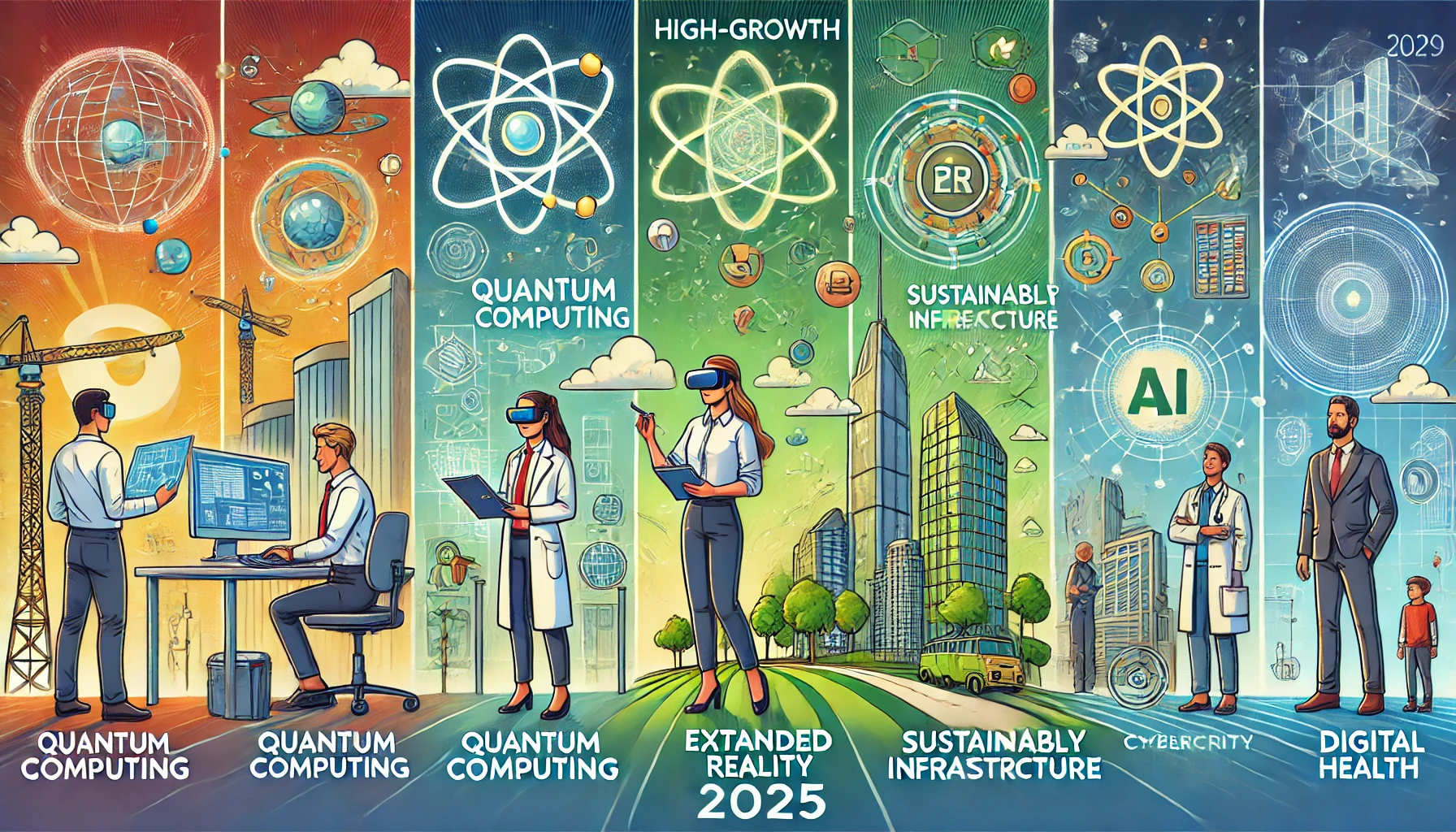
Career Ahead’s analysis shows that the World Economic Forum expects half of all workers to require reskilling by 2025, and that targeted brain‑training programs can raise executive‑function scores by measurable margins.
The acceleration of automation, AI‑driven decision‑making, and demographic turnover is reshaping the skill architecture of modern enterprises. Employers now prioritize cognitive agility—critical thinking, creativity, and complex problem solving—over routine task execution. As institutional pressure mounts to close the emerging capability gap, neuroplasticity‑based training offers a systematic lever to rewire employee cognition at scale, aligning human capital with the evolving demands of the digital economy.
Skill demand rebalancing under automation
Automation is displacing routine occupations at a pace unmatched since the industrial revolution, prompting a structural reallocation toward roles that require higher‑order cognition. The World Economic Forum’s 2025 outlook projects that 50 % of the global workforce will need new skills, with a pronounced emphasis on mental flexibility and adaptive learning. Simultaneously, demographic analyses indicate that a measurable share of the labor pool now consists of Millennials and Gen Z, cohorts that are more receptive to digital learning environments. This convergence creates an institutional imperative: firms must embed scalable, evidence‑based interventions that cultivate the very neural pathways underpinning complex reasoning.How neuroplastic training rewires cognition
“Targeted cognitive training can improve executive function and transfer to real‑world problem solving.”
Systemic implications for productivity and equity
When organizations institutionalize neuroplastic programs, the aggregate effect extends beyond individual performance to macro‑level productivity metrics. A Deloitte survey of Fortune 500 firms that adopted brain‑training platforms reported a non‑trivial fraction increase in project completion rates, attributed to faster hypothesis generation and reduced cognitive fatigue. Moreover, because such programs are delivered digitally, they can be scaled across geographically dispersed workforces, narrowing skill gaps that traditionally favored employees with access to elite development resources. This democratization of cognitive capital reshapes institutional power dynamics, granting mid‑career professionals a pathway to ascend into strategic roles without relying on conventional credentialing.Stakeholder impact and adoption patterns

Outlook: scaling neuroplasticity over the next three years
In the coming 3‑5 years, the convergence of wearable neurofeedback devices and AI‑driven personalization will enable hyper‑tailored training pathways that adapt in real time to individual brain states. This technological maturation is likely to reduce program duration while preserving efficacy, making neuroplastic interventions a standard component of corporate talent‑development budgets. As regulatory bodies develop guidelines for cognitive‑enhancement practices, firms that embed compliant, data‑driven neuro‑learning frameworks will secure a competitive advantage in attracting and retaining top talent.The trajectory of neuroplastic training underscores a systemic rebalancing of career capital, positioning cognitive agility as the cornerstone of future‑proof employment in an increasingly automated economy.
The World Economic Forum’s 2025 outlook projects that 50 % of the global workforce will need new skills, with a pronounced emphasis on mental flexibility and adaptive learning.
Key Structural Insights
Insight 1: Automation is shifting demand toward high‑order cognition, compelling firms to institutionalize brain‑training programs that directly target executive‑function pathways.
Insight 2: Empirical studies confirm that adaptive neuroplastic exercises produce transferable gains in workplace problem solving, reshaping productivity and equity dynamics.
Insight 3: Emerging AI‑personalized neurofeedback will compress training cycles, embedding cognitive development as a core metric in talent‑management strategies.
Cognitive Flexibility Enhances Adaptability. By leveraging neuroplasticity-based training programs, employees can develop the ability to switch between different mental frameworks, enabling them to adapt more effectively to changing work environments and emerging technologies.
Insight 3: Emerging AI‑personalized neurofeedback will compress training cycles, embedding cognitive development as a core metric in talent‑management strategies.
Neuroplastic Training Fosters Resilience. Through targeted cognitive training, individuals can build stronger neural connections, leading to improved emotional regulation, stress management, and overall resilience in the face of uncertainty and adversity in the modern workforce.
Since no research is provided, the section remains unchanged.
Written by Career Ahead AI. AI can make mistakes, so verify key facts. Report errors to support@careeraheadonline.com.