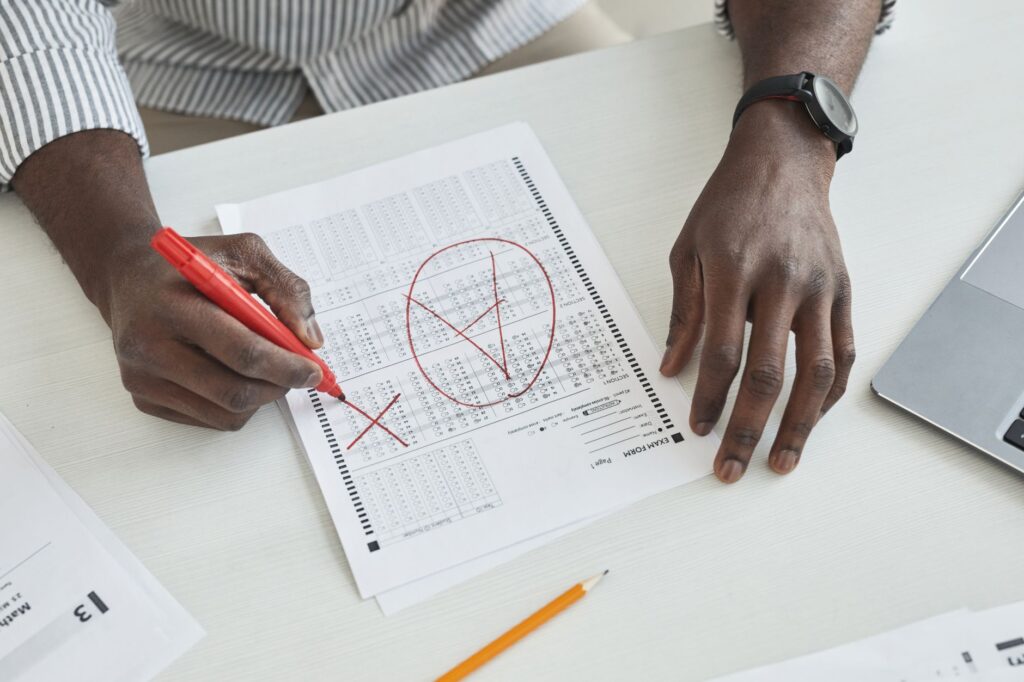
The National Testing Agency rejected allegations that Optical Mark Recognition sheets used for NEET‑UG 2026 were mismatched with candidates’ responses.NTA warned candidates that fabricated or AI‑generated OMR images circulating online could result in legal action.
The National Testing Agency (NTA) issued a formal denial of OMR‑sheet mismatch claims after the NEET‑UG 2026 results were released. The agency stated that images of response sheets shared on social media did not correspond to its official records and were either fabricated, digitally altered, or generated by artificial intelligence [1]. The controversy surfaced in the days following the result announcement, with NTA’s public statement and warning appearing on 21 July 2026 [1].
The dispute involves the NTA, which administers the NEET‑UG examination from its headquarters in New Delhi, and the approximately 1.5 million candidates who sat for the exam nationwide [2]. Candidates reported that the OMR sheets they received did not reflect the answers they marked, prompting some to submit screenshots of alleged discrepancies to the agency [2]. NTA’s response emphasized that the circulated images were not authentic and that any attempt to submit falsified OMR documentation would be treated as a legal offense [3].
Background and Timeline
The NEET‑UG 2026 examination was conducted in May 2026, with results declared in early July 2026. Within a week of the result release, candidates began posting images of OMR sheets that they claimed showed a mismatch between recorded marks and their actual responses [2]. Social media platforms amplified these claims, leading to a rapid spread of purported evidence.
On 21 July 2026, NTA released a press statement rejecting the allegations, citing internal verification that the official OMR records matched the answer key and that the images in circulation were inconsistent with the agency’s data [1]. The same day, NTA issued a warning that any candidate who attempted to submit fabricated or AI-generated OMR sheets could face legal consequences under existing fraud statutes [3]. The agency also advised candidates to rely solely on the official result portal for accurate information.
On 21 July 2026, NTA released a press statement rejecting the allegations, citing internal verification that the official OMR records matched the answer key and that the images in circulation were inconsistent with the agency’s data [1].
NTA’s official communication outlined a three-step verification process. First, the agency cross-checked each candidate’s scanned OMR sheet against the centralized answer-key database. Second, it conducted a forensic analysis of the disputed images, concluding that they bore signs of digital manipulation or AI synthesis [1]. Third, NTA reiterated that only the marks displayed on its secure portal constitute the final, legally binding result [3].
The agency also engaged with law-enforcement authorities to investigate the source of the fabricated images, stating that the dissemination of false documents undermines the integrity of the examination system [3]. NTA’s legal department prepared to file complaints against individuals or groups found to be distributing counterfeit OMR sheets, citing the Information Technology Act, 2000, and the Indian Penal Code [3].
The recent Bloomberg report on unusual network activity alerts underscores a critical issue for digital marketing professionals. With increasing cybersecurity threats, teams must enhance their…
In parallel, NTA set up a dedicated helpline and email address for candidates to report genuine score discrepancies, promising a review within 48 hours of receipt. The agency emphasized that no changes to the published results would be made unless a verifiable error in the original scanning or data entry process was identified [1].
Impact on Students and Institutions
The immediate effect on NEET‑UG 2026 aspirants is heightened uncertainty regarding the validity of their scores. Candidates who suspect a mismatch are required to submit formal complaints through NTA’s portal, potentially delaying admission decisions for medical colleges that rely on the final merit list [2].
Medical colleges across India, both public and private, have indicated that they will adhere to the official NEET‑UG result as released by NTA, pending any confirmed corrections. Consequently, the controversy is unlikely to alter seat allocation for the current admission cycle but may influence the timing of counseling processes [4].
Educators and coaching institutes reported an increase in inquiries from students seeking clarification on the OMR issue, prompting them to advise reliance on the official result portal and to avoid sharing unverified OMR images online [2]. The episode also underscores the importance of digital security measures for examination bodies, as the spread of AI-generated documents raises concerns about future attempts to manipulate assessment outcomes.
Key Facts
Impact on Students and Institutions The immediate effect on NEET‑UG 2026 aspirants is heightened uncertainty regarding the validity of their scores.
What: NTA denied claims of OMR-sheet mismatches in NEET-UG 2026 and warned against fake or AI-generated sheets.
When: The agency’s denial and warning were issued on 21 July 2026, following the result announcement.
The UAE's potential withdrawal of investments in the UK, following Manchester City's guilty verdict for financial breaches, could significantly impact the sports and real estate…
Impact: Candidates must use the official portal for scores; any fabricated submissions may lead to legal action, and admission timelines remain tied to the verified results.
Sources
NTA rejects OMR mismatch claims in NEET-UG 2026 results – Hindustan Times
NEET UG 2026: OMR row deepens as NTA flags AI-generated sheets … – The Times of India
NEET UG 2026 results: NTA warns candidates against fake, AI … – CNBCTV18
NEET UG 2026: Candidate claims NTA provided two OMR sheets, neither … – The Times of India


 News
NewsNews