No products in the cart.

Open-Weight AI Surges Past Proprietary Models

Open-weight models allow developers to access and modify the model weights, providing them with the flexibility to tailor AI solutions to their specific needs.

Palantir Technologies’ CEO, Alex Karp, announced on July 2, 2026, that many companies are moving from proprietary AI models to open-weight AI models. This trend is especially clear among Indian startups, which are leveraging open-weight models to create enterprise AI applications. The shift is primarily driven by the high costs associated with proprietary models, particularly in a market with limited funding.
Open-weight models enable developers to access and modify model weights, offering the flexibility to create AI solutions tailored to specific needs. In contrast, proprietary models, such as those from OpenAI and Anthropic, charge users based on data processed. As costs escalate, especially for larger companies, the appeal of open-weight models increases.
Cost Efficiency Drives Adoption
Indian startups are increasingly adopting open-weight AI models due to financial constraints. According to Tracxn, Indian deeptech startups raised only $1.47 billion in 2025, starkly contrasting with the $179 billion raised in the U.S. This funding gap compels founders to be resourceful in their technology choices, pushing them toward sustainable and cost-effective solutions like open-weight AI models.
Proprietary AI models often charge based on usage, which can become prohibitively expensive as products scale. For instance, using models like GPT-5.5 can cost $5.50 per million input tokens, while open-weight alternatives like DeepSeek-R1 only cost $1.35 per million tokens. This price difference makes open-weight models more attractive for startups aiming to control costs while developing robust AI solutions. Additionally, running these models on local infrastructure reduces costs and enhances performance by minimizing latency issues associated with cloud solutions.
Kalyani Khona, an angel investor and AI researcher, emphasizes that startups with limited budgets must build their systems more economically. The flexibility of open-weight models allows these companies to run AI applications on their infrastructure, reducing reliance on external APIs and their associated costs. This independence is crucial in a landscape where data privacy and security are paramount, enabling startups to maintain better control over their data and comply with local regulations.
As startups focus on niche areas, the customization potential of open-weight models becomes a significant advantage, enabling them to effectively meet specific industry needs.
You may also like
 AI & Technology
Sequoia Capital's $10 Billion Plan for the AI Economy
Sequoia Capital's $10 billion investment plan aims to reshape the AI economy by supporting startups and creating jobs across various sectors, reflecting a growing confidence…
Read More →Fine-tuning open-weight models on proprietary datasets allows startups to create domain-specific solutions that can outperform larger, general-purpose models. This capability enhances the quality of AI applications and provides startups with a competitive edge in a crowded market. As startups focus on niche areas, the customization potential of open-weight models becomes a significant advantage, enabling them to effectively meet specific industry needs.
As this trend continues, many startups are expected to adopt a hybrid approach, combining both proprietary and open-weight models. This strategy allows them to leverage the strengths of both systems while managing costs. By utilizing proprietary models for high-demand functions and open-weight models for other applications, startups can optimize resources and maintain competitiveness.
Geopolitical Factors and Control Over AI Infrastructure
The geopolitical landscape also significantly influences the shift toward open-weight AI models. Recent restrictions on access to proprietary AI models, such as those on Anthropic’s Claude Opus 5, have raised concerns among companies about relying solely on a few dominant providers. This situation underscores the need for greater control over AI infrastructure and data. Kashyap Kompella, founder of RPA2AI, notes that companies are prioritizing control over their AI systems to mitigate disruptions from government policies or export controls.
Open-weight models enable startups to host AI applications on their infrastructure, reducing dependence on external providers. This shift reflects a broader trend in technology, where companies seek to minimize risks associated with proprietary software. By adopting open-weight models, companies can fine-tune their AI systems to better fit their needs, ensuring they are not entirely reliant on a single vendor’s API. This independence is vital amid rising geopolitical tensions that could impact technology access.
Moreover, running AI applications in a private environment enhances data security and compliance with local regulations. As concerns about data privacy grow, the demand for solutions that offer better control over data handling is likely to increase. The trend toward open-weight AI models is not solely about cost; it also involves building resilient systems capable of withstanding external pressures and maintaining operational integrity.
The rising demand for collaborative AI development and open-source tools is reshaping the skills landscape for data scientists and software engineers.
As the AI landscape evolves, the combination of cost efficiency and improved control over infrastructure is expected to drive further adoption of open-weight models among Indian startups and enterprises. The growing trend toward open-weight AI signifies a substantial shift in how startups approach AI development. The rising demand for collaborative AI development and open-source tools is reshaping the skills landscape for data scientists and software engineers.
You may also like
 AI & Technology
Singapore's DBS CEO Sees AI Costs Falling in ‘Token Paradox’
The implications of this development are significant for banking executives and financial analysts. As AI technologies become more cost-effective, financial institutions may need to rethink…
Read More →This transformation underscores the importance of adaptability and innovation in technology. As open-weight models gain traction, professionals must stay informed about the changing landscape and be prepared to engage with new technologies. The future of AI in India appears to be moving toward a more democratized and accessible model, enabling startups to thrive without the heavy financial burdens of proprietary systems.
It remains to be seen how the balance between proprietary and open-weight models will evolve in the coming years. Will companies continue to prioritize cost and control, or will proprietary models regain their appeal as technology advances? The answers to these questions will shape the future of AI development in India and beyond.
Frequently Asked Questions
What are the benefits of using open-weight AI models for data scientists?
Open-weight AI models offer significant cost savings and greater flexibility for data scientists. They allow for customization and fine-tuning, enabling the development of domain-specific solutions without the high costs of proprietary models.
Software developers should focus on skills related to cloud infrastructure, model fine-tuning, and data management.
How can AI researchers adapt to the rise of open-weight AI?
AI researchers can adapt by gaining expertise in open-source frameworks and understanding how to fine-tune models. This knowledge will be crucial as the industry shifts toward more collaborative and cost-effective AI development.

What skills should software developers focus on to work with open-weight AI technologies?
Software developers should focus on skills related to cloud infrastructure, model fine-tuning, and data management. Familiarity with open-source tools and frameworks will also be essential as the demand for open-weight AI solutions grows.
You may also like
 AI & Technology
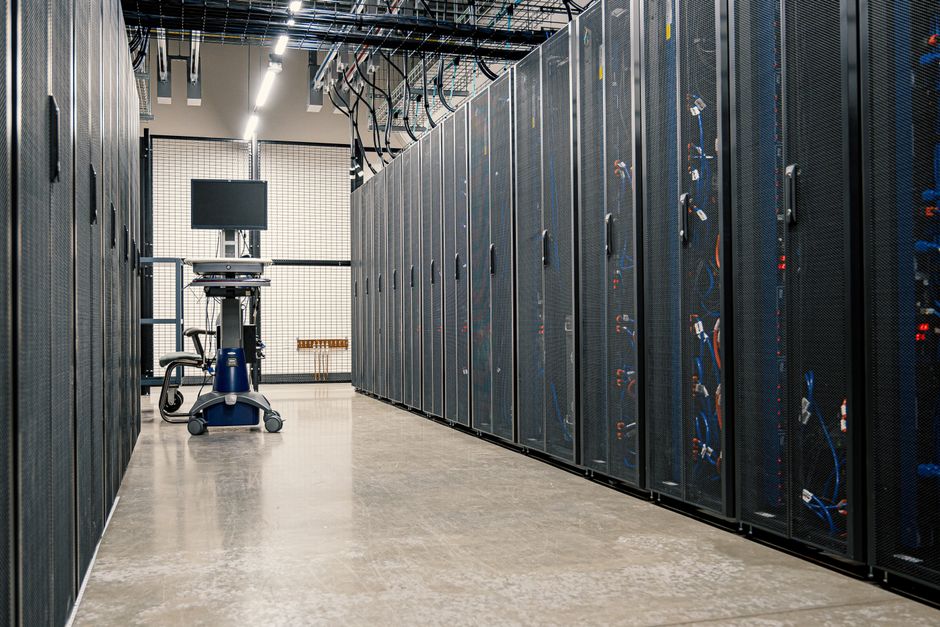
Microsoft Expands India Data Center with Adani, HDFC
Microsoft has launched its largest data center in India, enhancing cloud service capabilities and creating new job opportunities in the tech sector.
Read More →