

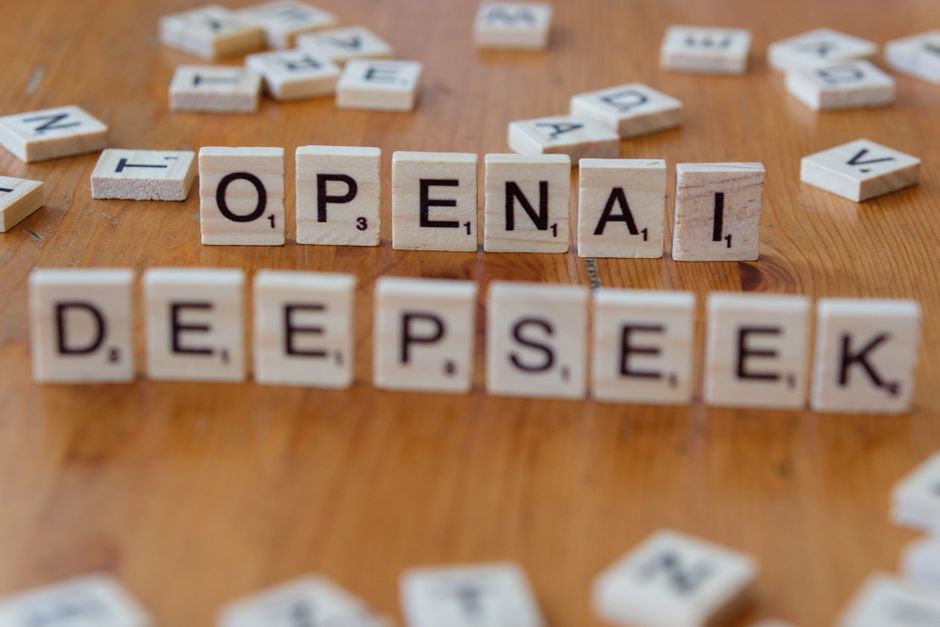
OpenAI has announced a major achievement. It has successfully solved one of the Millennium Problems, specifically the Navier-Stokes existence and smoothness problem. This announcement, made on September 8, 2026, marks a significant milestone in mathematics. It shows how artificial intelligence can tackle complex challenges that have puzzled experts for decades.
This breakthrough highlights OpenAI’s advanced capabilities. It also shows the transformative impact of AI on mathematical research. As the implications unfold, mathematicians and AI researchers are ready for a new era of collaboration and innovation.
The Significance of OpenAI’s Breakthrough
OpenAI’s resolution of the Navier-Stokes problem is a pivotal moment in mathematics. This problem is one of the seven Millennium Prize Problems, with a reward of one million dollars for a correct solution. The Navier-Stokes equations describe fluid motion and are vital in fields like meteorology and oceanography. Solving this problem advances theoretical understanding and has practical implications across various scientific disciplines.
Sources like science.slashdot.org and cnn.com report that this achievement shows AI’s growing role in solving complex problems. AI can process vast amounts of data and recognize patterns. This ability can lead to faster and more efficient solutions in mathematics, a field that has relied on human intuition and creativity.
Career Ahead’s analysis suggests that this development may shift funding and research focus toward interdisciplinary approaches. Projects that combine mathematics and AI might receive more attention. This shift could create new research opportunities for mathematicians specializing in abstract algebra and related fields.
Furthermore, this breakthrough could inspire new educational programs that integrate AI and mathematics. Such programs would prepare the next generation of researchers to work at the intersection of these disciplines. As AI evolves, the demand for mathematicians who can collaborate with AI technologies will likely increase.
In light of these developments, mathematicians must stay agile.
In light of these developments, mathematicians must stay agile. They should be open to incorporating AI tools into their research. The integration of AI into mathematical research is not just a trend; it is becoming a necessity for those who want to stay relevant.
New Opportunities for Collaboration
The intersection of AI and mathematics offers unique collaboration opportunities. OpenAI’s breakthrough shows that mathematicians can work alongside AI researchers to explore new areas in mathematical theory and application. This collaboration could lead to innovative solutions for longstanding problems.
As noted by wsj.com, the competition among AI labs for mathematical supremacy is growing. This competitive landscape encourages collaboration instead of isolation. Mathematicians and AI researchers can combine their expertise to tackle complex problems more effectively. The synergy between human creativity and AI’s computational power can yield results neither could achieve alone.
Career Ahead research shows that funding bodies are increasingly interested in projects that demonstrate AI’s practical applications in solving mathematical problems. This trend will likely lead to more collaborative grants and initiatives aimed at fostering interdisciplinary research. For mathematicians, this means more opportunities to partner with AI researchers, paving the way for groundbreaking discoveries.
Moreover, educational institutions may begin to offer specialized programs that focus on integrating AI in mathematical research. Such programs would attract students interested in mathematics and those from computer science and engineering backgrounds. This would foster a more diverse research community.
As the field evolves, mathematicians will need to adapt to this collaborative environment. Developing skills in AI and machine learning will be crucial for those looking to leverage these technologies in their research. The ability to work with AI tools will become an asset, enhancing research capabilities and contributing to innovative solutions.
Developing skills in AI and machine learning will be crucial for those looking to leverage these technologies in their research.
Emerging Skills in Mathematics and AI
The integration of AI in mathematical research requires new skills for mathematicians. As AI technologies advance, mathematicians must learn about machine learning algorithms, data analysis techniques, and computational modeling. These skills will help them use AI effectively in their research.
Career Ahead’s analysis shows that mathematicians who can use AI tools well will have a competitive edge in the job market. The demand for professionals who can bridge the gap between mathematics and AI is expected to rise. Industries increasingly seek individuals who can leverage AI to solve complex problems.
Furthermore, interdisciplinary collaboration will require strong communication skills. Mathematicians must clearly articulate their ideas to AI researchers and vice versa. This ability to communicate across disciplines will be essential for productive partnerships and ensuring both fields benefit from collaboration.
The evolving landscape of mathematics and AI also calls for a mindset of continuous learning. As technologies develop, mathematicians must stay updated on the latest advancements in AI. Engaging in lifelong learning will be crucial for those wishing to remain at the forefront of their fields.
In summary, OpenAI’s breakthrough in solving the Navier-Stokes problem marks a new era for mathematicians and AI researchers. The potential for collaboration, along with the need for emerging skills, presents both challenges and opportunities in the evolving landscape of mathematics.
How can AI researchers leverage this development in their work?
As mathematicians and AI researchers look to the future, the question remains: how will these fields continue to evolve together? What new discoveries will emerge from their collaboration?
Frequently Asked Questions
What are the implications of OpenAI’s breakthrough for mathematicians?
Career Ahead’s analysis shows that OpenAI’s solution to the Navier-Stokes problem may shift funding and research focus toward interdisciplinary projects that combine mathematics and AI. This presents new opportunities for mathematicians to engage in collaborative research.
How can AI researchers leverage this development in their work?
AI researchers can use OpenAI’s breakthrough as a foundation to explore new algorithms and methods for solving complex mathematical problems. This collaboration can lead to innovative solutions that benefit both fields.

What skills should mathematicians develop to stay relevant in an AI-driven landscape?
Mathematicians should focus on acquiring skills in machine learning, data analysis, and computational modeling. These skills will enable them to effectively use AI tools in their research and enhance their problem-solving capabilities.
Written by Career Ahead AI. AI can make mistakes, so verify key facts. Report errors to support@careeraheadonline.com.





