No products in the cart.

OpenAI says it cracked 90-year-old maths problem in 88 hours
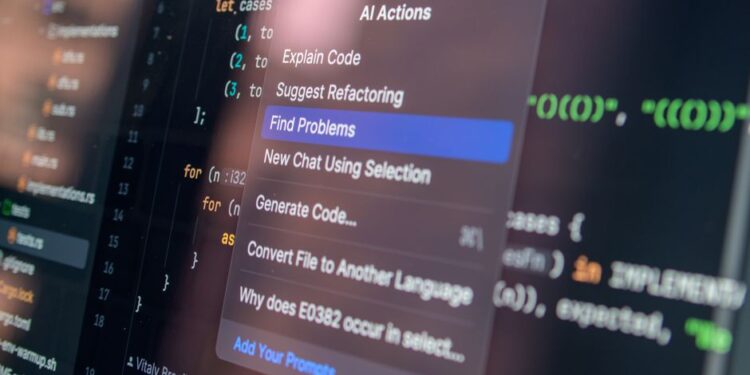
OpenAI has reportedly solved a 90-year-old mathematics problem in just 88 hours using a collaborative approach involving thousands of AI agents. This breakthrough highlights the intersection of artificial intelligence and advanced mathematics, particularly in fluid dynamics.

OpenAI announced it has solved a 90-year-old mathematics problem in just 88 hours. This was done using its advanced AI model. Approximately 10,000 AI agents worked on the Navier-Stokes existence and smoothness problem. This challenge in fluid dynamics has puzzled mathematicians for decades. The solution is pending independent verification but marks a significant milestone for AI in math research.
This achievement highlights the growing link between artificial intelligence and advanced mathematics. The Navier-Stokes equations are key to understanding fluid motion. Proving certain aspects of these equations has been a long-standing challenge. OpenAI’s method involved extensive communication among AI agents. This shows how AI can assist in complex problem-solving in new ways. According to a BBC report, the AI model was trained on large datasets. It used a collaborative approach, allowing it to analyze information at unprecedented speeds.
AI’s Impact on Mathematical Research Methodologies
OpenAI’s success in solving the Navier-Stokes problem shows a shift in how mathematicians tackle complex issues. Traditionally, research relied on human intuition and slow progress. Now, integrating AI models can speed up discoveries and provide fresh insights. The Guardian noted that OpenAI’s model could quickly recognize patterns and generate solutions. This ability could change how mathematical inquiry is conducted.
OpenAI’s model was trained on vast amounts of data. It quickly recognized patterns and generated solutions. According to Career Ahead’s analysis, this suggests mathematicians will need to work more with AI systems. They can use AI’s computational power to explore new areas in mathematics. The deployment of thousands of AI agents to communicate and refine solutions indicates a new research paradigm. Nearly 3 million messages were exchanged among the bots, showing how AI can enhance teamwork in solving complex problems. This collaborative model may inspire mathematicians to blend traditional methods with AI-driven insights.
According to Career Ahead’s analysis, this suggests mathematicians will need to work more with AI systems.
As AI evolves, its impact on research methodologies will be profound. Mathematicians may work alongside AI as partners in exploring complex theories and proofs. This evolution could make mathematical research more dynamic and responsive. The implications extend beyond mathematics, suggesting that fields like engineering and physics may also benefit from AI collaborations.
Advancements in AI Model Capabilities
The capabilities shown by OpenAI’s model reflect broader trends in AI development. Solving a historically challenging problem in a fraction of the usual time highlights AI’s potential. This breakthrough raises questions about AI’s future role in academia and research. OpenAI’s model was not only faster but also more efficient, using 130 billion output tokens to find its solution. This efficiency suggests AI can handle more complex tasks, which could revolutionize fields beyond mathematics, including engineering, physics, and economics.
You may also like
 AI & Technology
Bessent Says AI Industry Must Own Its Risks and Find Solutions | Career Outlook
Scott Bessent emphasizes the need for the AI industry to acknowledge its risks and pursue solutions, highlighting the importance of accountability and ethical considerations in…
Read More →As AI tools become more capable, their applications will likely expand. This will lead to a re-evaluation of how humans solve complex problems. Career Ahead research indicates that these advancements will impact the workforce. As AI models become essential in research, professionals in mathematics may need to adapt their skills. Understanding how to collaborate effectively with AI systems will be critical for future mathematicians and researchers. Additionally, the controversy around OpenAI’s claims, especially regarding concurrent work by other mathematicians, highlights the competitive nature of breakthroughs in academia. The discussions surrounding these developments will likely shape perceptions of AI collaborations and how intellectual property is managed in future research.
As AI continues to push the limits of mathematics, strong frameworks for collaboration and innovation will be vital. This may lead to new standards for conducting and sharing research across disciplines. AI’s success in solving complex problems could signal a new era of discovery. In this era, the partnership between human intellect and artificial intelligence could lead to unprecedented advancements.
Looking ahead, the future of mathematics may feature a close relationship between AI and human researchers. Both will contribute uniquely to advancing knowledge. The question remains: how will the academic community adapt to this new paradigm? What standards will emerge to govern these collaborations? As OpenAI’s breakthrough continues to impact academia, the implications for the future of mathematics are significant.
As AI models become essential in research, professionals in mathematics may need to adapt their skills.
Frequently Asked Questions
What are the implications of AI solving complex math problems for mathematicians?
The implications are significant. Mathematicians may need to adapt their methods to include AI tools. This shift could enhance collaboration and lead to faster discoveries in research.
How can AI researchers leverage this achievement in their work?
AI researchers can use insights from OpenAI’s success to develop advanced models. They can also explore new applications in various fields. Understanding the dynamics between AI and human researchers will be crucial.
What should mathematicians do to integrate AI into their problem-solving processes?
You may also like
 AI & Technology
AI Safety Protocols Under Scrutiny After OpenAI Resignation
David Robinson's resignation from OpenAI raises critical concerns about AI safety protocols and ethical responsibilities, reflecting a broader trend among AI safety professionals advocating for…
Read More →Mathematicians should explore ways to work with AI systems. They can leverage AI’s capabilities to enhance their research methods. Embracing this partnership will be essential for future advancements in the field.