Islamabad, Pakistan — A recent report has revealed a troubling trend in the education sector of Pakistan. Families in the country are now spending an estimated PKR 2.8 trillion on education, surpassing the government’s allocation of PKR 2.23 trillion. This alarming shift indicates a significant failure in public education financing and raises urgent questions about inequality and the state’s responsibility to provide quality education.
The report, released during a national policy dialogue by the Institute of Social and Policy Sciences (I-SAPS), highlights that households are shouldering 56 percent of total education costs, while the public sector contributes only 44 percent. This shift in financial responsibility from the state to families signifies a dangerous trend where access to education increasingly depends on a family’s financial capacity rather than equitable state provision.
According to I-SAPS Executive Director Salman Humayun, the scale of private spending on education is concerning. Families are forced to spend more due to the declining quality of public education. The report shows that households are spending PKR 1.31 trillion on private school fees, PKR 613 billion on tuition and coaching centers, and PKR 878 billion on other education-related expenses such as books, uniforms, and transport.
The Impact of Rising Education Costs on Families
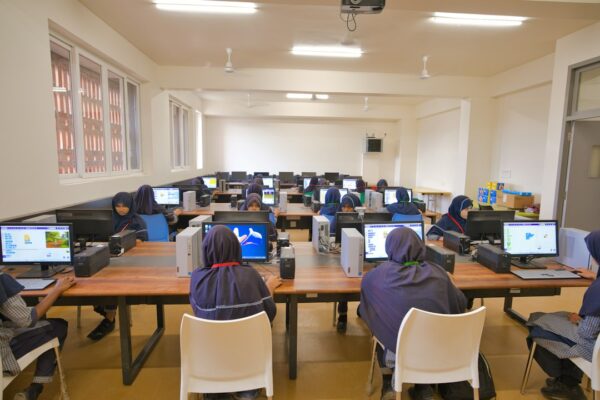
This trend of increased financial burden on families raises critical questions about equity in education. As the report indicates, poorer families are at risk of being pushed out of the education system altogether. The reliance on private institutions is a response to the persistent weaknesses in public schooling, which has led many families to seek better educational opportunities outside the state system.
The Impact of Rising Education Costs on Families This trend of increased financial burden on families raises critical questions about equity in education.
The data shows that the total education expenditure in Pakistan now stands at PKR 5.03 trillion. This unprecedented reliance on household spending underscores the urgent need for reforms in public education financing. The findings also suggest that merely increasing budgets will not suffice. There is a pressing need for greater efficiency, outcome-based financing, and stronger governance mechanisms to restore confidence in public education.
Families are increasingly opting for private education due to declining quality and accountability in government schools. The shift to private institutions is not just a trend; it reflects a broader systemic failure that needs addressing. Analysts warn that this situation may lead to a two-tier education system, where only those who can afford private education receive quality schooling, while others are left behind.
 Education & University Insights
Education Ranks as the Most Cyber-Attacked Sector
An LMS breach exposed student data, while AI can tailor phishing and clone school leaders’ voices.
Read More →What This Means for Your Career in Pakistan
The implications of this educational funding crisis extend beyond immediate financial burdens. For young professionals and students, the rising costs of education can significantly impact career trajectories. Those from wealthier backgrounds may have access to better educational resources, networking opportunities, and ultimately, better job prospects. In contrast, students from less affluent families may find themselves at a disadvantage, limiting their career options and potential for upward mobility.
As the education landscape shifts, it is essential for students and young professionals to adapt. Here are some actionable steps you can take:
- Explore Scholarships: Actively seek out scholarships and financial aid programs that can help alleviate the burden of educational costs. Many organizations offer funding for students from underprivileged backgrounds.
- Consider Online Learning: Leverage online platforms that provide affordable courses and certifications. This can enhance your skills without the high costs associated with traditional education.
- Network with Professionals: Build connections with industry professionals through internships or volunteer opportunities. Networking can open doors to job opportunities and mentorship, regardless of your educational background.
- Stay Informed: Keep up with changes in education policy and funding. Understanding the landscape can help you make informed decisions about your education and career path.
However, experts warn that this trend may not be sustainable. A recent report from the World Bank highlights that relying heavily on household spending can exacerbate educational inequalities. Without significant reforms in public education financing, the gap between the haves and have-nots will only widen.
For young professionals and students, the rising costs of education can significantly impact career trajectories.
The Future of Education Funding in Pakistan
The current situation presents a challenging future for education in Pakistan. As families continue to shoulder the financial burden, the need for systemic reform becomes increasingly urgent. Policymakers must focus on improving the quality of public education to ensure that all students have access to equal opportunities.
Looking ahead, it is crucial for the government to engage with families and communities to rebuild trust in the public education system. By prioritizing transparency and accountability, the state can work towards a more equitable education system that serves all citizens. Will the government rise to the challenge and ensure that education is a right for every child, regardless of their family’s financial situation?
 Education & University Insights
Education Leaders Stress Early University Succession
The conclave brought institutional and technology leaders together to examine university transitions and long-term vision.
Read More →Written by Career Ahead AI. AI can make mistakes, so verify key facts. Report errors to support@careeraheadonline.com.