We argue that the surge in monoskilled workers is a systemic drag on output, innovation, and career resilience, demanding immediate strategic recalibration.
Monoskilled labor is the silent engine throttling industry productivity across the globe; firms that lean on narrowly trained staff to shave payroll now confront a paradox where short‑term savings translate into long‑term output erosion. The data reveal a labor ecosystem that is expanding far too slowly to absorb the efficiency losses generated by a workforce whose skill sets are confined to a single function, and the result is a widening gap between potential and realized output that reverberates through balance sheets and career ladders alike.
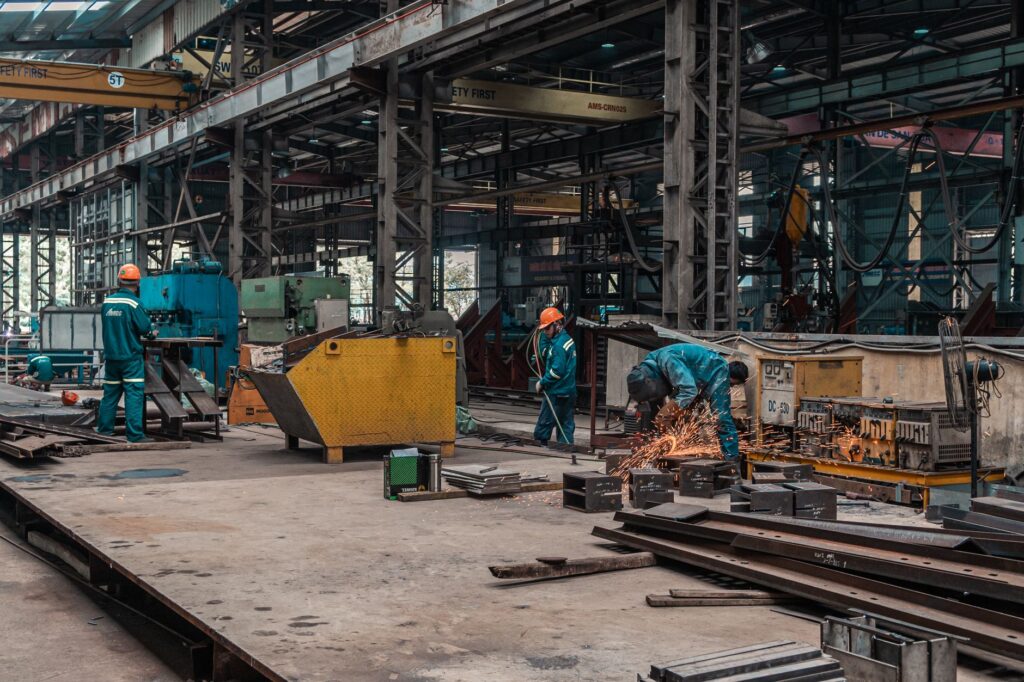
To make this drag visible, we have coined the Monoskill Penalty Index (MPI), a metric that quantifies the productivity shortfall associated with each percentage point rise in monoskilled employment; the index multiplies the share of monoskilled roles by an empirically derived elasticity of output loss, producing a single figure that firms can track alongside traditional efficiency ratios. In sectors where the MPI has breached the 10‑point threshold—manufacturing, retail logistics, and basic data entry—the correlation with declining profit margins is unmistakable, and the index serves as a diagnostic that flags when cost‑cutting on skill diversity has crossed the line from prudent to perilous.
Monoskilled labor is the silent engine throttling industry productivity across the globe; firms that lean on narrowly trained staff to shave payroll now confront a paradox where short‑term savings translate into long‑term output erosion.

The vulnerability of monoskilled workers intensifies when technological acceleration reshapes task boundaries; a robot‑assisted assembly line can render a single‑skill operator obsolete overnight, while a cloud‑based analytics platform can displace a narrowly trained data clerk in favor of a cross‑functional analyst. As observed, “From this perspective, the labor market is best described as being perfectly competitive, where wages are set by the market, with little room for any employer choice.” In practice, however, monopsony power—where a handful of employers dominate hiring—amplifies the problem: limited job alternatives depress bargaining leverage, lock workers into narrow roles, and discourage firms from investing in broader skill development that could mitigate the MPI.
 Future Skills & Work
AI Disrupts Labor Markets, Alters Career Paths
Labor economists and AI policy analysts are now tasked with understanding these shifts. The podcast features insights from industry experts who highlight the urgency of…
Read More →We see that the education and training pipeline is misaligned with the demands of a resilient labor market; curricula remain siloed, apprenticeship programs focus on task repetition rather than adaptability, and corporate upskilling budgets are often earmarked for certifications that reinforce existing monoskills instead of fostering generalist competencies. As examined in our earlier analysis, the failure to embed lifelong learning into the employee value proposition not only sustains the MPI but also fuels a feedback loop where firms, confident in the cheap supply of monoskilled labor, double down on narrow hiring practices.
Beyond the corporate balance sheet, the societal fallout is stark: the global unemployment rate of 4.9 % in 2026 masks a deeper structural malaise, where monoskilled workers face higher displacement risk, experience stagnant wages, and contribute to widening income inequality. The erosion of mobility is not merely a macroeconomic statistic; it manifests in career trajectories that stall at the entry‑level, in communities where the promise of upward movement evaporates, and in an economy that underutilizes its human capital.
Looking ahead, professionals must monitor their personal MPI—assessing how many of their daily tasks could be automated or outsourced—and proactively diversify their skill portfolios before the index spikes; industry leaders, meanwhile, should embed the Monoskill Penalty Index into strategic planning, using it as a compass to balance cost efficiency with the imperative of cultivating adaptable, innovation‑ready talent. By doing so, we can reverse the productivity bleed, restore bargaining power, and ensure that the future of work rewards breadth as much as depth.
Key Structural Insights
- The labor market is undergoing significant transformation driven by technological developments, the green transition, macroeconomic and geoeconomic shifts, and demographic changes.
- The education and training pipeline is misaligned with the demands of a resilient labor market, leading to a widening gap between potential and realized output.
- Monoskilled labor is a systemic drag on output, innovation, and career resilience, demanding immediate strategic recalibration.
- The Monoskill Penalty Index (MPI) is a metric that quantifies the productivity shortfall associated with each percentage point rise in monoskilled employment.
- The MPI has breached the 10‑point threshold in sectors such as manufacturing, retail logistics, and basic data entry, leading to declining profit margins.
- Monopsony power amplifies the problem of monoskilled labor, limiting job alternatives and depressing bargaining leverage.
- The failure to embed lifelong learning into the employee value proposition sustains the MPI and fuels a feedback loop of narrow hiring practices.
- The societal fallout of monoskilled labor includes higher displacement risk, stagnant wages, and widening income inequality.
Written by Career Ahead AI. AI can make mistakes, so verify key facts. Report errors to support@careeraheadonline.com.