No products in the cart.

Rankings, Reputation, and the Mental‑Health Ledger: How Competitive University Metrics Reshape Student Capital
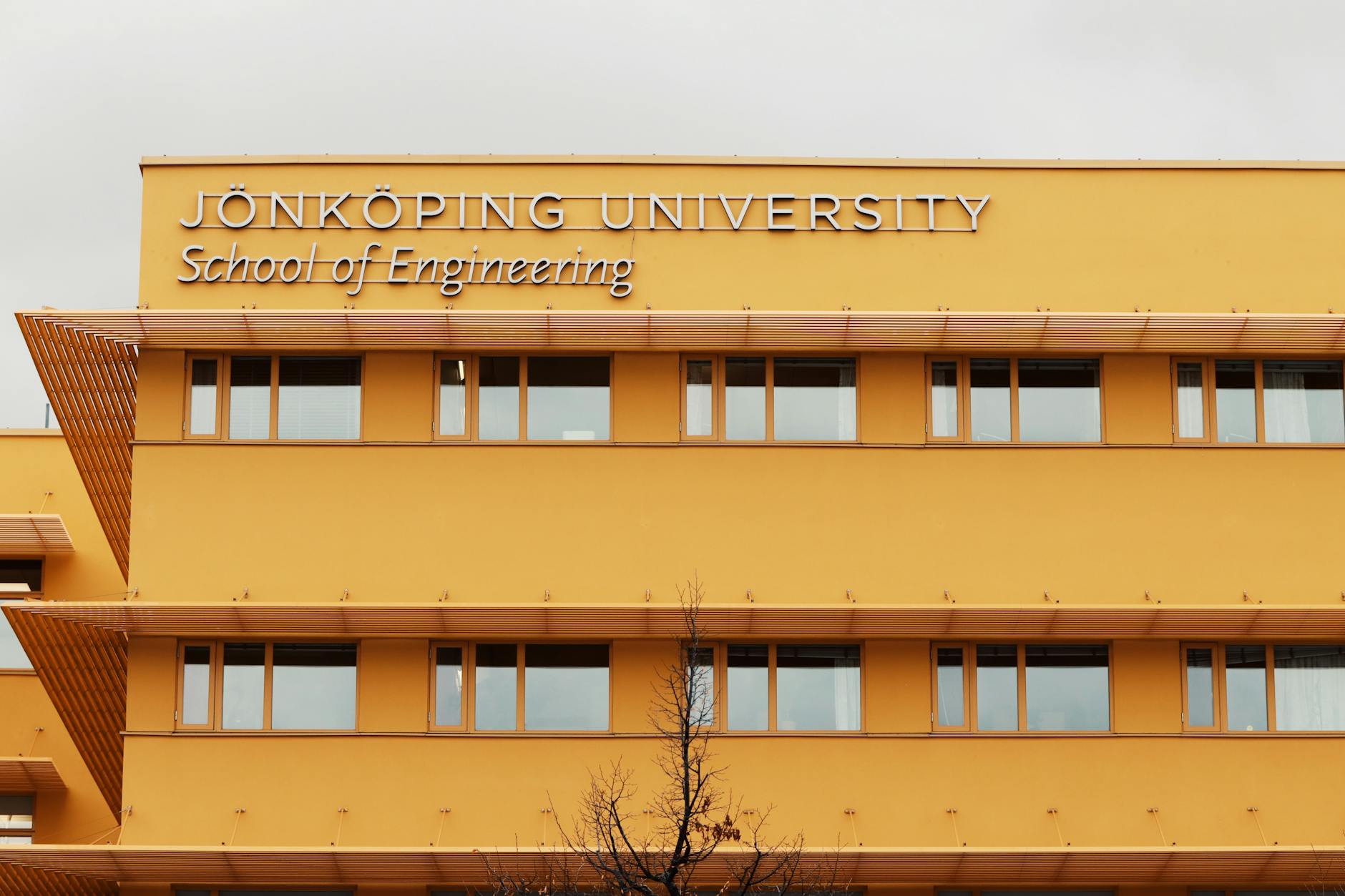
University rankings have become a structural engine that intensifies competition, elevating anxiety among students while concentrating career capital within elite institutions, a dynamic poised for recalibration through policy and technology.

Dek: University rankings have become a structural lever that shapes institutional power and career trajectories. The correlation between rank‑driven competition and rising anxiety among undergraduates signals a systemic shift in how higher‑education value is constructed and how economic mobility is mediated.
Opening: Context and Macro Significance
Over the past two decades, global university rankings have migrated from niche academic exercises to a dominant market signal that influences enrollment decisions, donor behavior, and government funding formulas. In the United States, the proportion of applicants citing “rank” as a primary factor rose from 22 % in 2015 to 38 % in 2023, according to the National Survey of College Choice [1]. This asymmetry amplifies institutional pressure to climb the ladder of research output, faculty citations, and selectivity—metrics that are readily quantifiable but only loosely tethered to student well‑being.
Concurrently, the National College Health Assessment reports that 41 % of full‑time undergraduates experienced moderate to severe anxiety in 2024, a 12‑point increase since 2015 [2]. The trajectory of these mental‑health indicators aligns temporally with the expansion of ranking‑centric narratives in college marketing and policy. The macro‑level implication is a feedback loop: higher rankings attract higher‑achieving, high‑pressure students, whose mental‑health challenges then become an institutional cost that is often invisible in the ranking calculus. This dynamic reframes the traditional view of rankings as a benign information service and positions them as a structural determinant of career capital formation.
Layer 1: The Core Mechanism

University rankings operationalize a narrow set of performance indicators—research expenditures, faculty‑student ratios, and median SAT/ACT scores—while relegating student support metrics to ancillary status [3]. The weighting schema, exemplified by the 2025 Times Higher Education (THE) methodology, allocates 30 % to research reputation, 20 % to teaching environment, and only 5 % to graduate outcomes, including employment rates [4]. This quantitative hierarchy incentivizes institutions to prioritize activities that boost rankable inputs at the expense of holistic student development.
A mixed‑methods study of Texas high‑school seniors demonstrated that the perception of class rank competition directly translated into heightened stress during the college‑application cycle, with 68 % of respondents reporting “extreme pressure” to achieve a top‑10 percentile standing [5]. When these students matriculate at elite institutions, the rank‑derived pressure persists, manifesting as a “performance paradox”: students must sustain high academic outputs to justify their admission while navigating an environment that undervalues mental‑health resources.
The result is an asymmetric distribution of career capital, where students at lower‑ranked schools face both reduced access to prestige and limited institutional support for mental resilience.
You may also like
 Artificial Intelligence
Irving, Texas — Winter Storm Tests Power Grids Amid AI Data Center Surge
Irving, Texas is grappling with power outages as a winter storm tests the grid's capacity, exacerbated by the surge in AI data centers. What does…
Read More →The core mechanism also perpetuates inequities. Top‑ranked universities command disproportionate endowments—averaging $1.9 billion versus $210 million for institutions outside the top 200—enabling expansive counseling centers, research stipends, and wellness programs [6]. However, the allocation of these resources is often contingent on maintaining or improving rank, creating an institutional incentive to channel funds toward rank‑enhancing activities rather than universal mental‑health services. The result is an asymmetric distribution of career capital, where students at lower‑ranked schools face both reduced access to prestige and limited institutional support for mental resilience.
Layer 2: Systemic Implications
The reverberations of rank‑driven competition extend beyond campus borders, reshaping the broader education ecosystem. High‑school curricula increasingly mirror university ranking criteria, emphasizing standardized test preparation and AP course loads to boost college‑entry metrics. A longitudinal analysis of 12,000 high‑school graduates showed a 23 % rise in AP enrollment between 2010 and 2022, correlating with a 15 % increase in reported test‑related anxiety [7]. This upstream pressure compresses the decision horizon for students, narrowing exploration of interdisciplinary interests and reinforcing a linear trajectory toward rank‑centric outcomes.
Faculty and staff experience a parallel feedback loop. In a 2023 survey of 4,500 faculty members at top‑50 U.S. universities, 57 % reported that ranking considerations influenced tenure and promotion decisions, prompting a shift toward “high‑impact” publications over pedagogical innovation [8]. The resulting teaching environment often deprioritizes mentorship and mental‑health awareness, further entrenching a culture where academic performance eclipses personal well‑being.
On the policy front, state legislatures have begun to tie public funding to ranking performance. The 2022 “Higher‑Education Accountability Act” in California earmarked $2 billion in performance‑based allocations, with 40 % of the formula derived from national ranking positions [9]. This institutional power lever creates a systemic incentive for universities to double‑down on rank‑centric strategies, potentially crowding out mental‑health initiatives that lack immediate ranking payoff.
Collectively, these systemic ripples generate a self‑reinforcing architecture: rankings shape institutional behavior; institutional behavior shapes student experience; student experience feeds back into ranking metrics through graduation rates and post‑graduation outcomes, thereby sustaining the structural asymmetry.
Students at top‑ranked institutions accrue “credential premium” benefits—average starting salaries 27 % higher than peers from lower‑ranked schools, according to the Georgetown Center on Education and the Workforce [10].
Layer 3: Human Capital Impact – Winners and Losers

The distribution of career capital under the ranking regime is markedly uneven. Students at top‑ranked institutions accrue “credential premium” benefits—average starting salaries 27 % higher than peers from lower‑ranked schools, according to the Georgetown Center on Education and the Workforce [10]. This premium translates into accelerated economic mobility for a subset of the population, reinforcing existing socioeconomic stratification.
You may also like
 Business
Fly91 to expand network to 12 cities and the New Career Landscape
Fly91, a regional airline based in Goa, is set to enhance its network by adding services to 12 cities, including Rajahmundry, Vijayawada, and Hubballi, starting…
Read More →Conversely, the mental‑health toll disproportionately affects students from underrepresented and lower‑income backgrounds. A 2024 analysis of counseling center utilization revealed that 62 % of students seeking services at elite universities identified as first‑generation college attendees, compared with 38 % at mid‑tier institutions [11]. The heightened stress environment erodes “psychological capital,” a predictor of persistence and leadership emergence, thereby diminishing the long‑term leadership pipeline from diverse backgrounds.
Leadership development programs, traditionally housed within elite universities, now compete with ranking imperatives for resources. The Harvard Business School’s “Leadership Initiative” saw a 15 % budget reduction in FY2025, redirected to research outputs that directly influence ranking metrics [12]. This reallocation narrows pathways for emergent leaders who rely on structured mentorship and experiential learning, further consolidating leadership pipelines within a homogenous elite.
The cumulative effect is a bifurcated labor market: high‑rank alumni occupy senior, high‑visibility roles, while graduates from lower‑ranked institutions, despite comparable skill sets, encounter glass‑ceiling barriers amplified by the reputational deficit. The systemic asymmetry curtails the diffusion of talent across sectors, limiting organizational diversity and stifling innovation that thrives on heterogeneous perspectives.
Closing: Outlook for the Next Three to Five Years
Looking ahead, the structural tension between ranking incentives and student mental health is likely to intensify unless corrective mechanisms emerge. Two converging forces will shape the trajectory:
Key Structural Insights > [Insight 1]: University rankings function as an institutional lever that amplifies competitive pressure, directly correlating with rising student anxiety and uneven distribution of career capital.
- Regulatory Realignment: Federal and state policymakers are increasingly scrutinizing the unintended consequences of performance‑based funding. The 2025 Higher Education Reform Act proposes to incorporate student‑wellness metrics—such as counseling center utilization rates and self‑reported stress levels—into funding formulas [13]. If enacted, this could recalibrate institutional incentives, compelling universities to invest in systemic mental‑health infrastructure as a component of rank‑relevant performance.
- Technological Mediation: AI‑driven personalized intervention platforms, exemplified by the Chinese study integrating exercise and mindfulness to boost academic outcomes, demonstrate measurable reductions in anxiety scores (average decrease of 0.8 on the GAD‑7 scale) and modest GPA gains (0.12 points) over a 16‑week period [2]. Adoption of such tools across U.S. campuses could provide scalable support, attenuating the mental‑health impact of rank‑driven pressure while preserving academic performance.
If these developments coalesce, the next five years may witness a redefinition of “rank” from a purely research‑centric yardstick to a more multidimensional index that accounts for student well‑being and equity outcomes. Such a shift would alter the calculus of career capital, potentially democratizing access to leadership pipelines and smoothing the trajectory of economic mobility for a broader cohort of graduates.
You may also like
 Artificial Intelligence
AI Revolution: 100,000 Tech Jobs Disappear in 2025
As AI reshapes the workforce, over 100,000 tech jobs have vanished in 2025. This article explores the implications for workers and businesses alike.
Read More →Key Structural Insights
> [Insight 1]: University rankings function as an institutional lever that amplifies competitive pressure, directly correlating with rising student anxiety and uneven distribution of career capital.
> [Insight 2]: The ranking‑centric mechanism perpetuates systemic inequities by channeling resources toward rank‑enhancing activities, marginalizing mental‑health support, and reinforcing socioeconomic stratification.
> * [Insight 3]: Emerging policy reforms and AI‑enabled wellness interventions could rewire the incentive structure, integrating mental‑health metrics into performance assessments and mitigating the asymmetric impact on student well‑being.