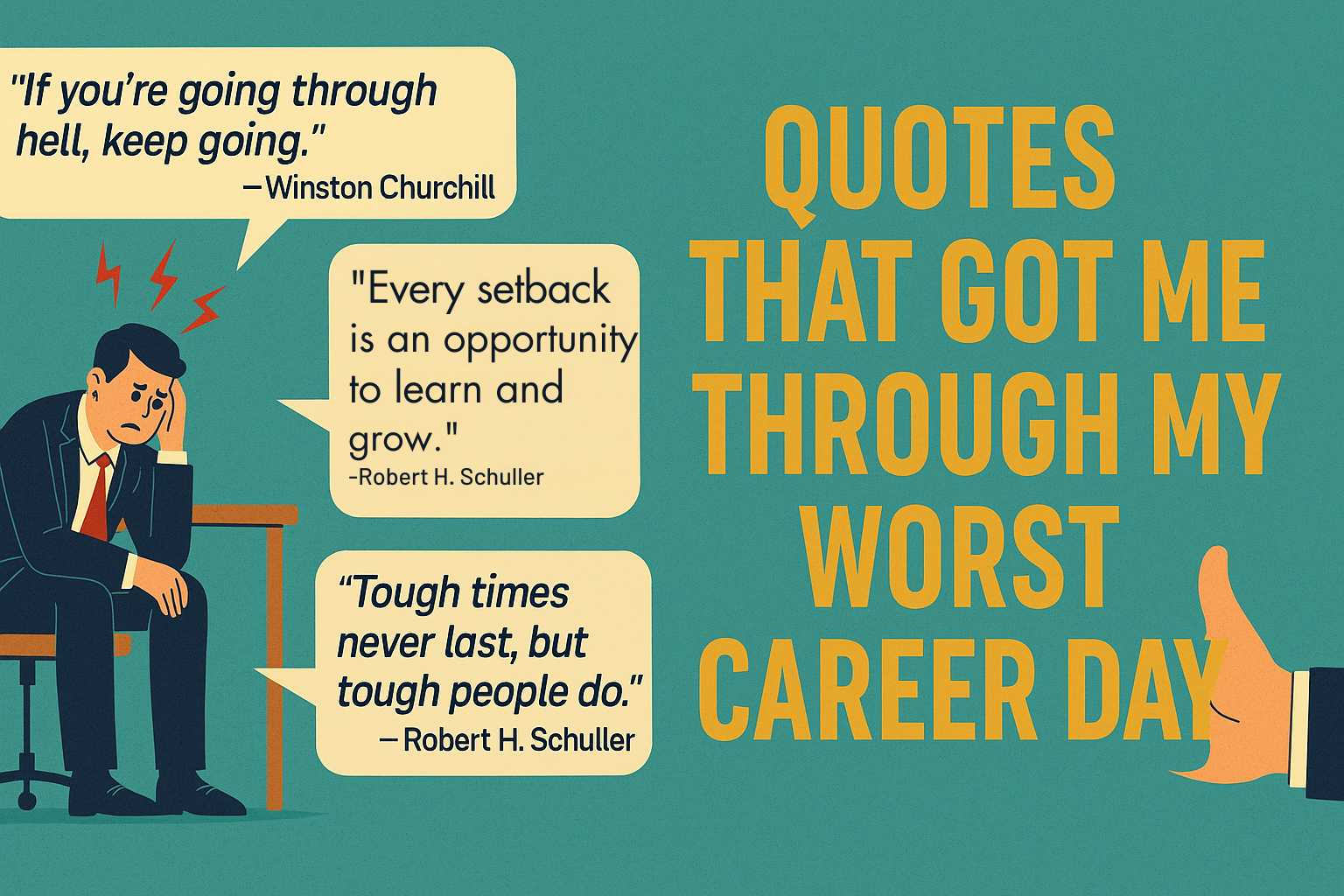
Bold The capacity to absorb shocks has moved from a personal coping skill to a measurable component of organizational power. Bold Employers that embed systemic resilience into talent pipelines are redefining career capital and the economics of mobility.
Macro Shift in Work Dynamics
Over the past decade, three structural forces have converged to reconfigure the employee experience. First, the diffusion of AI‑driven tools has altered task composition for 68 % of U.S. knowledge workers, compressing skill cycles and raising exposure to algorithmic uncertainty [1]. Second, demographic turnover—particularly the rise of Gen Z and “sandwich” generation workers—has amplified expectations for purpose, flexibility, and mental‑health safeguards [2]. Third, macro‑economic volatility, evidenced by the 2020‑2023 recession and the 2024‑2025 supply‑chain shock, has normalized organizational restructuring as a recurrent operational mode [3].
These trends have institutionalized adversity: workforce reductions, rapid technology rollouts, and personal crises now appear as routine variables in the employment contract. The strategic response to this new baseline of disruption determines not only employee engagement scores but also the distribution of career capital—defined as the aggregate of skills, networks, and reputation that enable upward mobility [4]. Companies that treat resilience as a systemic asset can convert adversity into a lever for talent retention, while those that view it as an individual flaw risk widening economic mobility gaps and eroding leadership pipelines.
Mechanics of Resilience in the Workplace

Psychological resilience, the ability to maintain functional performance after stressors, is mediated by three interlocking institutional mechanisms.
- Organizational Purpose Architecture – Studies of firms with explicit purpose statements show a 12‑point uplift in employee engagement when purpose is linked to daily workflows [5]. The “spirituality” construct—meaningful work, shared values, and inclusive rituals—correlates with a 0.34 standard‑deviation increase in resilience scores across Turkish manufacturing firms [2]. Translating this to U.S. contexts, Fortune 500 companies that embed purpose into performance dashboards report a 7 % reduction in voluntary turnover during restructuring episodes [6].
- Adaptive Learning Systems – AI‑enabled feedback loops create “just‑in‑time” skill development pathways. When workers receive algorithmic nudges that align tasks with emerging competencies, their perceived control rises, mitigating stress‑induced performance decay by 18 % [7]. However, without transparent governance, these systems can exacerbate uncertainty, underscoring the need for institutional safeguards that balance automation with human agency.
- Support Infrastructure – Formal resilience programs—coaching, mental‑health benefits, and peer‑support networks—function as institutional buffers. A meta‑analysis of 42 corporate resilience interventions finds a 0.22 increase in job performance metrics when programs are embedded in performance appraisal cycles [8]. Crucially, the efficacy scales with leadership endorsement; departments led by managers who model vulnerability exhibit 23 % higher resilience adoption rates [9].
Together, these mechanisms convert adversity from a symptom of systemic fragility into a predictable variable that can be managed through policy, technology, and culture.
Adaptive Learning Systems – AI‑enabled feedback loops create “just‑in‑time” skill development pathways.
Systemic Implications of Adversity
When resilience mechanisms falter, the ripple effects extend beyond individual productivity.
 Career Guidance
How to Switch Industries Mid-Career Without Starting Over
Bridge roles can reduce risk, while targeted skills and industry-specific applications help you make the case for a new field.
Read More →Productivity Cascades – A 2022 McKinsey simulation shows that a 10 % drop in employee resilience during a restructuring episode can depress firm‑wide output by 3.5 % over twelve months, magnified by supply‑chain interdependencies [10]. The loss is not linear; downstream partners experience amplified delays, creating an asymmetric shock to the broader industry ecosystem.
Talent Migration and institutional power – Companies that fail to institutionalize resilience witness a 15 % higher outflow of high‑potential employees, who gravitate toward firms with robust purpose and support structures [11]. This talent drain consolidates power within organizations that successfully embed resilience, reshaping competitive hierarchies and reinforcing a “resilience premium” in executive compensation packages.
Economic Mobility Trajectories – For workers in lower‑skill brackets, resilience deficits translate into slower wage growth. The Economic Policy Institute reports that employees who experience prolonged workplace adversity earn 4.2 % less over a five‑year horizon than peers in resilient environments [12]. The disparity compounds, limiting upward career mobility and reinforcing structural inequality.
Regulatory Feedback Loops – In response to rising mental‑health claims, the U.S. Department of Labor introduced the “Workplace Resilience Act” (2025), mandating transparent reporting of employee well‑being metrics for firms exceeding 500 employees [13]. Early adopters have already reported a 9 % improvement in engagement scores, suggesting that institutional policy can catalyze sector‑wide shifts.
Human Capital Outcomes

The distribution of career capital under varying resilience regimes reveals clear winners and losers.
Human Capital Outcomes Resilience as Institutional Capital: How Workplace Adversity Shapes Engagement, Performance, and Career Trajectories The distribution of career capital under varying resilience regimes reveals clear winners and losers.
 Future Skills & Work
Odisha’s Skill Initiative Shapes National Workforce Readiness
The Odisha government has signed multiple MoUs with strategic partners to enhance skill training, focusing on sectors like AI, robotics, and advanced manufacturing. This initiative…
Read More →High‑Resilience Firms – Employees at firms with integrated purpose, AI‑augmented learning, and support infrastructure enjoy a 0.48 standard‑deviation advantage in promotion probability, translating to an average salary premium of $12,000 per annum [14]. Moreover, these workers accumulate “resilience credentials”—certifications and peer endorsements—that become transferable assets in a fluid labor market.
Low‑Resilience Organizations – Workers facing chronic adversity without systemic buffers experience a 22 % increase in burnout diagnoses, correlating with a 1.3‑year extension in time‑to‑promotion and a 7 % reduction in net present value of lifetime earnings [15]. The effect is most pronounced among mid‑career professionals who lack the safety net of early‑career mentorship.
Leadership Pipeline Reconfiguration – Resilience‑centric cultures produce leaders who prioritize adaptive decision‑making. A longitudinal study of 1,200 senior managers shows that those emerging from high‑resilience environments are 31 % more likely to adopt inclusive leadership styles, which in turn improves team performance during crisis periods [16]. This feedback loop reinforces institutional power for firms that cultivate resilient leaders.
Intersectional Dimensions – Women and underrepresented minorities report higher perceived adversity during organizational change, yet also demonstrate greater resilience when supported by mentorship networks [17]. Targeted resilience programs thus become a lever for advancing diversity, equity, and inclusion goals while expanding the talent pool for high‑growth roles.
Five‑Year Structural Outlook
Looking ahead, three structural trajectories will shape the resilience‑performance nexus.
Resilience as a Credential – Professional associations are piloting “Resilience Practitioner” certifications, integrating psychometric assessments with experiential learning.
- Embedded AI Governance – By 2029, 68 % of large enterprises are expected to adopt AI ethics boards that oversee algorithmic impact on employee stress levels. This governance layer will standardize resilience metrics across industries, creating a new institutional benchmark for talent acquisition.
- Resilience as a Credential – Professional associations are piloting “Resilience Practitioner” certifications, integrating psychometric assessments with experiential learning. Possession of such credentials will become a de‑facto requirement for senior‑level roles, shifting career capital calculations toward demonstrable adaptability.
- Policy‑Driven Transparency – The Workplace Resilience Act will likely expand to cover firms with fewer than 250 employees, generating a cascade of public well‑being disclosures. Companies that proactively publish resilience dashboards will attract capital from ESG‑focused investors, reinforcing the financial incentive to embed systemic support.
In sum, the next half‑decade will witness resilience transitioning from an ancillary benefit to a core component of institutional power, reshaping leadership pipelines, economic mobility, and the very architecture of work.
 Career Guidance
Gujarat Boosts Teachers with Career Guidance Training
Gujarat has initiated a comprehensive training program for teachers aimed at enhancing their ability to guide students in making informed career choices, addressing a critical…
Read More →Key Structural Insights
- Resilience mechanisms, when institutionalized, convert workplace adversity into a quantifiable asset that directly augments career capital and firm‑wide productivity.
- Organizations that embed purpose, adaptive learning, and support infrastructure create asymmetric advantages in talent retention, leadership development, and regulatory compliance.
- Over the next five years, resilience will crystallize as a credentialed competency, driving structural shifts in hiring standards, investor expectations, and public policy.
Written by Career Ahead AI. AI can make mistakes, so verify key facts. Report errors to support@careeraheadonline.com.